
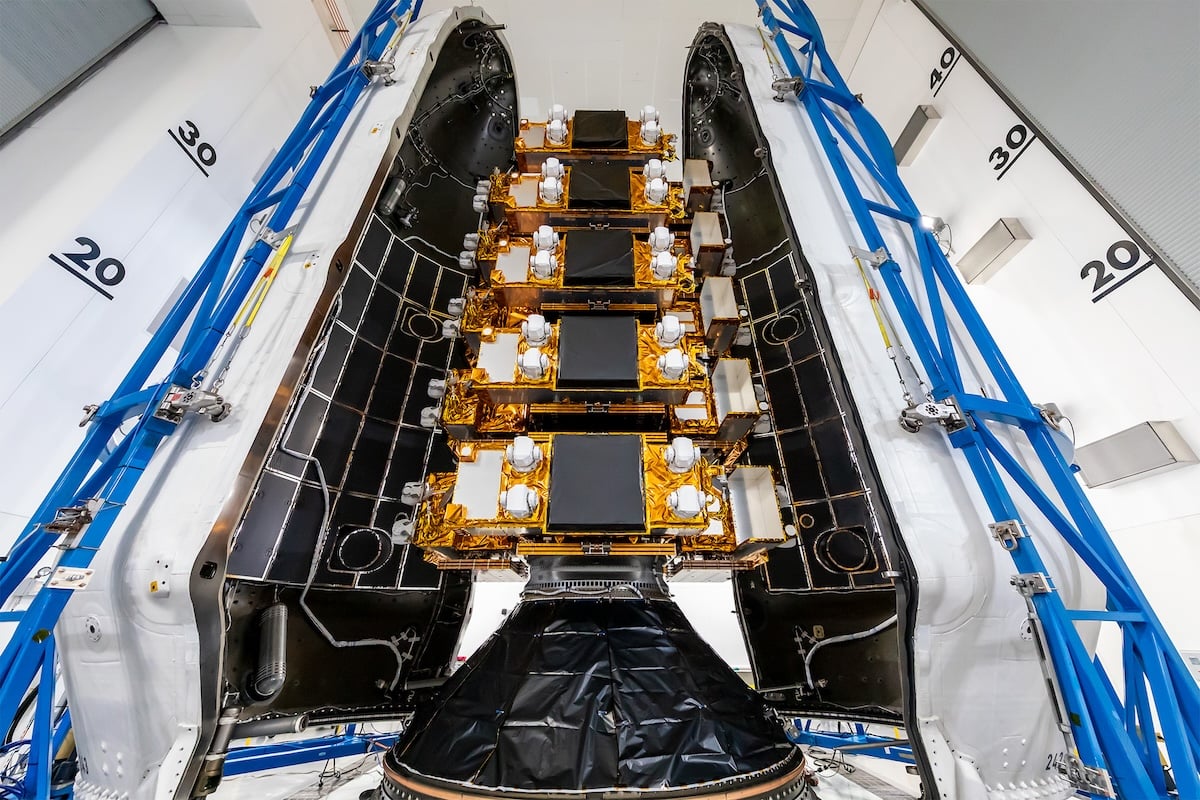
The Transport Layer is part of SDA’s Proliferated Warfighter Space Architecture, a low Earth orbit constellation designed to detect and track missiles and move data rapidly around the world. Its communications satellites will connect military users with missile-tracking satellites across an interoperable network.
Northrop Grumman said its satellites help extend Link 16 into space, enabling tactical data to be sent directly to military users. Link 16 is a secure, high-speed and jam-resistant military data network.
“Our first plane of Transport Layer satellites strengthens the PWSA constellation by adding capacity and diversity of an on-orbit asset, helping SDA accelerate toward global, resilient, instant connectivity for the joint force,” said Lou Christen, Northrop Grumman’s senior director for proliferated systems. “We’ve fully embraced the rapid go-to-market strategy and are on contract to deliver approximately 150 innovative satellites for the warfighter, a key capability for an integrated, layered defense system.”
A second orbital plane of 21 Northrop Grumman satellites is planned to follow. The company said several dozen additional satellites for the architecture are due to launch into low Earth orbit over the next six months.
Northrop Grumman is building approximately 150 space vehicles across Tranches 1, 2 and 3. Its contracts include more than 30 missile warning and tracking satellites that will integrate with the Transport Layer to track conventional and advanced missiles.
The company combines in-house engineering with established commercial products from industry partners to improve production speed, affordability and resilience. It said its space programs draw on seven million square feet of manufacturing floor space equipped with advanced production systems and AI-enabled capabilities.