Announced on October 13, the demonstration validated launch-system compatibility and flight characteristics in an operational setting. It was conducted with the Systems Integration Management Office of U.S. Army Special Operations Aviation Command.
The MH-60 flight builds on earlier launches from fixed-wing aircraft, helicopters and ground-based platforms. It brought L3Harris’ wider Wolf Pack portfolio to 60 flight demonstrations.
“This flight demonstration marks a significant milestone in our mission to deliver multi-domain capabilities that warfighters can rely on,” said Quinlan Lyte, president of Advanced Effects at L3Harris. “By pushing the boundaries of what our launched effects vehicles can do and expanding the platforms from which they operate, we are staying ahead of the threat to remain mission ready.”
Red Wolf has also been integrated with Bell AH-1Z Viper and UH-1Y Venom helicopters, with 52 launches recorded during testing with those aircraft. The U.S. Marine Corps is expected to become the first operator.
For Army special operations aviation, integration could provide another means of engaging targets at long range. MH-60s assigned to the 160th Special Operations Aviation Regiment support special operations forces, including through fire-support missions.
On December 29, 2025, the Marine Corps announced a successful Red Wolf strike against a surface target at the Atlantic Test Range in Maryland. The AH-1Z launch formed part of the service’s Long Range Attack Missile, or LRAM, program.
The test also demonstrated Red Wolf’s ability to act as a communications node and reconnaissance system. The vehicle can collect and share information about targets and its surroundings during flight to help coordinate attacks across multiple platforms.
Operators used a tablet-based control interface for the first time during that test. The approach is intended to simplify operation and reduce the additional functions that must be integrated into helicopter avionics.
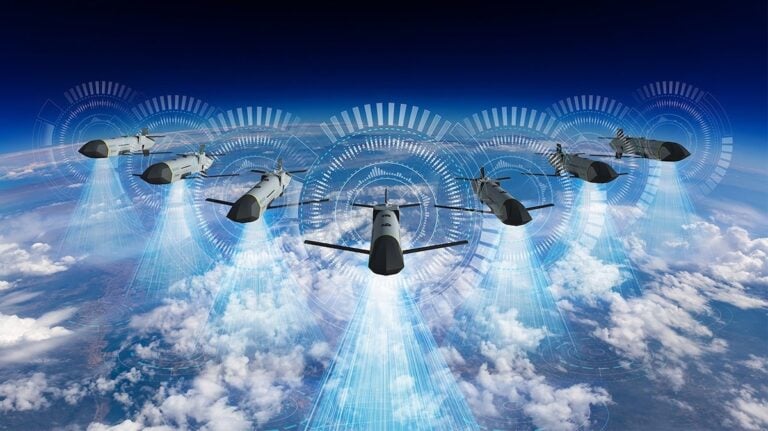
L3Harris presented Red Wolf and Green Wolf as a cooperative family in July 2025, following approximately a decade of development. The company said their guidance systems and artificial intelligence algorithms allow multiple vehicles to operate together.
Red Wolf provides the strike capability, while Green Wolf is designed to disrupt detection and communications systems or serve as an air-defense decoy. Their different payloads are intended to improve the effectiveness of coordinated missions.
Two-way data links also allow the vehicles’ sensors to support reconnaissance. The July description identified the option to recover vehicles that remain intact and have not been expended, allowing them to return to friendly forces for reuse.
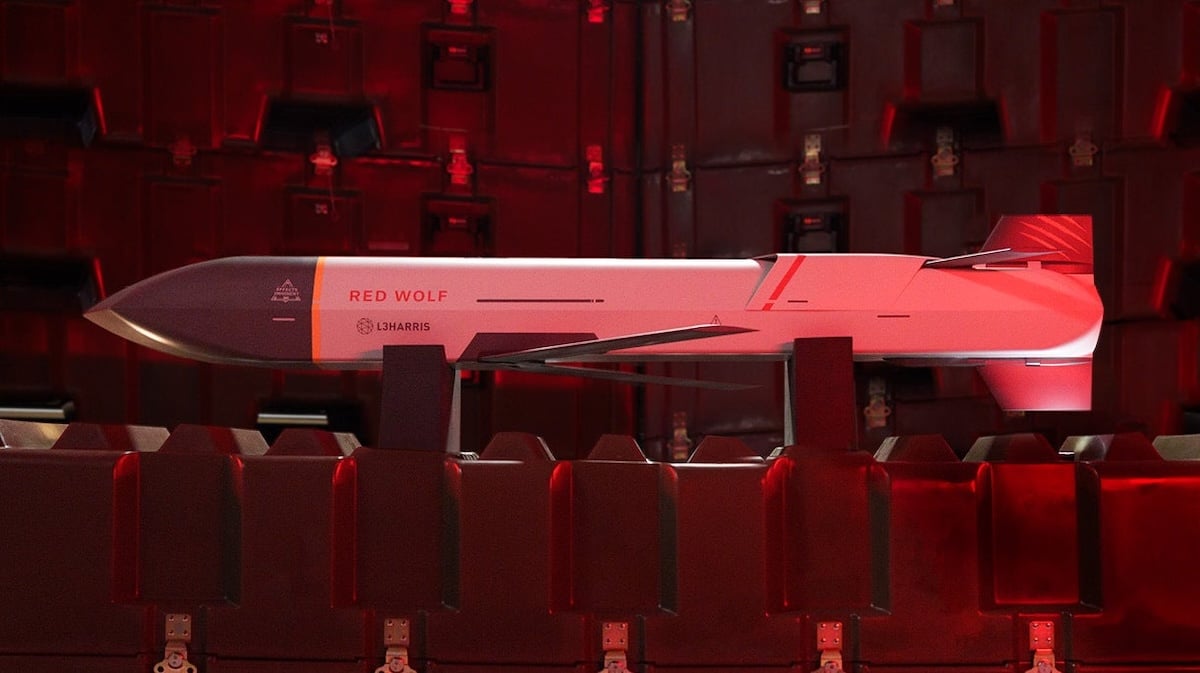
Published performance figures describe high-subsonic flight, a low-altitude range exceeding 200 nautical miles, or about 370 kilometers, and endurance of around an hour. Red Wolf is approximately 1.8 meters long and can carry a warhead weighing about 25 pounds, or 11.4 kilograms.
The systems were described as being in initial low-rate production in July 2025 after an order from an undisclosed customer. Later information described Red Wolf as being in series production, with L3Harris establishing capacity for up to 1,000 missiles annually.
Unit-cost estimates published in July ranged from $300,000 to $500,000. The configurations and production quantities behind those estimates were not specified.