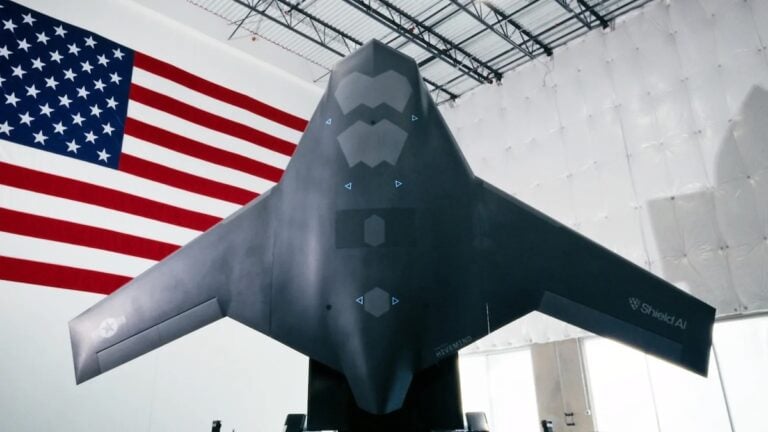
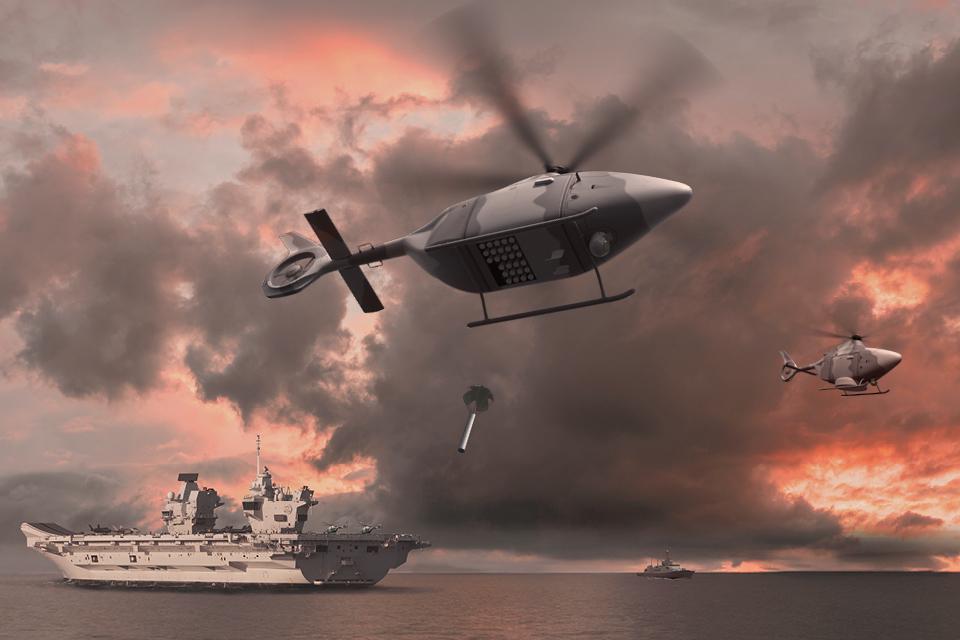
Under the agreement announced by Shield on October 29, the companies will integrate the Hivemind Software Development Kit so Leonardo engineers can build and adapt their own mission software. The partnership builds on Leonardo’s existing autonomy capabilities, which were onboard Proteus when it first flew in early 2026.
“Leonardo builds some of the most widely flown rotorcraft in the world, and Hivemind gives its engineers new tools to add autonomy to them,” said Tom Schaefer, Shield’s vice president of Hivemind engineering. “Leonardo’s engineers can therefore tailor Hivemind software to their mission sets, and the work stays with them.”
Hivemind allows partners to develop, test, deploy and update autonomous pilots as missions, sensors and threats change. Shield said partners retain ownership of what they build and can maintain and modify those capabilities independently.
“As we look to the demands of our customers and the reality of military and security operations in both wartime and in peacetime, there is a need for autonomy powered by AI. The ability to develop and integrate mission autonomy using Hivemind onto Proteus will support the implementation of autonomous capabilities,” said Adam Wardrope, Leonardo’s vice president of market development for Helicopters UK.
Leonardo developed Proteus with the Royal Navy and UK Defence Innovation as a vertical-takeoff-and-landing technology demonstrator. The aircraft informs the Navy’s Maritime Aviation Transformation strategy, which sets out its plans through 2040.
Proteus has a modular bay designed for approximately one tonne of payload or two standard NATO 463L pallets. That allows different equipment to be fitted for roles such as anti-submarine warfare, airborne early warning and intra-theater transport.
Wardrope said Leonardo could potentially extend its use of Shield’s software to other rotary-wing programs. The companies presented the agreement as a route to further collaboration, rather than announcing additional aircraft integrations.