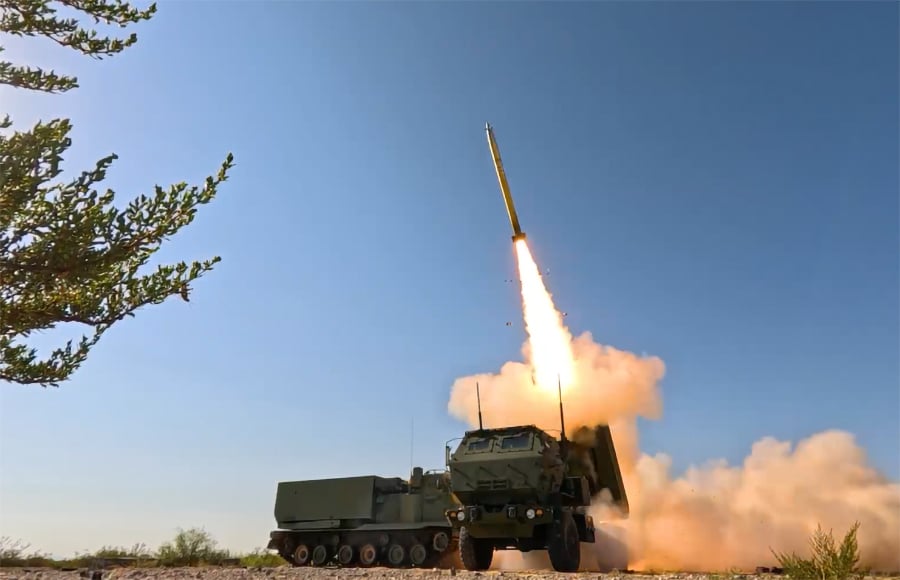
The team fired the rocket from a HIMARS launcher, then transmitted the target update using the Strigo datalink and Remote Interceptor Guidance-360, or RIG-360. Lockheed Martin funded the integration of the systems internally.
The demonstration tested a way to expand GMLRS capabilities without fundamentally changing the munition, instead connecting existing sensors, launchers and targeting systems. According to the company, the capability would allow commanders to adjust pre-programmed strikes in response to changing battlefield conditions.
Lockheed Martin said the test supports the Army’s plans for networked precision fires by bringing those systems into a single integrated kill chain. The aim is to give soldiers greater flexibility when engaging dynamic threats.
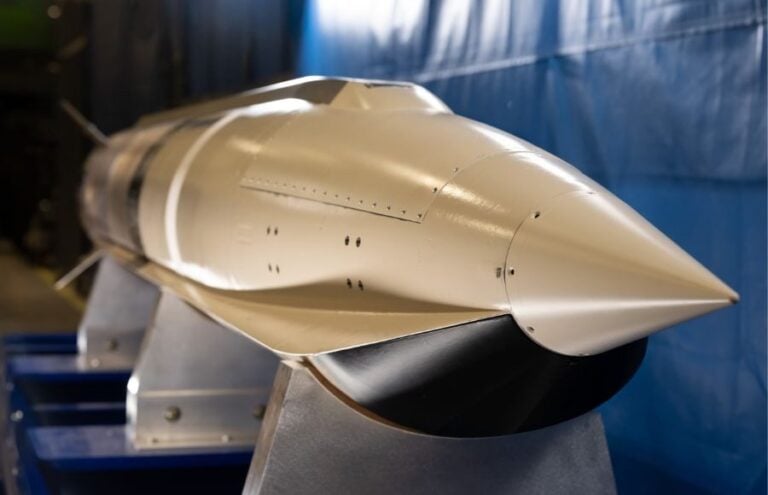
The company said the datalink package is also directly applicable to Extended Range GMLRS and the Precision Strike Missile, or PrSM. That would extend the approach demonstrated in the test to other precision rockets and missiles.
“By delivering this level of integration between Lockheed Martin products such as GMLRS, RIG-360 and Strigo, we’re giving our warfighters the confidence and capability to succeed in the most complex, real‑world scenarios,” said Randy Crites, vice president, Lockheed Martin Advanced Programs. “Accelerating mission integration with trusted systems ensures faster, more effective outcomes on the modern battlefield and gives commanders the flexible options they need to respond to any threat.”