The programme has entered Low-Rate Initial Production in 2026, with the first operational missile deliveries planned for early 2027. MBDA said the move follows a development and certification effort that has included laboratory modelling and live guided firings.
SPEAR is designed to engage targets at stand-off range while allowing the launch aircraft to remain outside the reach of enemy air defences. The weapon’s turbojet gives it a range of more than 100 kilometres, which MBDA describes as class-leading for a missile of its size.
The missile is also intended to increase the number of weapons a platform can carry. MBDA said its smaller size and multi-effects warhead allow a single sortie to engage multiple targets and help commanders maintain the pace of an air campaign.
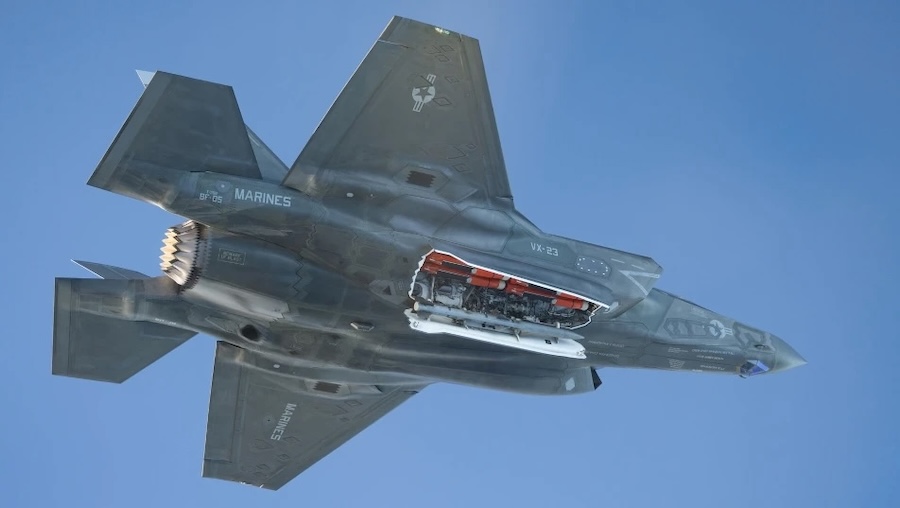
Integration work is advancing on the F-35B. Earlier this year, SPEAR made its first flight on the aircraft during environmental data gathering using a four-pack launcher designed for carriage inside the weapons bay.
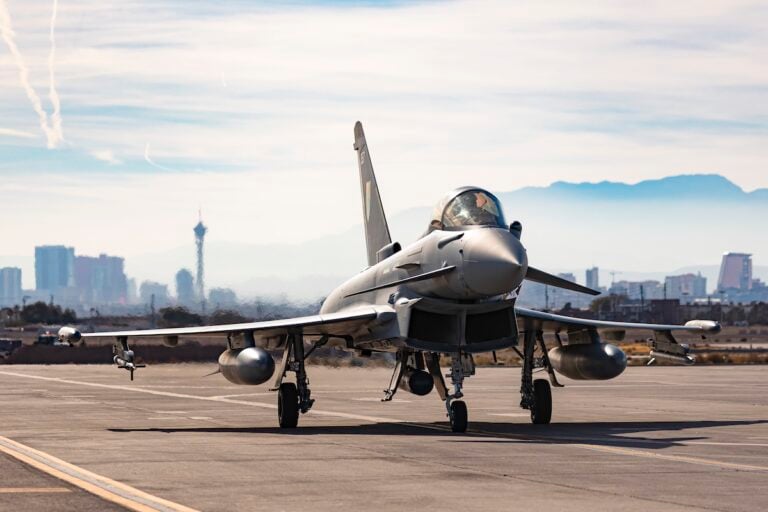
Live firings to date have been carried out from Typhoon using a dedicated trials launcher. MBDA said data and experience from those firings are being used to develop an operational three-pack launcher for external hardpoints.
That launcher is intended for fourth-generation combat aircraft and uncrewed platforms. MBDA said it expects the system to be certified and ready for use in early 2027, expanding the range of aircraft able to employ SPEAR.
The company has also carried out fit checks on platforms beyond F-35 and Typhoon. MBDA said recent commitments on weapons collaboration and integration with uncrewed systems reflect growing customer interest in wider SPEAR deployment.
The missile combines a millimetric active seeker with a laser seeker. MBDA said the design supports fire-and-forget missions and allows targets to be identified and engaged with precision in congested areas and poor weather.
SPEAR’s datalink allows target information to be updated during flight. That gives operators flexibility against mobile and relocatable targets in contested environments.
MBDA is already developing additional versions of the weapon. SPEAR-EW is intended to decoy and defeat air defence radars, while SPEAR Glide is a lower-cost version with a simplified architecture and a larger warhead.
The company said it has also demonstrated the integration of its Orchestrike AI technology into the missile. That work is aimed at enabling collaborative behaviour, allowing groups of missiles to respond to battlefield changes in real time.
For MBDA, SPEAR’s transition into production marks the start of a broader route to multi-platform use. The company is presenting the weapon family as a scalable way to combine range, load-out, networking and survivability for air forces facing more heavily defended operating environments.