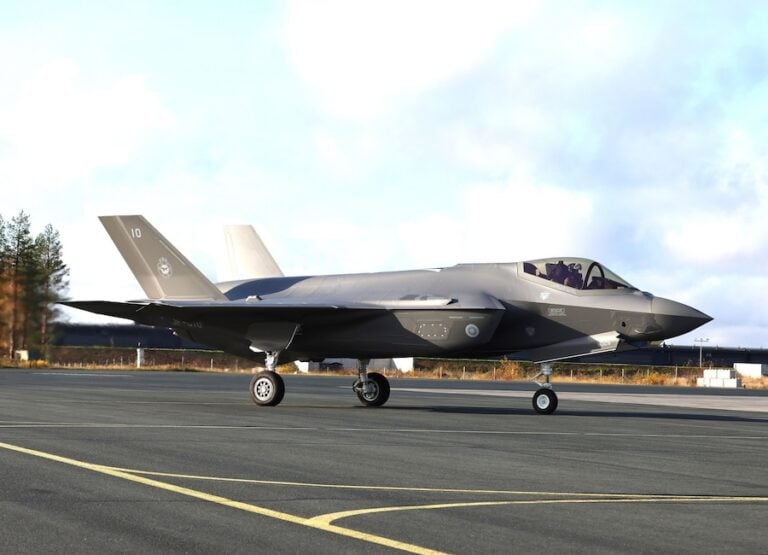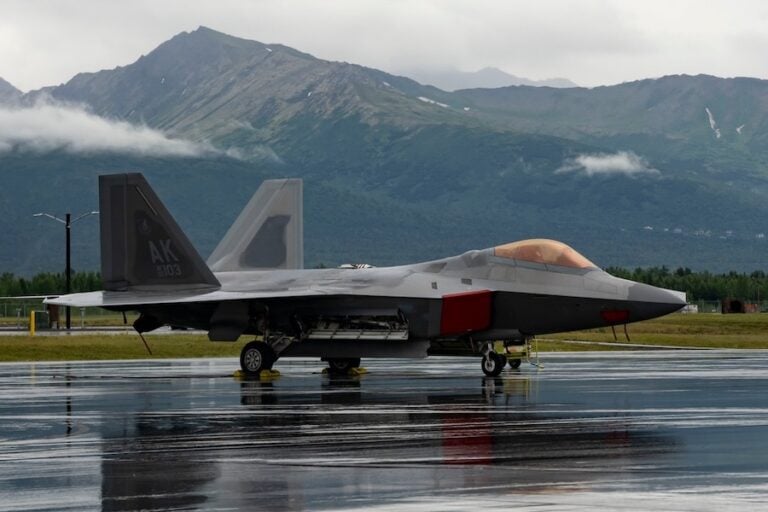
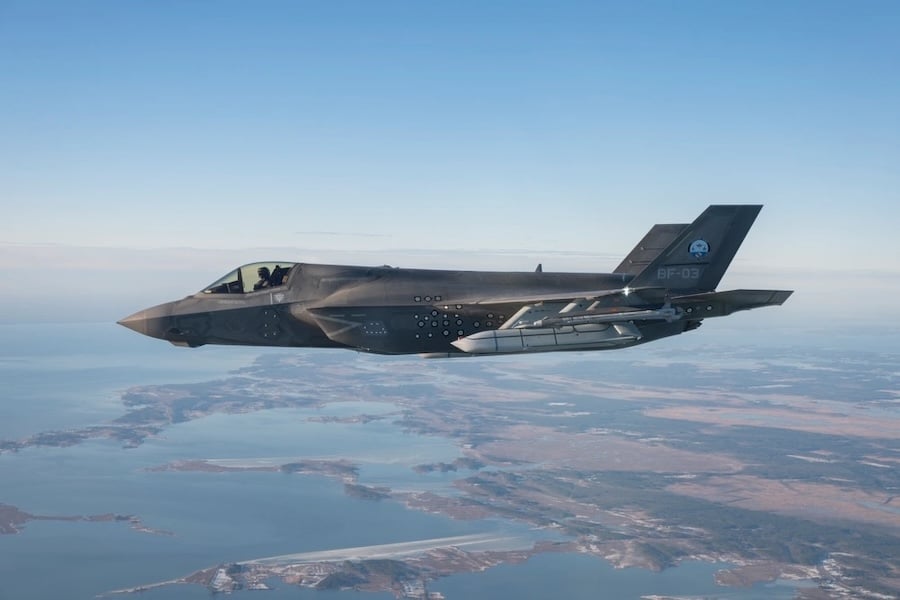
The letter brought together concerns about the missing shipment and longstanding gaps in oversight of the F-35’s global spare-parts pool. Krishnamoorthi asked the Defense Department to establish who was responsible, assess the potential security consequences and explain why earlier recommendations to improve accountability remained unfinished.
“We cannot allow advanced military technologies to fall into the hands of U.S. adversaries,” wrote Krishnamoorthi, a senior member of the House intelligence committee and the House select committee on competition with China. He called for an immediate review and a congressional briefing on the incident and measures to prevent further losses of sensitive technology.
Citing Politico and Bloomberg, the letter said a UPS shipment from Australia included a weapons-bay door and a jet canopy bound for repairs in the United States. The shipment reportedly stopped in South Korea before being rerouted to Hong Kong, where Bloomberg reported that the Chinese government took possession of the parts and had not returned them.
Krishnamoorthi warned that examination of the components could help China reverse engineer American stealth technology. He asked the Pentagon to assess what the parts might reveal about the fighter’s capabilities, materials and other sensitive technologies.
That concern differed from assessments previously reported by Defence Industry Europe, which cited Australian Defense Minister Richard Marles saying he understood that the shipment contained no sensitive components. Lockheed Martin described the parts as unserviceable and posing a low risk of exploitation, while the Pentagon said it was working with authorities and industry partners to recover them and investigate the incident.
The letter sought a complete chain of custody, including who authorized the South Korea stop and which entity was responsible for the components during transit. Krishnamoorthi also asked whether the diversion resulted from an intentional act, negligence, inadequate safeguards or subversion, and whether the department had identified anyone responsible.
The choice of transportation was another focus of his questions. He asked why the F-35 components were shipped commercially rather than through military transportation, what rules governed that decision and whether those rules would now be reassessed.
Krishnamoorthi linked the reported diversion to findings in a 2023 Government Accountability Office report on F-35 spare-parts management. According to the figures cited in his letter, more than one million parts worth a combined $85 million went missing over five years, and the Defense Department investigated only 2% of those lost parts.
The F-35’s international participants share a global pool of spare parts owned by the Pentagon and managed by prime contractors, the letter noted. Krishnamoorthi argued that this arrangement left a gap in accountability that might help explain how the shipment reached Hong Kong.
He said the department had accepted all four GAO recommendations to improve supply-chain accountability and had expected to complete them by mid-to-late 2024. The recommendations remained open, according to the letter, which requested an explanation for the delay and a timetable for implementing each one.
“The F-35 Program supply chain clearly needs more oversight,” Krishnamoorthi wrote. He urged the Pentagon to track parts through a government system of record and strengthen its supervision of commercial shipments.
His proposed safeguards included extensive vetting of carriers entrusted with sensitive military technology and closer scrutiny of their policies on stops in adversary-controlled territories. He also asked whether other F-35 parts or sensitive military components had been lost, diverted or routed through China, Hong Kong or other territories controlled by U.S. adversaries.
Krishnamoorthi extended the argument to F-35 exports, reiterating his opposition to sales to countries including Saudi Arabia because of the risk of Chinese access to American technology. His letter asked the Pentagon to assess the wider danger of sensitive technology reaching China through third countries.
“Until DOD secures its own supply chains and holds those responsible for the Hong Kong diversion accountable, it cannot guarantee the security of F-35 technology anywhere,” he wrote. He requested details of recovery efforts and the additional steps taken or planned to prevent similar incidents.