“We can’t be held hostage to others having the sole capability to provide critical minerals and strategics, including aluminum,” Petraeus said at an Oct. 16 event hosted by the American Primary Aluminum Association (APAA) at the National Press Club in Washington. “The fact is, we have allowed China to achieve at least oligopolistic control over many of the strategic and rare earth mineral categories and processing in particular and that should make us very, very uncomfortable.”
APAA has since released a video of the fireside chat, which also featured Century Aluminum CEO Jesse Gary, Magnitude 7 Metals owner David Kaplan and research economist Adam Hersh.

Smelters restart, new plant planned
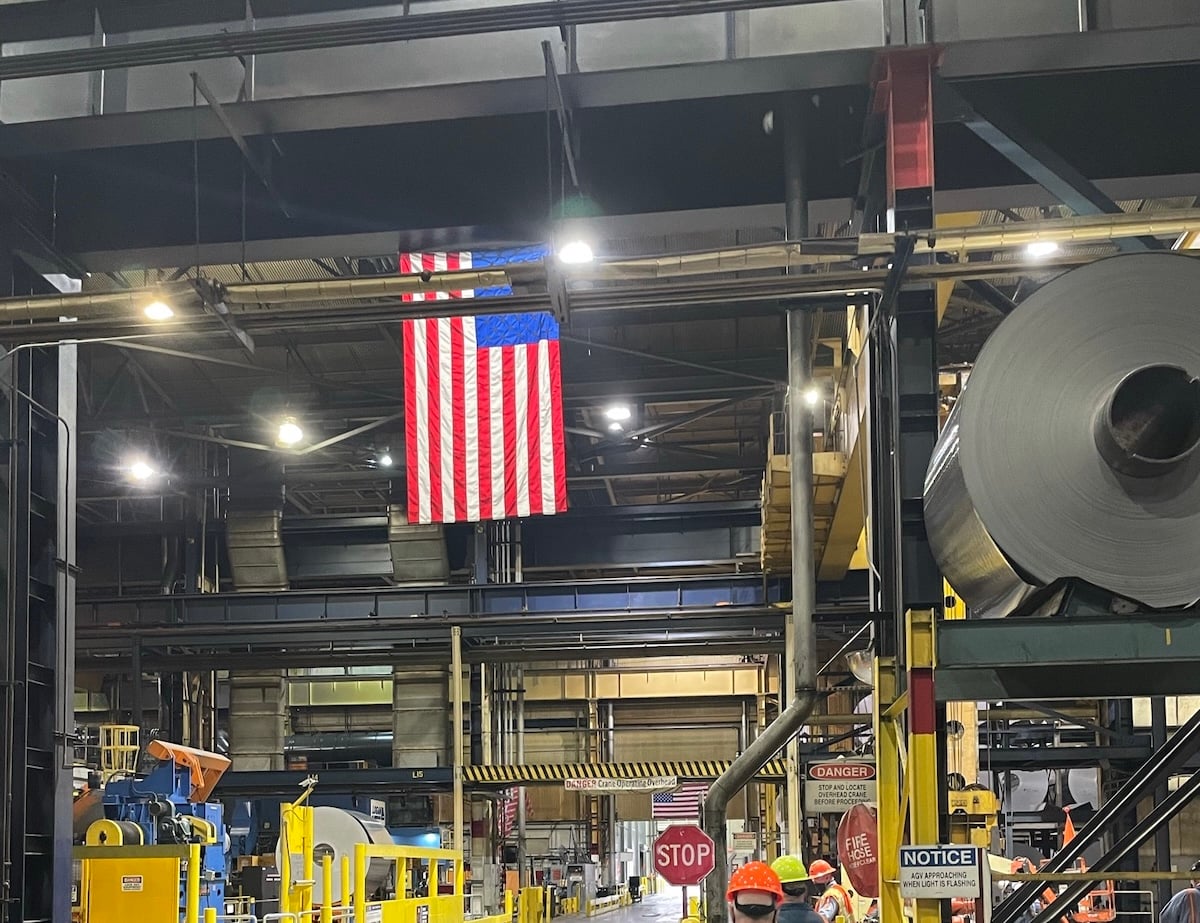
The industry group pointed to Century Aluminum’s Mt. Holly smelter in South Carolina, which has returned to full production, and to the restart of Magnitude 7 Metals’ plant in Missouri. According to APAA, the Missouri restart alone will raise U.S. primary aluminum output by 20% by the end of 2026.
APAA also cited Century’s planned smelter in Inola, Oklahoma, which it says would double U.S. production capacity. If built, it would be the first new primary aluminum smelter in the country in nearly 50 years, the association said.
APAA argues that more domestic smelting would strengthen the industrial base that defense manufacturers depend on, since aluminum is used across a wide range of military and civilian products.
Industry credits tariffs
APAA President Mark Duffy said rebuilding primary production would cut U.S. reliance on aluminum from China, Russia and the Middle East. He attributed the recent wave of investment to the 50% Section 232 tariff on aluminum imports and urged the administration to keep it in place with no exceptions or exemptions.
Petraeus also credited the administration. “Aluminum is in just about everything and we should have our own supply of this,” he said. “This is one [of] the areas in which I think the current administration has really done quite good work.”