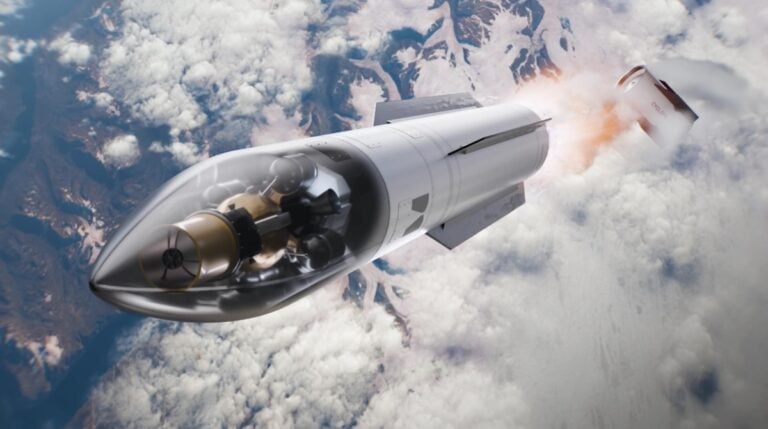
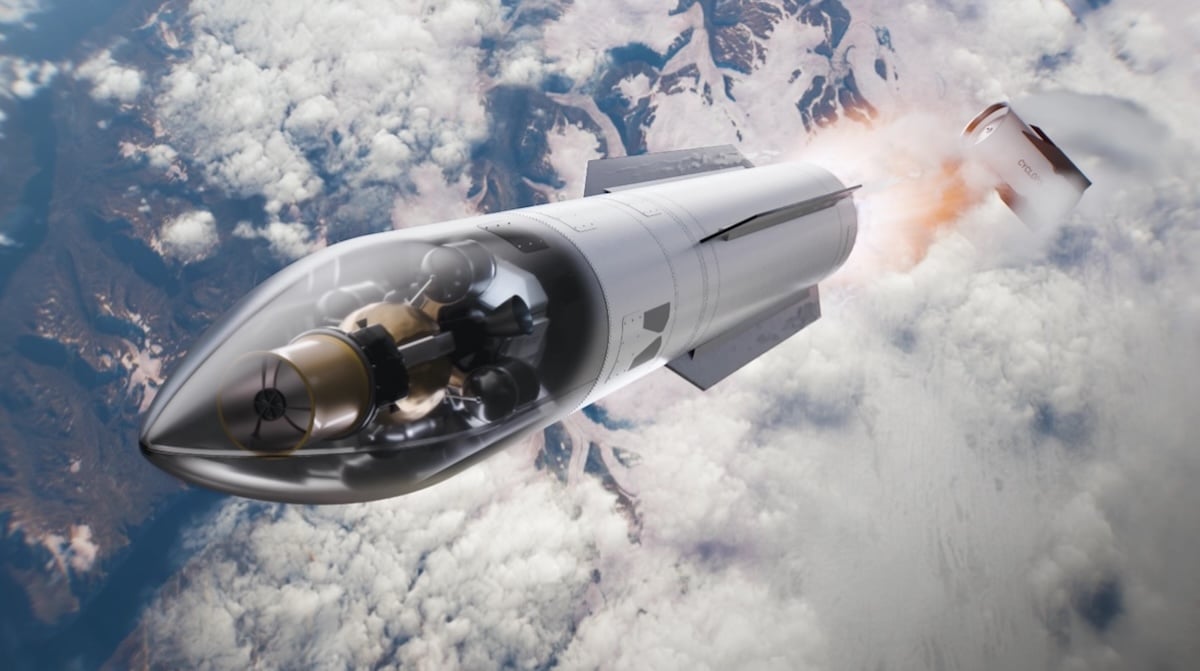
Announced October 22, the award supports an interceptor intended for homeland and regional missile defense. Cyclops is designed to engage missiles during their midcourse phase, with lower costs and mass production central to the company’s approach.
“Demand for interceptors has surged, while low production capacity and high unit costs remain major challenges to replenish expanded magazine depth,” said Dan Piemont, Long Wall’s co-founder and chief executive officer. The company began developing Cyclops in 2024 and publicly introduced it in December 2025.
“We bring a clean sheet design and a new approach to the table. With Cyclops, Long Wall is building for the current and future operational environment.”
Hit-to-kill design and containerized launchers
Cyclops carries an exoatmospheric kill vehicle designed to destroy its target through a direct collision rather than blast fragmentation. In its December announcement, Long Wall identified the kill vehicle’s propulsion and seeker as key areas for reducing costs and making production easier to scale.
At that time, the company said it had built its first kill vehicle prototype and begun testing. It expressed confidence that Cyclops could eventually be manufactured in the hundreds or thousands, rather than dozens.
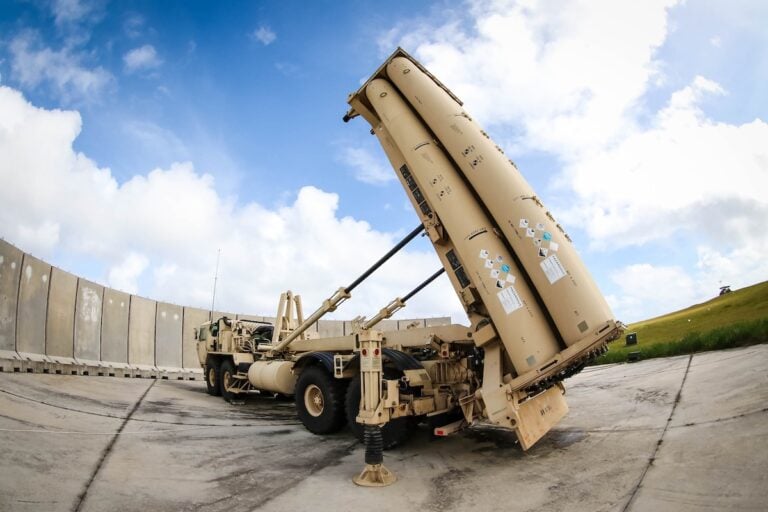
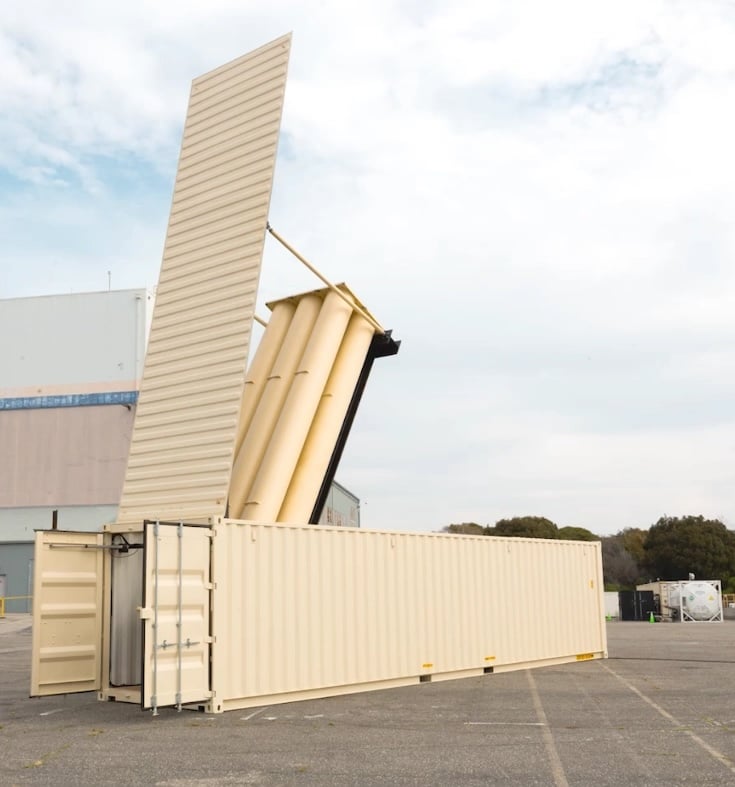
Long Wall has also designed a containerized launching station intended to support deployment on land or aboard ships with limited supporting infrastructure. In December 2025, it reported building an initial launcher test unit and conducting a self-funded development campaign using six THAAD simulators.
The company plans to use its in-house RSX liquid booster vehicle to support Cyclops flight testing and target missions. It says this approach can make test flights more readily available and reduce development costs.
Private funding supports development
“We spent the last two years investing our own capital to design and test Cyclops based on our perception of escalating global threats,” Piemont said. “We will continue investing alongside the MDA to ensure the U.S. maintains a qualitative and quantitative edge over those who threaten us.”
Long Wall now reports development, testing and production infrastructure spanning more than 180,000 square feet and 100 acres across three major facilities. Its December announcement described more than 160,000 square feet of existing facilities that, when fully utilized, could produce more than 100 Cyclops interceptors annually.
The manufacturing approach combines 3D printing, CNC machining, welding, electronics assembly, environmental and hot-fire testing, and vehicle integration. Long Wall says modular production methods and commercial machinery are intended to allow capacity to expand with demand.
“As technologists, there has never been a better time to make a mass-producible interceptor in this class,” said Harry O’Hanley, Long Wall’s co-founder, chairman and president. “We have some pretty incredible tools at our disposal – from the latest GPUs to breakthroughs in optics and propulsion manufacturing – and we have the opportunity to take advantage of it all from day one and deliver for the MDA.”