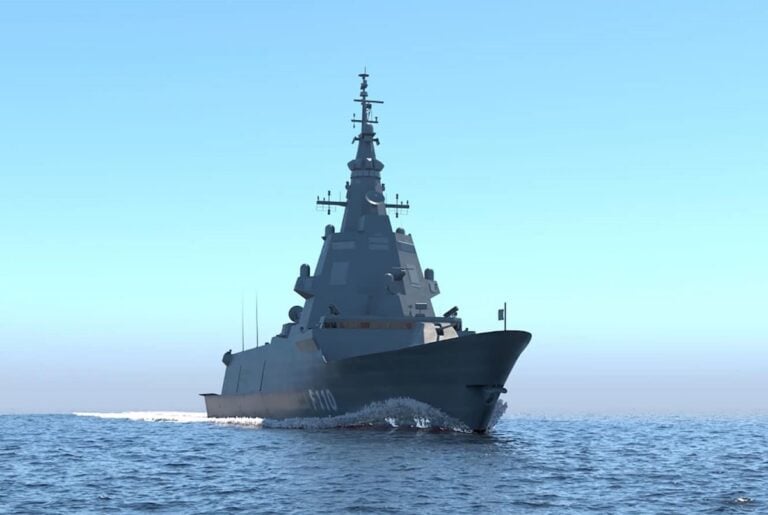
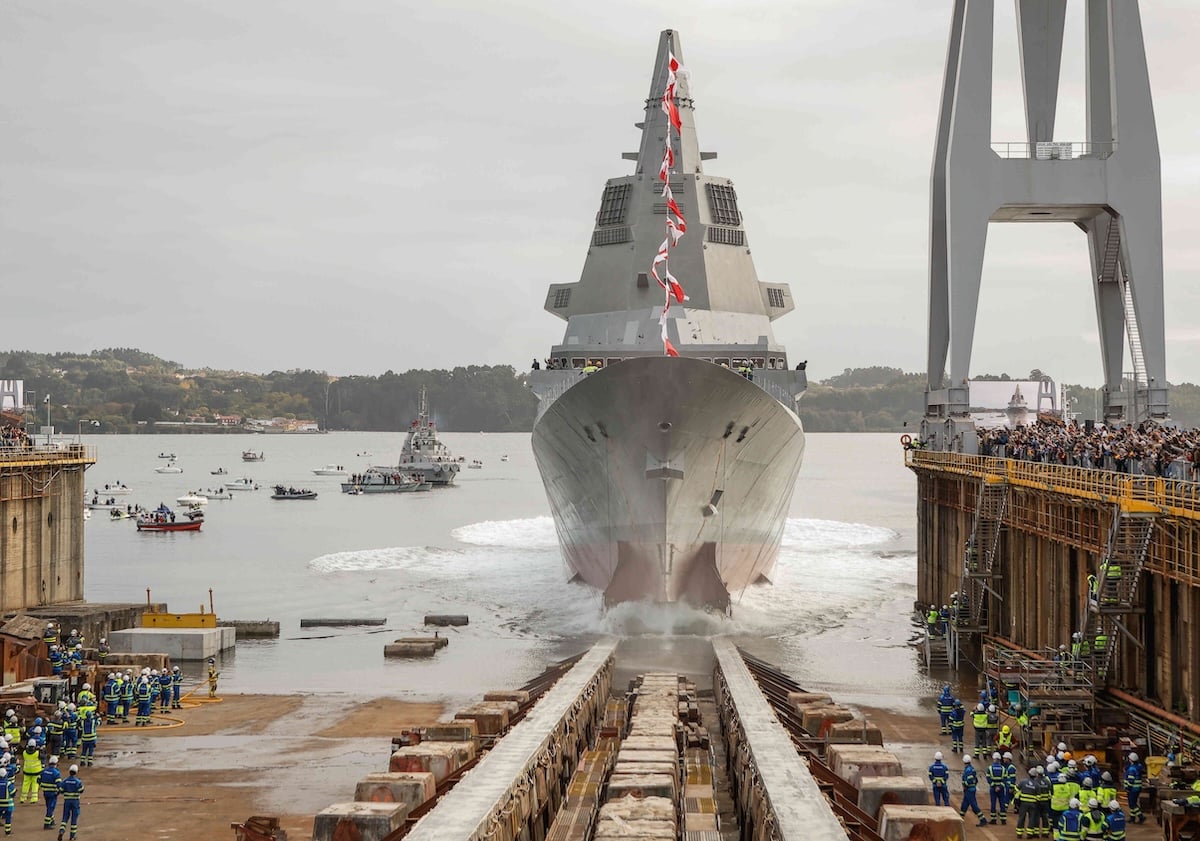
The frigate entered the water with installation and assembly work substantially further advanced than is usual at launch, according to Navantia. The company followed the same approach with the first vessel, Bonifaz, which is undergoing systems installation and start-up before sea trials scheduled for 2027.
Work is progressing on four ships in the series, with five blocks of the third frigate, F113, already on the slipway. Initial construction of F114 is under way at Ferrol’s new Digital Block Factory.
The F110 frigates are designed to counter air, surface and submarine threats, operate alongside other naval units and support civilian authorities in maritime security missions. Their design also allows additional capabilities to be incorporated without fundamentally redesigning the platform.
Digital technology is central to the programme’s approach to operations and maintenance. A digital twin, developed by Navantia with the Spanish Navy and the Directorate-General for Armament and Materiel, will provide a virtual replica of the vessel to support decisions using data from onboard sensors.
The system draws on the Internet of Things, cloud computing and machine learning to help optimise operation and maintenance. It is complemented by the Integrated Services System, developed with the navy and the University of Vigo, which connects sensors installed in the ship’s lighting infrastructure.
Navantia said the digital twin and sensor network would help improve safety, reduce crew requirements and incorporate unmanned vehicles into operations. Its SCOMBA combat system will process information from sensors, radars and weapons in real time.
An integrated mast is designed to optimise use of the electromagnetic spectrum and reduce the frigate’s radar signature. Navantia is also supplying the Integrated Platform Control System, engines and other equipment manufactured at its facilities in the Bay of Cádiz and Cartagena.
Spanish suppliers account for 65% of the programme’s content, alongside technology provided by international partners. Navantia said the programme involves approximately 500 companies across Spain and supports around 9,000 jobs over more than a decade.
“The frigate ‘Roger de Lauria’, like its predecessor ‘Bonifaz’, faithfully reflects Spain’s commitment to innovation and technological sovereignty,” said Admiral Antonio Piñeiro, Chief of Staff of the Spanish Navy. “Each vessel in this series creates highly skilled jobs, promotes R&D&I and strengthens the Spanish naval industry’s international leadership.”