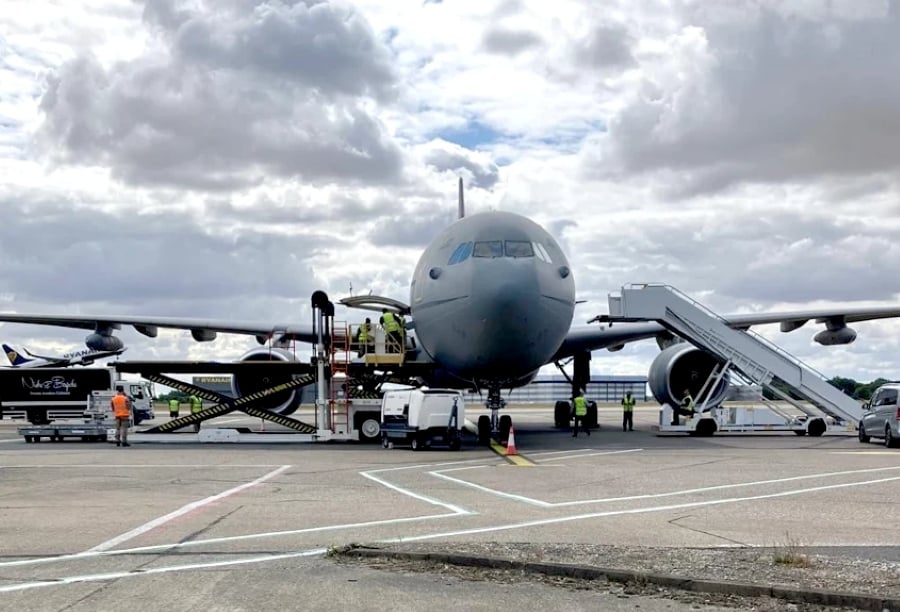
RAF Brize Norton is the Royal Air Force’s principal Air Mobility hub, making continuity of operations during the runway closure a central part of the programme. NSPA is using its aviation support network to help sustain activity from alternative airports throughout the works.
During the mobilisation phase, NSPA personnel worked with the RAF Civilian Air Dispatch team and the contractor to coordinate site visits to the Fixed Base Operators supporting MACE Vector. Those operators are responsible for ground handling, fuelling and catering services at the airports being used during the programme.
The visits allowed NSPA and the RAF to verify directly that the required support arrangements were in place before operations began in July 2026. The mobilisation phase also tested and validated the new support contract, including the transition of ground handling responsibilities through the Global Access Services Contractors.
Following mobilisation, NSPA personnel deployed to the first airports supporting MACE Vector to oversee contracted services and provide on-site support. Their presence enabled issues raised by the customer to be addressed promptly, helping to maintain operational continuity.
“Through our skilled Air Operations team, we ensure that Nations’ Air Forces receive the support required at the necessary time and place with unwavering reliability,” said Christian Pingel, NSPA’s Operations and Support Programme Manager. “The team’s expertise and oversight enable seamless coordination, deployment, and sustained operational readiness, empowering allied air forces to execute their missions with confidence and efficiency.”
NSPA’s role combines coordination, deployment support and oversight of contracted aviation services during the runway replacement programme. The agency said its Air Operations team is intended to ensure that air forces receive the required support at the necessary time and location.
Source: NATO Support and Procurement Agency (press release)