The ministry said the campaign sought to disrupt weapons production while reducing Russia’s capacity to launch further attacks. Its account included damage to six Su-34 aircraft and the destruction of two others, alongside strikes on facilities producing electronics, rocket propellant and drones.
Six Su-34s were damaged at Borisoglebsk airfield in Voronezh Oblast, according to the ministry. It said Ukrainian Navy missile forces destroyed two more at Marinovka in Volgograd Oblast on 29 October using Neptune coastal missile systems, estimating their combined value at around $100 million.
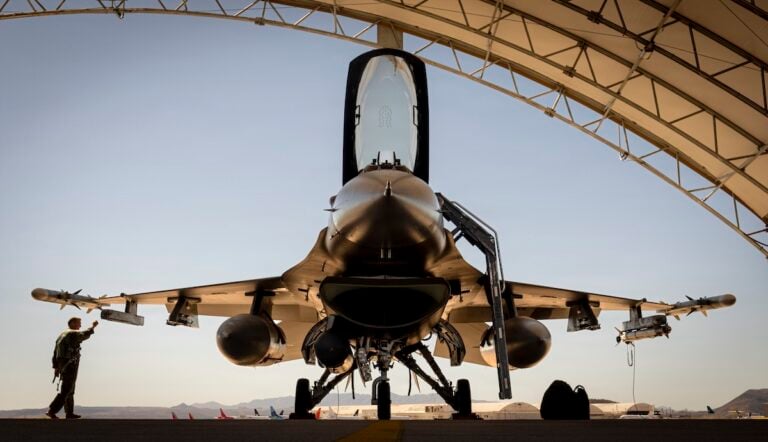
An aircraft was also hit at Yeysk airfield in Krasnodar Krai. The ministry identified the Su-34 as one of Russia’s main glide-bomb platforms and said aircraft losses would limit attacks on Ukrainian cities, frontline areas and military positions.
At Proton-Electrotex in Oryol, which manufactures missile electronics, the ministry said the main microchip production workshop was destroyed and a building and servers were damaged. Four production workshops were damaged at Kamensky Combine in Rostov Oblast, a solid rocket propellant producer, where a fire also broke out in a finished-goods warehouse.
Other industrial targets included Energiya in Lipetsk Oblast, a battery supplier for bombs and missiles, and Redkino Pilot Plant in Tver Oblast, which produces fuel components for Kh-55 and Kh-101 missiles. The ministry also reported a strike on Roboavia, a drone developer and manufacturer in Rostov Oblast.
In Nizhny Novgorod Oblast, Ukraine reported hitting the Center for the Operation of Ground-Based Space Infrastructure Facilities and the Center for the Elimination of Intercontinental Ballistic Missiles. Both were listed at approximately 650 kilometres from Ukraine’s border, the greatest distance specified in the ministry’s account.
The ministry said a 55Zh6U Nebo-U radar near Magri in Krasnodar Krai, valued at an estimated $100 million, was hit. It also listed a mesh-network repeater in the Black Sea and an Iskander-M missile launcher in Kursk Oblast among the targets.
Strikes also hit command posts, ammunition and logistics depots, repair units, a field artillery depot and an attack-drone base, according to the ministry. It said such operations were intended to hamper ammunition supplies, equipment repairs and preparations for new attacks.
Separately, Ukraine’s Defence Procurement Agency DOT has launched its first tender for deep-strike drones. The aircraft are intended to strike targets deep inside enemy territory, using tactical and technical requirements set by the defence ministry.