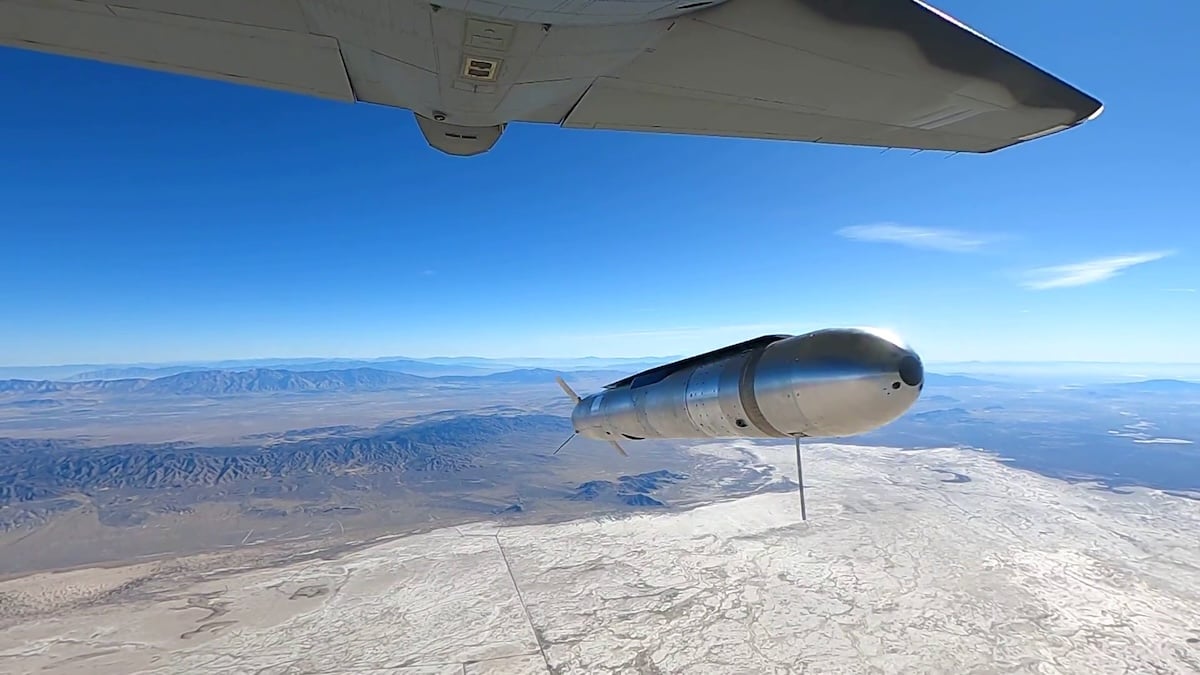
The company expects to deliver the first LCCM weapons in 2027 for test and evaluation, with full-rate production anticipated in 2028 and 2029. Those preparations follow a May 13 framework agreement between Leidos and the Department of War.
Leidos brought missile-component suppliers together at its global headquarters on September 26 to agree requirements, assess manufacturing capacity and coordinate delivery schedules. Production work will be concentrated in Huntsville, Alabama, and McEwen, Tennessee, with suppliers carrying out work across 14 states.
“The nationwide Leidos cruise missile supply chain team is putting in place the robust plans and resources that’ll allow us quickly scale cruise missile production,” said Cindy Gruensfelder, president of Leidos Defense. “We’re investing in our people, facilities, and supply chain to deliver proven capability to warfighters with a real sense of urgency.”
Initial Havoc Spear deliveries to Air Force Special Operations Command are now under way. Separately, Leidos received a summer 2026 award from U.S. Special Operations Command for 45 missiles, with deliveries under that contract expected to begin in fall 2027.
“Demand has never been higher, and our customers are counting on us to deliver dependable propulsion for today’s operational fleets and future programs,” said Jessica Villardi, vice president of Fighter and Mobility Programs at Pratt & Whitney. “Pratt & Whitney is investing in capacity and advanced manufacturing to strengthen the industrial base and accelerate delivery of the proven, dependable power our customers need.”
Ben Nicholson, chief commercial officer of Divergent, highlighted the urgency of the supplier discussions and the information shared during the meeting. “After a more than 30-year career in D.C., I haven’t seen a prime pull suppliers together like this, at pace, with genuine urgency, and share information the way things were done today.”
Leidos said the production effort would strengthen the U.S. missile industrial base and support greater long-range strike capacity. Its other military work includes the Army’s Indirect Fire Protection Capability Increment 2 launcher, hypersonic strike technology, and guidance and sensor systems for air and missile defense.