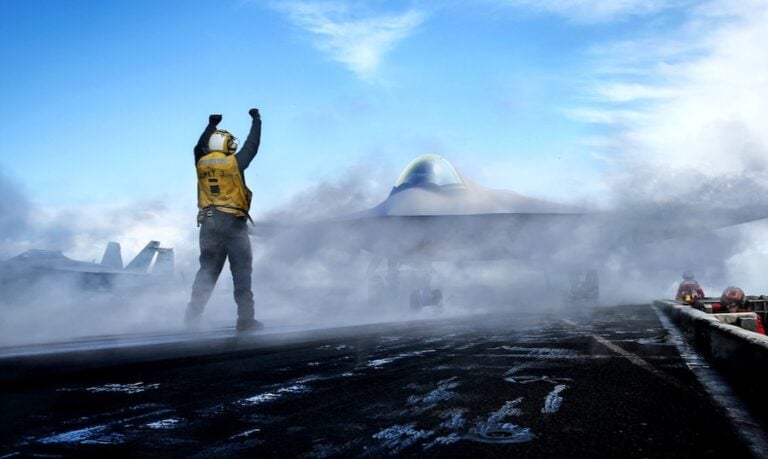

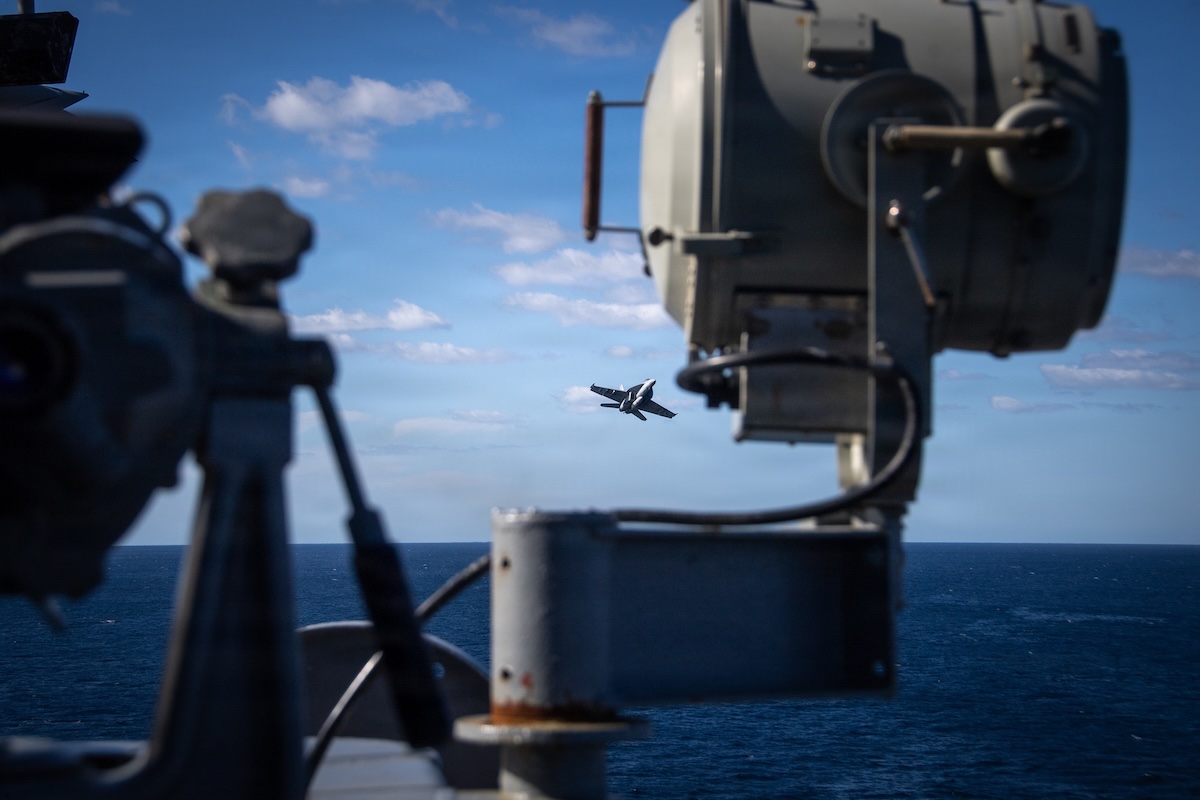
Known as PALS, the Precision Approach Landing Systems help pilots land at night or in bad weather. They do so by guiding pilots to a good starting position for the approach.
A ship needs the certification before it can conduct flight operations. On Nimitz, the systems are supported by the combat systems department and the Carrier Air Traffic Controller Center, or CATCC.
The certification was not the only work done at sea. Sailors also used the underway period to prepare for future operations, running aircraft recovery, damage control, propulsion and other drills.
With the certification and training behind it, Nimitz is ready for future underway periods, the Navy said. Those include time at sea in support of East Coast carrier qualifications, or CQs.
CQs are an important milestone in the training of student naval aviators. They give students their first opportunity to land on the flight deck of an operational aircraft carrier.
Nimitz is scheduled to conduct multiple CQs in support of Commander, Naval Air Force Atlantic. The carrier is homeported at Naval Station Norfolk as part of Carrier Strike Group 8.
Nimitz is the oldest American aircraft carrier in active service and the lead ship of its class. The Navy describes the supercarrier as one of the largest warships in the world.
The ship was laid down, launched and commissioned as CVAN 68. It was re-designated CVN 68, a nuclear-powered multi-mission aircraft carrier, on June 30, 1975, as part of a fleet realignment.
The move in July returned Nimitz to a base it left in 1987. That year the carrier was relocated from Naval Station Norfolk to Naval Station Bremerton in Washington state, now part of Naval Base Kitsap.
Following its Refueling and Complex Overhaul in 2001, the ship’s homeport was changed to Naval Air Station North Island in San Diego. It moved again in 2012 to Naval Station Everett in Washington state, and in January 2015 from Everett back to Naval Base Kitsap.