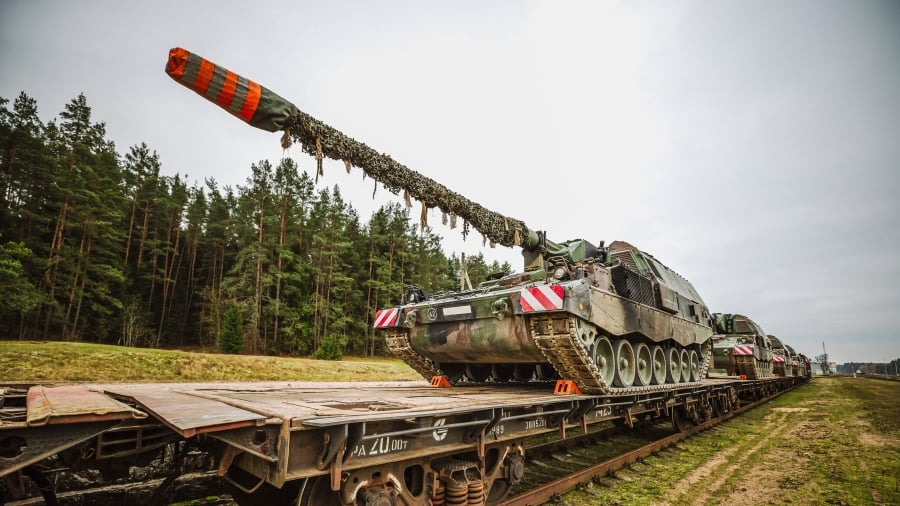
The annual report (full report in this link) tracks project status, wider trends and lessons from PESCO cooperation, with notable progress this year in military mobility, cyber defence, artificial intelligence, electronic warfare and maritime security. It also shows a growing number of initiatives moving beyond common requirements and demonstrators towards deployable capabilities.
In military mobility, projects developing transport aircraft are defining common requirements while work continues to harmonise airlift pilot training. Newer initiatives covering unmanned air-to-air refuelling and the evacuation of injured soldiers have established foundations for joint development, alongside efforts to remove obstacles to moving troops and equipment across EU borders.
Maritime programmes are also progressing towards procurement and operational use. The Essential Elements of European Escort project has agreed common operational requirements for future European escort ships, while the Critical Seabed Infrastructure Protection initiative is preparing technology demonstrations focused on protecting critical underwater infrastructure.
Several other maritime projects have completed their planning phase and are moving towards procurement. In the cyber domain, Cyber Rapid Response Teams continue to support EU missions and operations, while the Quantum Enablers for Strategic Advantage project is contributing to efforts by armed forces to exploit quantum technologies for defence.
PESCO cooperation typically begins with participating states defining common requirements before moving to demonstrators and collaborative testing. Procurement of systems developed through the framework can then be conducted through intergovernmental organisations or national procurement agencies acting for participating member states.
Among the projects moving towards procurement are the Cyber Threats and Incident Response Information Sharing Platform, Maritime Semi-Autonomous Systems for Mine Countermeasures and the Medium-size Semi-Autonomous Surface Vehicle. Cooperation also continues through the Organisation for Joint Armament Cooperation on the European Patrol Corvette, Eurodrone, European Secure Software defined Radio and Anti-Torpedo Torpedo programmes.
The report identifies links between PESCO, EU funding instruments, defence companies and research organisations as an important contributor to progress in intergovernmental cooperation. Thirty PESCO projects are linked to European Defence Fund programmes, giving participating EDF industrial consortia a 10% funding bonus through each connection, while 30 projects also involve research and technology organisations.
Projects receiving expert support from the European Defence Agency tend to show stronger progress and greater operational maturity, according to the report. Several initiatives are also evolving from individual cooperation projects into permanent European defence structures.
The Cyber and Information Domain Coordination Centre is transitioning into the permanent EU Cyber Defence Coordination Centre to provide long-term cyber support for EU missions and operations. The Network of Logistic Hubs in Europe and Support to Operations is now operational, while the Joint EU Intelligence School is moving towards permanent capability status through closer integration with the European Security and Defence College.
Looking ahead, participating states are expected to maintain their focus on converting collaborative programmes into functioning military capabilities. The report identifies deeper cooperation with industry and greater use of EU funding instruments as priorities for delivering tangible results as PESCO supports the EU’s wider defence readiness agenda.
Source: European Defence Agency