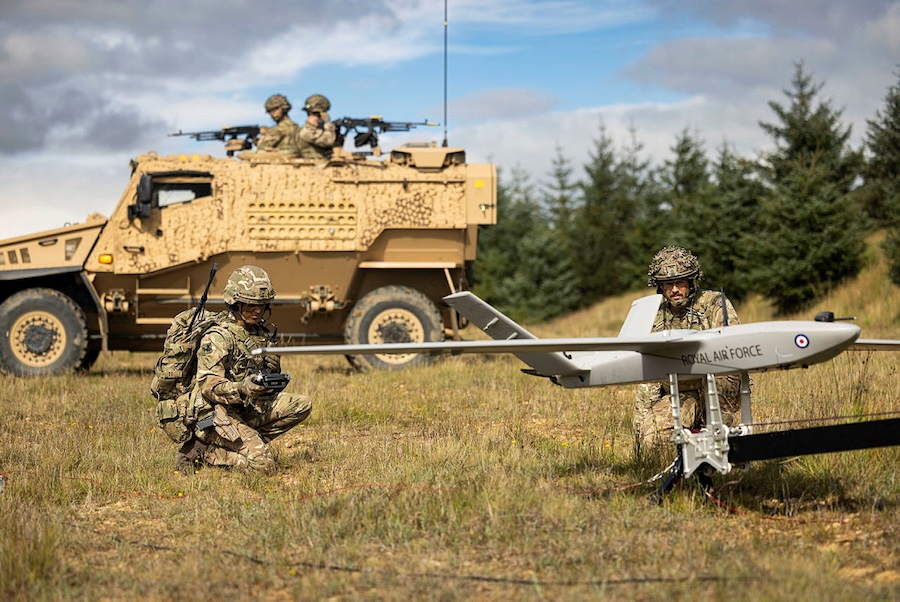
StormShroud is designed to blind enemy radars and disrupt integrated air defence systems. The platform is expected to improve the survivability and effectiveness of aircraft such as Typhoon and F-35B Lightning.
Following its introduction into operational service in May 2025, the system quickly entered testing. In June 2025, 216 Squadron completed the first in-service flight of StormShroud at RAF Spadeadam.
The milestone flight was supported by 1 Squadron RAF Regiment. It marked the start of an intensive phase of development and operational testing.
Throughout 2025, the RAF conducted a series of regular flying periods across multiple locations. Testing took place at RAF Spadeadam, RNAS Predannack and the Salisbury Plain Training Area.
The complexity of operations increased over time, moving from single-platform flights to coordinated multi-platform missions. This progression culminated in a December 2025 exercise on Salisbury Plain, where multiple StormShroud systems operated together in a dynamic environment.
The RAF has also focused on developing tactics, techniques and procedures for the platform. In September 2025, a joint deployment to RAF Spadeadam was carried out to refine these operational methods.
The exercise also strengthened cooperation between 216 Squadron and the RAF Regiment. It highlighted the role of the RAF Regiment in enabling and operating future uncrewed air systems.
In parallel, 216 Squadron has been developing a new organisational model for uncrewed capabilities. This approach combines regular personnel with reservists, including specialists from the uncrewed aviation sector.
The integration of reservists has contributed to the programme’s development and operational effectiveness. Some participants have since considered transitioning to full-time military service, supporting the growth of the capability.
Development work is continuing into 2026, with further flying conducted in Cornwall in February. Additional domestic and international exercises are planned to refine operational use of the platform and its payload.
Efforts are also underway to advance the autonomy of the system. These developments are intended to enhance its role as a next-generation capability within RAF operations.
The RAF said StormShroud represents a significant step in its ongoing transformation. The programme aims to integrate autonomous systems with crewed aircraft to reshape how air power is generated and applied.