
NATO said Agile Combat Employment is designed to increase the resilience, survivability and flexibility of airpower. The concept enables forces to operate from both established and distributed locations in contested and dynamic environments.
The concept relies on interconnected capabilities including air-to-air refuelling, command and control, logistics, maintenance and host-nation support. These elements allow NATO to continue generating combat airpower across a wider operating area.
Air-to-air refuelling was one of the main enablers of the exercise. During Ramstein Flag 2026, France, Poland, Türkiye and the United States participated in multinational refuelling activities.
The refuelling activity involved U.S. Air Force KC-135 Stratotanker aircraft assigned to the 100th Air Refuelling Wing. It also included the French Air and Space Force’s A330 Multi-Role Tanker Transport.
NATO said the exercise allowed nations to evaluate receiver aircraft, procedures and formation configurations in a multinational environment. The French MRTT also evaluated irregular refuelling formations not routinely practised alongside U.S. KC-135 aircraft.
These formations can increase operational flexibility by allowing more tanker aircraft to operate within the same airspace. NATO said testing them in a controlled training environment helps participating nations develop flexibility required to support Agile Combat Employment during future contingencies.
Command and control formed another central part of the exercise. At Ørland Air Base, communications specialists from the U.S. Air Force’s 100th Communications Squadron supported NATO’s command-and-control architecture.
Their expeditionary communications package can establish secure communications in less than an hour. NATO said this enables forces to rapidly generate combat power from dispersed locations.
The team also provided access to shared networks such as the Air Component Battle Network. This allowed participating nations to exchange information, coordinate operations and maintain connectivity across the exercise.
Türkiye’s Airborne Early Warning and Control aircraft also supported air warfare activities. NATO said the aircraft coordinated both “Red” and “Blue” aircraft and maintained surveillance across a large and complex battlespace.
The aircraft contributed to building the recognised air picture. It also relayed information to control and reporting centres supporting the exercise.
Ramstein Flag 2026 also highlighted operations in the High North and Arctic. Norway, Sweden and Finland provided regional expertise and access to training environments with expansive airspace, dispersed operating locations and demanding conditions.
NATO said the region offered an ideal setting to practise Agile Combat Employment at scale. Participating nations operated across multiple locations and adapted to unfamiliar terrain and conditions.
The exercise was also valuable for nations less accustomed to northern environments. France, Greece and Italy gained experience with unfamiliar terrain, rapidly changing weather and the extended daylight linked to the region’s midnight sun.
NATO said these conditions challenged aircrews, maintainers and support personnel to adapt procedures. The experience was intended to strengthen readiness and improve the Alliance’s ability to operate in unfamiliar environments.
Sustaining Agile Combat Employment also depended on maintainers, logisticians and host-nation support personnel. Norway’s host-nation support helped participating nations adapt procedures, maintenance requirements and logistics processes for Allied aircraft operating from the same airfield.
NATO said small adjustments helped sustain smoother flight operations. These efforts supported more than 150 daily sorties across the exercise area.
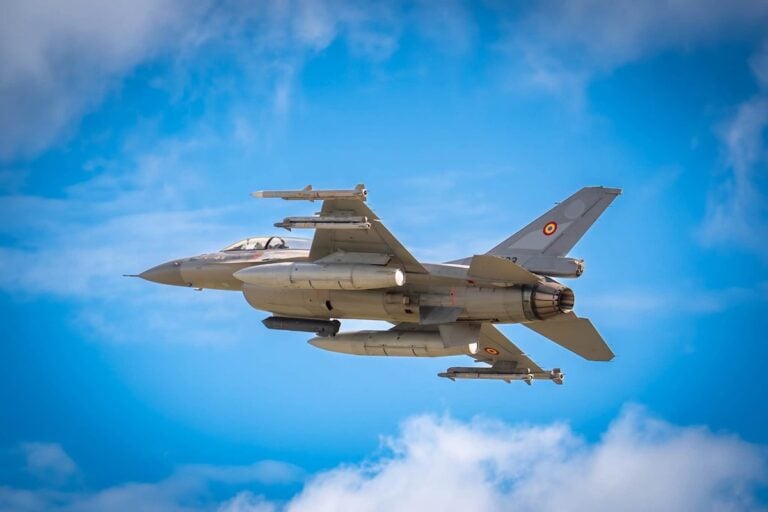
“Our F-16 deployment, which we conducted alongside our host ally Norway and participant Belgium, has been a significant experience in enhancing interoperability among different air forces,” Küçük said. “Working together under common standards strengthened operational efficiency while enabling the exchange of technical knowledge and maintenance expertise.
“These experiences not only improve our ability to sustain aircraft operations during multinational exercises but also establish a solid foundation for future Allied missions,” he added. For Turkish Air Force maintenance officer First Lieutenant Ali İhsan Küçük, the work showed how ground interoperability contributes to operational effectiveness in the air.
Ramstein Flag 2026 also tested how multinational forces operate together under realistic conditions. NATO said the exercise helped identify procedural differences, share best practices and refine tactics, techniques and procedures for Agile Combat Employment.
The lessons from multinational integration contribute to NATO’s wider ability to operate as a cohesive force. The exercise covered flight lines, maintenance facilities, mission planning cells and air-to-air refuelling operations.
“Integration is how we learn what works and what does not,” said U.S. Major Louis Fasano, a detachment commander assigned to the 100th Air Refueling Wing. He said multinational exercises help identify procedural differences before they become operational challenges.
“When we plan, we look across the board and see whether our briefs are the same and what is understood until we find those gaps,” Fasano said. “Some nations may focus more on weather considerations, while others may be thinking about terrain.”
NATO said these observations are captured through after-action reviews. Participating nations use them to identify lessons, address procedural gaps and develop solutions for future exercises and operations.
Ramstein Flag provides a venue for Allies to practise Agile Combat Employment across the full spectrum of air operations. This includes aircrew coordination, air-to-air refuelling, maintenance, logistics and command and control.
The aim is to validate existing capabilities and identify ways to improve interoperability. NATO said this helps ensure the Alliance can generate and sustain combat airpower wherever and whenever required.
Ramstein Flag 2026 includes more than 18 participating nations and more than 200 Allied aircraft, enablers and NATO assets. They are operating from locations across 12 countries.
Through about 150 sorties per day, Allies are strengthening readiness, interoperability and collective defence across NATO’s northern flank. NATO said the exercise supports its ability to operate as one Alliance in demanding conditions.