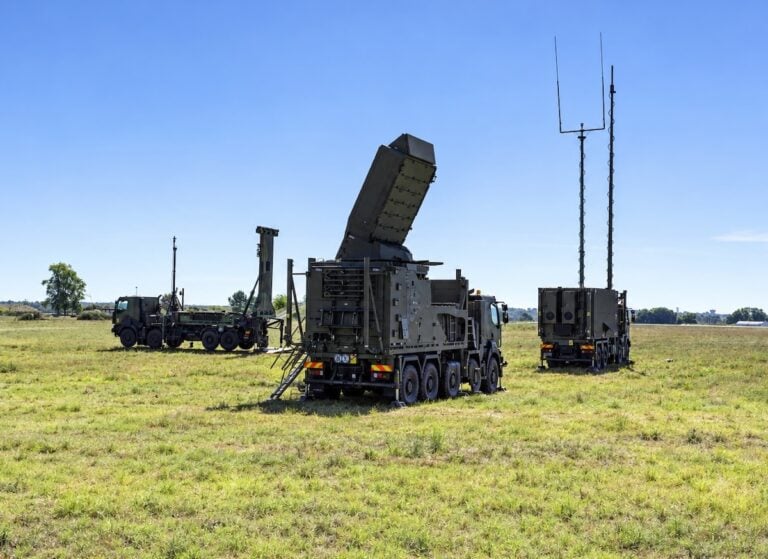

The agreement is intended to expand the Counter-Unmanned Aircraft Marketplace. The Army said the marketplace will give allies and partners access to counter-drone capabilities that have been proven on current battlefields.
The ceremony included U.S. Army leaders and representatives from NATO allies. Sweden, Denmark, Norway, France, Poland, the United Kingdom, the Netherlands, Italy and Lithuania were among the countries represented.
The letter of intent affirms allied commitment to streamline counter-UAS acquisition and training. It is also intended to help participating nations identify, evaluate and field capabilities at the pace required on today’s battlefield.
“What we’re fundamentally trying to do here is bring in the same market portals that have made so many companies successful in our country and yours, and just get our government and other governments’ regulation out of the way,” Driscoll said.
Driscoll described the marketplace as a practical tool for making acquisition more transparent and responsive. He said it should be informed by the Soldiers and operators who use the equipment.
“What we think will work is to allow transparent access to user feedback,” Driscoll said. “What we think will work is to allow everyone here to offer their products to Soldiers around the world and us to just listen to Soldiers, get their feedback, and then scale the things that work.”
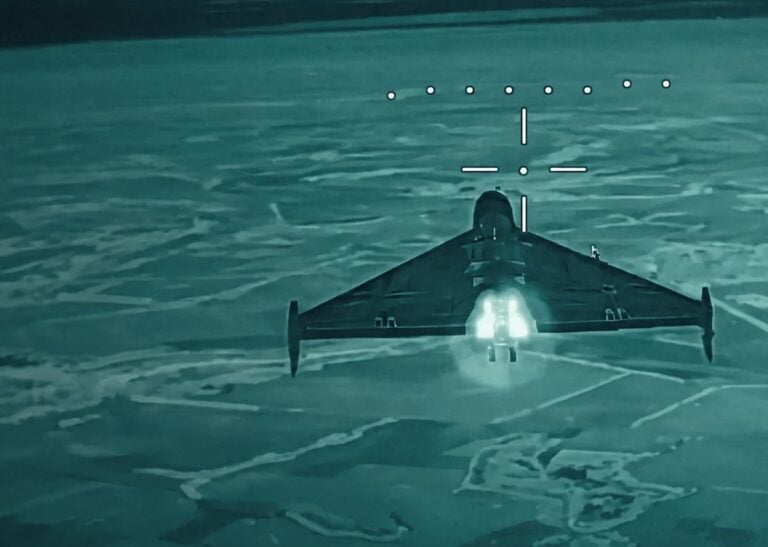
The Army said unmanned aircraft systems continue to reshape the battlefield. Small drones, one-way attack systems and other unmanned platforms are increasing demand for layered detection, tracking and defeat capabilities.
Driscoll said the challenge involves more than buying better equipment. He said systems must also work together across nations and services.
“What we know is this inflection point of war is going to require us to create compatible systems,” Driscoll said. “To do things like air defense, we need all of our equipment to be interoperable at a minimum.”
Interoperability was a central theme of the event. Leaders framed the effort as a way to help allied and partner forces share information, compare capabilities, align requirements and reduce barriers to delivering emerging technologies.
Driscoll cited Project Jailbreak as one example of Army work to remove technical barriers. He said the Army reviewed about 100 systems in 30 days and identified a broader need for equipment to transmit and receive data through common digital interfaces.
The Army is also preparing to apply similar lessons in Europe through the Eastern Flank Deterrence Initiative. Driscoll said the goal is to help vendors build to allied requirements from the beginning, making systems more useful, compatible and easier to field.
The marketplace initiative begins with counter-drone systems. Driscoll also described a wider vision that could eventually include drones, radars, sensors, tanks, helicopters and other major capabilities.
The long-term goal is to create a trusted environment for allied nations to identify, evaluate and procure equipment more efficiently. The Army said this would also give industry clearer insight into operational demand.
The ceremony also highlighted industry’s role in helping the Army and its partners keep pace with emerging threats. Driscoll said acquisition reform depends on both government action and sustained cooperation with companies able to deliver tested, practical capabilities.
Testing was another focus of his remarks. Driscoll said the Army is working to expand access to ranges and reduce delays that prevent vendors from rapidly proving their systems.
The Army said faster testing is needed to determine what works and move effective capabilities to Soldiers and allied forces. After the signing, Driscoll linked the agreement to the trust and speed required in modern conflict.
He said interoperability will shape how allies work together in the future. He described the agreement as a first step towards systems that support decision-making at the speed of war.
Eurosatory provided the setting for the signing by bringing together military leaders, government officials and industry representatives. Driscoll’s remarks placed the agreement within a broader Army modernisation effort focused on speed and Soldier-informed innovation.
The counter-UAS letter of intent is an early step in that effort. The Army said it is intended to reduce friction, expand cooperation and help allied forces move from shared requirements to fielded capability faster.