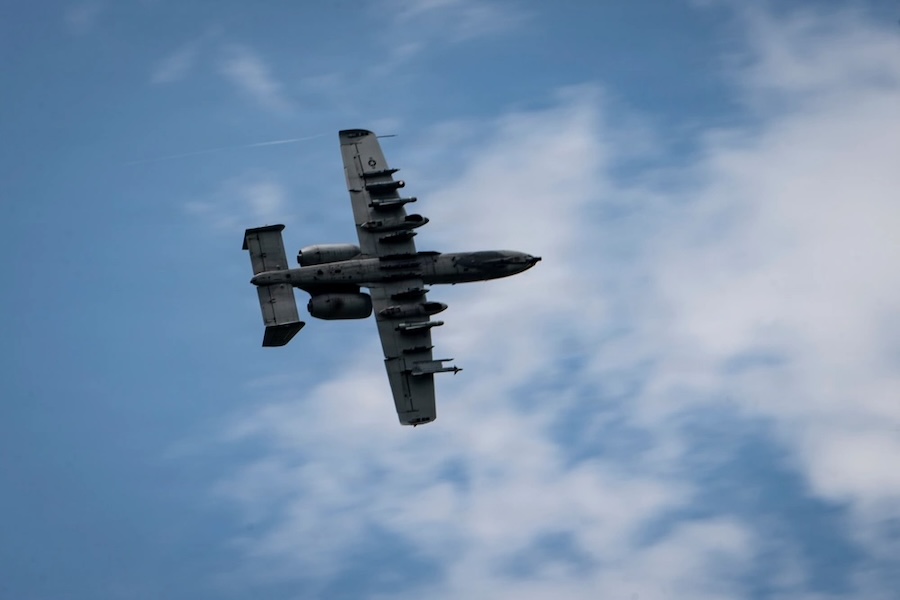
Royal Air Force controllers worked alongside Airmen from the 74th, 75th and 76th Fighter Squadrons. The recurring visits allow pilots and ground controllers to train across different aircraft, tactics and operational scenarios.
“This is a great opportunity for us to train with foreign aircraft and foreign pilots while working with different tactics and building our knowledge of close air support,” said Warrant Officer Class 2 Chris Fletcher, 4th Regiment Royal Artillery formation senior JTAC. “Every time we come, we learn something new.”
U.K. controllers have trained at Moody since 2015 and return twice each year to maintain their qualifications. This year’s activity also gave newly qualified controllers experience directing aircraft in realistic scenarios.
“Every exercise is different,” said Maj. Nivruth Maramreddy, 23d Fighter Group chief of standardization and evaluation. “There’s always different things we’re testing, different tactics we’re exploring and different members of the team.”
Standardized language is central to safely coordinating aircraft operating close to friendly forces. The training tested whether U.S. and U.K. personnel could communicate clearly during time-sensitive targeting decisions.
“We all strive to speak the same common language,” Maramreddy said. “In the moment, when you’re about to release ordnance in close proximity to friendly forces, you don’t have the ability to ask someone on the radio, ‘Can you clarify what you meant by that?’”
Moody’s nearby training ranges allowed pilots and controllers to prepare together before each mission. They also conducted face-to-face reviews after completing the close air support scenarios.
“The debrief is where most of the learning happens,” Maramreddy said. “Being able to brief together, execute the mission and then come back together to debrief in person speaks volumes to the growth of the entire close air support team.”
The repeated training also supports the long-standing military partnership between the United States and the United Kingdom. Both sides said regular interaction builds the trust and shared understanding needed for combined operations.
“We love coming out here,” Fletcher said. “We love working with the squadrons, working with the pilots and learning what they know and making ourselves better.”