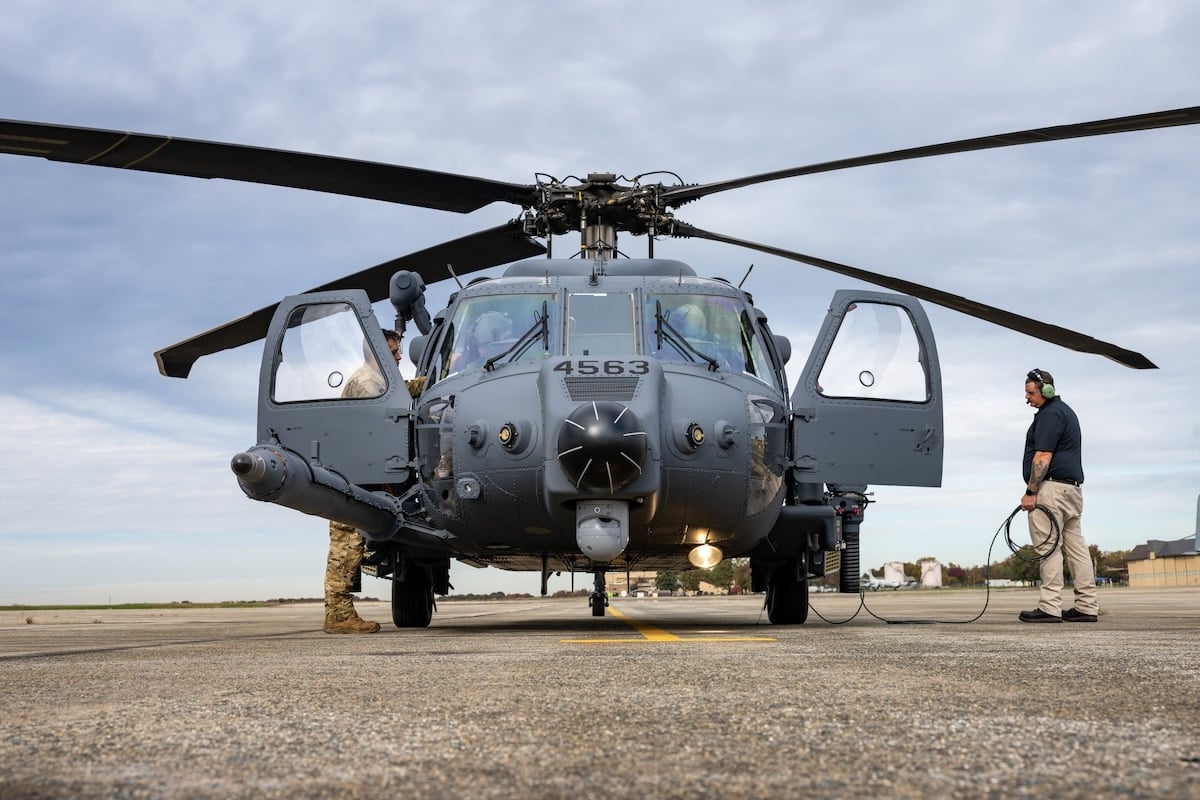
The HH-60W will initially be assigned to the 5th Helicopter Squadron, which will train crews and establish the new fleet. The 1st Helicopter Squadron will continue flying UH-1Ns to sustain Andrews’ round-the-clock national security mission during the transition.
“Our leaders recognized the need for change and decided to rapidly modernize the equipment that we use to protect our nation,” said Col. Karl W. Seekamp, commander of the 316th Wing and the installation. The Air Force said the HH-60W’s larger airframe and greater fuel capacity would extend its operational reach during crises and contingencies.
Training with certified Sikorsky aircrews is scheduled to begin in 2027. Selected graduates will qualify to teach fellow crew members HH-60W safety and familiarization procedures, building a pool of personnel in both squadrons able to operate the new helicopter and the Huey.
Capt. Joshua Lemon, a UH-1N instructor pilot and 316th Operations Group executive officer, will join the first class transitioning to the HH-60W. He said the aircraft would broaden the unit’s ability to support other military services and government agencies.
“It is inherently a joint airframe, meaning that almost any branch or agency in the area can call on us and we can lend a hand, or an aircraft,” Lemon said. “It makes us part of a bigger team.”
The 1st Helicopter Squadron has flown the UH-1N since 1971, and three aircraft that served during the Vietnam War remain in service. Its immediate-response contingency mission in support of national security requirements dates to 1969.
“It is important that we honor the legacy of what the Huey has done for safety and operations as a whole,” said Lt. Col. Jonathan Bonilla, commander of the 5th Helicopter Squadron. “We must remember this while we, as an Air Force, continue to look into the future.”