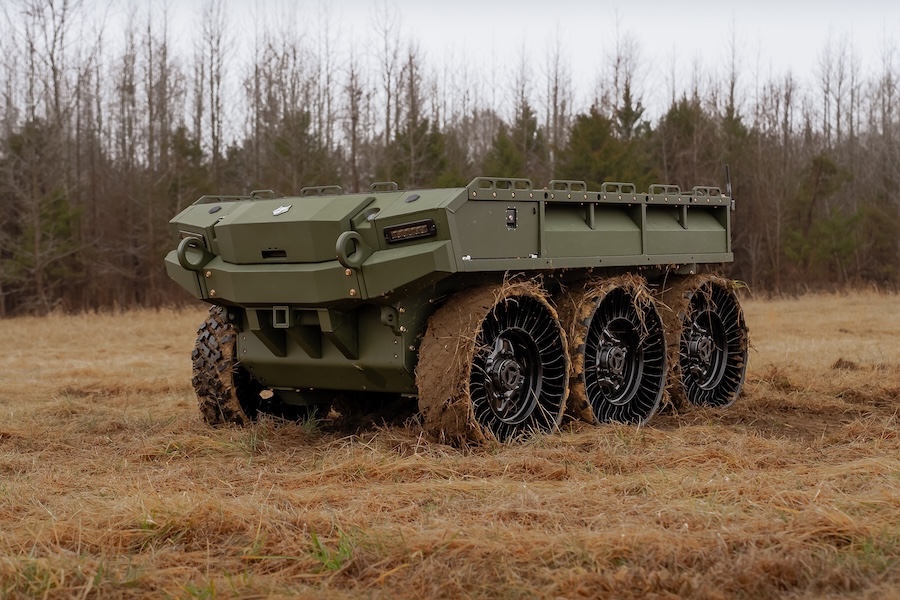
Hunter WOLF is a multi-mission robotic ground vehicle developed by HDT Robotics, which operates as BLADE, with a payload capacity of up to 2,800 pounds. The platform is designed to address the military’s “last tactical mile” by carrying supplies, equipment and personnel while reducing the physical burden on dismounted soldiers.
The vehicle is intended to extend the time troops can remain in the field, reduce fatigue and allow personnel to operate at greater distances from hazardous tasks. BLADE designed the system specifically for dismounted military operations, combining mobility, payload capacity and onboard power in a compact platform for demanding environments.
“No two Army units operate the same way,” said Tom Van Doren, President of Robotics, BLADE. “The value of these evaluations is seeing how the Hunter WOLF supports different mission sets, environments, and operational priorities. Every event helps validate the flexibility of the platform and identify new ways it can reduce workload and help keep soldiers out of harm’s way.”
During the evaluation, 82nd Airborne soldiers will operate Hunter WOLF in realistic scenarios and assess how it integrates with their missions. The division is a rapid-response formation capable of worldwide deployment within 18 hours and specializes in parachute assault and other military operations.
The vehicles will be configured with two AN/VRC-158 vehicle-mounted tactical radios, autonomous capabilities and five Universal Battery Chargers. Other configurations include casualty evacuation equipment, a 15-kilowatt mobile power export capability and extended cargo rails for carrying equipment.
“The 82nd Airborne brings a unique operational perspective centered on agility, mobility, and rapid deployment,” said John Conway, VP of Business Development, Robotics, BLADE. “Training units like this help demonstrate how the Hunter WOLF can integrate into light / mobile infantry operations while delivering the support soldiers need to stay focused on the warfighting mission.”
The 82nd Airborne evaluation follows earlier Hunter WOLF training activities with the U.S. Army’s 3rd Brigade, 10th Mountain Division, and the 101st Airborne Division. BLADE said the series of events is providing soldier feedback while testing the platform across different missions and operating environments.
The latest evaluation will give the Army another opportunity to assess the vehicle’s utility across logistics, mobility and support roles rather than a single mission set. For BLADE, the exercise will also test how Hunter WOLF can fit into a formation built around rapid deployment and highly mobile infantry operations.