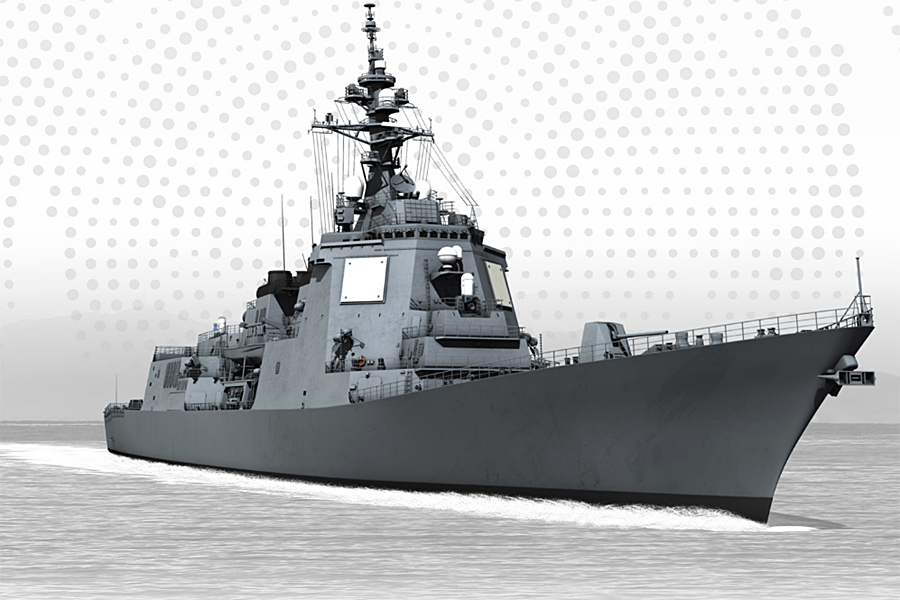
The first shipset includes shipboard radar processing equipment, power and cooling systems, and Aegis computing and display hardware alongside the four SPY-7 arrays. Once delivered to Japan, the equipment will be installed aboard the first ASEV before undergoing shipboard integration and final acceptance testing.
“Delivering the first ASEV shipset on schedule reinforces Lockheed Martin’s commitment to Japan in ensuring 21st Century Security across the Indo-Pacific region,” said Chandra Marshall, vice president of Multi-Domain Combat Solutions at Lockheed Martin. “This milestone continues to demonstrate the SPY-7 radar program’s proven maturity and showcases how rapidly our technology can move from concept to capability.”
Each of Japan’s two planned ASEVs will carry four AN/SPY-7(V)1 arrays, providing 360-degree coverage for integrated air and missile defense. Lockheed Martin said the radar is designed to detect and track multiple ballistic missile and airborne threats simultaneously.

The SPY-7 radar will operate with the Aegis Combat System, giving the new vessels a common combat-system architecture with Japan’s Kongo, Atago and Maya-class Aegis destroyers. That common architecture is also intended to support interoperability with allied naval forces, including the U.S. Navy’s Aegis fleet.
Lockheed Martin has worked with the U.S. Missile Defense Agency, Japan’s Ministry of Defense and industry partners on the program. Key SPY-7 components will also be produced in Japan to support long-term sustainment and future production of the radar system.

With the first shipset now being prepared for shipment, work is progressing on equipment for Japan’s second ASEV. Shipset 2 is scheduled for initial power-up at Lockheed Martin’s Production Test Center in Moorestown, New Jersey, later this fall.
The program remains on track for the two vessels to be commissioned in 2027 and 2028, according to Lockheed Martin. U.S. and Japanese engineers are also jointly developing maintenance procedures, training curricula and a supply-chain strategy intended to support the radar systems over their operational lives.