
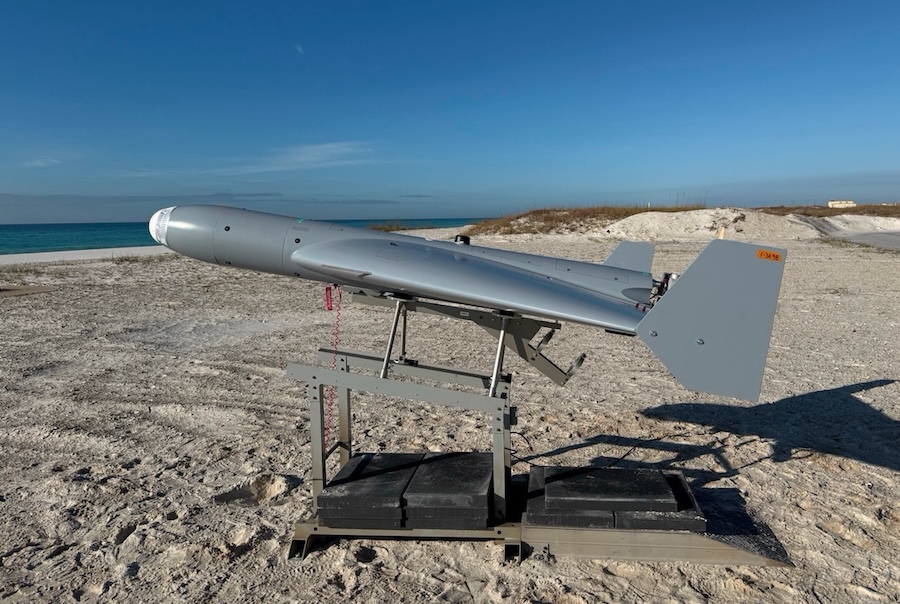
The LUCAS program is being developed by the Office of the Deputy Assistant Secretary of War for Prototyping and Experimentation under OUSW R&E. Its goal is to provide affordable mass by fielding large numbers of low-cost systems that can operate together to overwhelm adversary defenses and increase warfighter capability at scale.
Hivemind will act as the AI pilot for LUCAS, allowing groups of drones to coordinate, maneuver and adapt in real time based on warfighter input. Shield AI said the integration will include an operational demonstration this fall, in which a single operator will command a swarm of autonomous systems operating together.
The company said the effort represents a step toward operationalizing collaborative autonomy. The approach involves teams of autonomous systems working together in dynamic and communications-constrained environments under the supervision of one operator.
“LUCAS is about delivering affordable mass, but mass without coordination is limited in value,” said Brandon Tseng, president and co-founder of Shield AI. “Hivemind is the AI pilot that makes that mass intelligent.”
“It’s the autonomy layer that enables teams of drones to sense, decide, and act at scale,” Tseng added. “We’re proud to partner with OUSW R&E to put this capability in the hands of the warfighter at the speed of relevance.”
Shield AI said Hivemind simplifies the operation of networked unmanned systems by allowing a single operator to command multiple platforms during complex coordinated missions. The company said humans remain responsible for strike decisions while autonomy manages navigation, coordination and execution.
According to Shield AI, the system is intended to shorten the time from detection to action across the kill chain. Hivemind enables platforms to sense, decide and act independently without human intervention.
Unlike traditional autopilots that remain tied to preplanned routes, Hivemind can dynamically reroute mission plans, respond to unexpected conditions, avoid obstacles and execute complex tasks. Shield AI said the capability is designed to operate safely and effectively in changing mission environments.
The selection builds on Hivemind’s use across U.S. and allied defense platforms. These include the U.S. Air Force’s Collaborative Combat Aircraft program aboard Anduril’s YFQ-44A, the U.S. Navy BQM-177 test aircraft, the Airbus UH-72A Lakota helicopter and the Destinus Hornet platform.