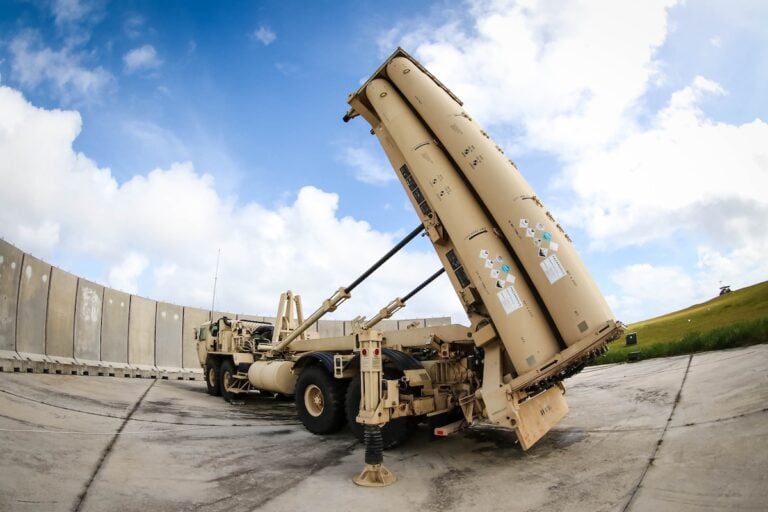
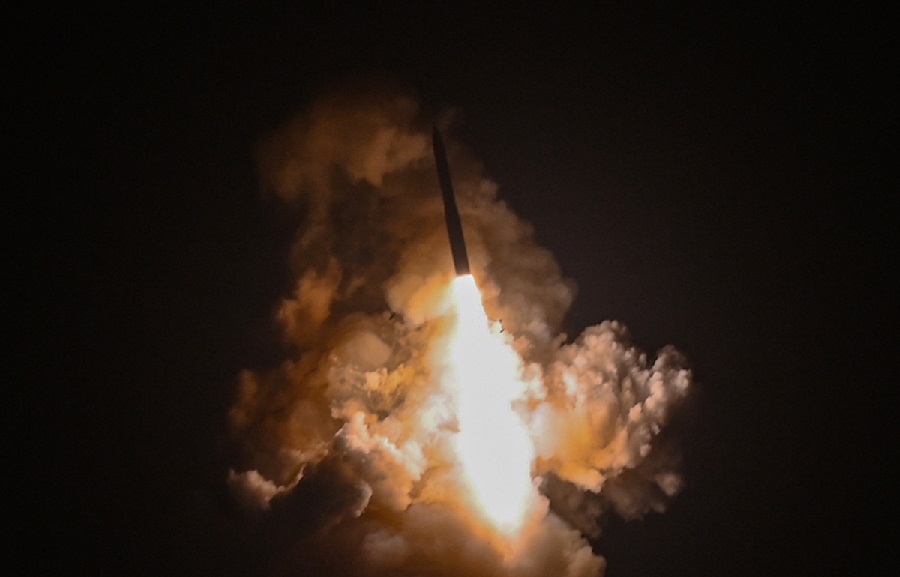
SIPRI said the nine nuclear-armed states continued programmes to modernise and enhance their nuclear arsenals in 2025. The states are the United States, Russia, the United Kingdom, France, China, India, Pakistan, North Korea and Israel.
Most of those states deployed new nuclear-armed or nuclear-capable weapon systems during the year. SIPRI estimated the total global inventory at 12,187 warheads in January 2026.
Of that total, about 9,745 warheads were in military stockpiles for potential use. An estimated 4,012 warheads were deployed with missiles and aircraft, while the rest were held in central storage.
Between 2,100 and 2,200 deployed warheads were kept on high operational alert on ballistic missiles. SIPRI said nearly all of those warheads belonged to Russia or the United States, and to a lesser extent France and the United Kingdom.
China and India may now occasionally deploy a small number of warheads mounted on missiles during peacetime, SIPRI said. The institute said this reflects wider changes in nuclear posture among several nuclear-armed states.
“Influential voices, including some world leaders, are advocating nuclear weapons as a guarantee against attack by a hostile state. But making national defence and security strategies dependent—or more dependent—on nuclear weapons could significantly increase nuclear risks,” said SIPRI Director Karim Haggag.
“The dangers associated with nuclear weapons are growing due to advances in weapon technology, the breakdown of nuclear arms control and heightened geopolitical tensions, among a range of other factors. At the same time, world events—not least the outbreak of conflict between nuclear-armed India and Pakistan—are challenging nuclear deterrence logic,” Haggag said.
Since the end of the Cold War, the dismantlement of retired warheads by Russia and the United States has usually exceeded the deployment of new warheads. SIPRI said this produced an overall annual decline in the global nuclear weapons inventory, but the trend is likely to be reversed as dismantlement slows and new deployments accelerate.
“The evidence is growing that the nuclear weapon states are sidelining, and even walking away from, their disarmament commitments and are instead flexing their nuclear muscles,” said Hans M. Kristensen, Associate Senior Fellow with SIPRI’s Weapons of Mass Destruction Programme and Director of the Nuclear Information Project at the Federation of American Scientists. “By reaching for nuclear solutions, states are creating new risks and fuelling arms-race dynamics.”
Russia and the United States together possess around 83% of all stockpiled nuclear warheads, meaning usable warheads. SIPRI said that combined share is shrinking somewhat because other nuclear arsenals are growing.
The Russian and US military stockpiles appeared to remain relatively stable in 2025. SIPRI said both countries’ extensive modernisation programmes seem likely to increase the size and diversity of their arsenals in the future.
The US nuclear modernisation programme continued to progress in 2025 but faced planning and funding challenges. SIPRI said those challenges are likely to further delay the programme and significantly increase its cost.
The institute said efforts to add new non-strategic nuclear weapons to the US arsenal would create further budgetary and logistical pressure. It said that pressure would deepen because of the Trump administration’s planned Golden Dome missile-defence system, estimated to cost $1.2 trillion.
Russia’s nuclear modernisation programme also faced challenges in 2025, according to SIPRI. Another test launch of the Sarmat intercontinental ballistic missile failed, while Western sanctions and demands linked to the war in Ukraine appeared to affect the programme.
SIPRI said Russia claimed that the Burevestnik nuclear-powered ground-launched cruise missile had achieved a successful flight test over more than 14,000 km in 2025 after several failures. Russia has also started building a forward-operating base in Belarus for its dual-capable Oreshnik intermediate-range ballistic missile.
Oreshnik missiles have been used against Ukraine with conventional warheads, most recently in May 2026, SIPRI said. The significant increase in Russia’s non-strategic nuclear warheads predicted by the United States in 2020 has still not materialised.
SIPRI said both Russian and US nuclear deployments are likely to rise in the years ahead. A Russian increase would mainly result from modernising remaining strategic forces to carry more warheads on each missile.
A US increase could come from deploying more warheads on existing launchers, reactivating empty launchers and adding new non-strategic nuclear weapons. SIPRI said nuclear advocates in the United States are pushing for such steps in response to China’s new nuclear deployments.
The expiry of the 2010 New START treaty in February has added uncertainty over future US and Russian strategic nuclear force levels. SIPRI said the absence of a successor agreement is one of several factors weakening nuclear arms control.
SIPRI estimated that China now has around 620 nuclear warheads. It said China is expanding its nuclear arsenal faster than any other country and displayed several new nuclear systems during its 2025 military parade.
By January 2026, China had loaded hundreds of missiles into three large missile silo fields in the north of the country, SIPRI said. It was also working to complete 30 silos in three mountainous areas in the east.
Depending on how China structures its forces, it could have at least as many intercontinental ballistic missiles as either Russia or the United States by the turn of the decade. SIPRI said that even if China exceeds 1,000 warheads by 2030, it would still have only about one quarter of each of the current Russian and US nuclear stockpiles.
The United Kingdom is not believed to have increased its nuclear arsenal in 2025. SIPRI said its operational warhead stockpile is expected to grow after the 2021 Integrated Review raised the ceiling on warhead numbers.
The 2025 Strategic Defence Review reiterated the UK policy of no longer publishing the size of its nuclear arsenal. SIPRI said this reduced transparency about the UK’s nuclear forces.
In 2025, the UK also announced plans to buy 12 nuclear-capable F-35A combat aircraft from the United States and equip them with US nuclear bombs. SIPRI said the plan would bring the UK into NATO’s nuclear-sharing arrangements and reverse the 1990s decision to denuclearise the Royal Air Force.
France continued upgrading its nuclear-powered ballistic missile submarine force in 2025. SIPRI said France introduced the enhanced M51.3 submarine-launched ballistic missile and continued development of a third-generation ballistic missile submarine.
The French government also announced plans to establish a new nuclear airbase in eastern France for two new nuclear-capable Rafale aircraft squadrons. Those aircraft are to be equipped with France’s next-generation hypersonic nuclear air-launched cruise missile.
In March 2026, President Emmanuel Macron announced that he had ordered an increase in the number of warheads in the French nuclear arsenal. He also said the government would no longer publicly communicate the size of the arsenal.
India is believed to have slightly expanded its nuclear arsenal again in 2025 and continued developing new nuclear delivery systems. SIPRI said the programme is increasingly focused on long-range weapons capable of reaching targets across China, while India’s rivalry with Pakistan remains central to planning.
Pakistan continued developing new delivery systems and accumulating fissile material in 2025. SIPRI said this suggests its nuclear arsenal could expand over the coming decade.
The brief armed conflict between India and Pakistan in May 2025 included Indian attacks on Pakistani air and missile bases likely to have nuclear-related roles. SIPRI said both sides took steps to avoid escalation.
North Korea continued developing its nuclear capabilities to meet its stated goal of “exponentially” expanding its nuclear arsenal. SIPRI estimated that North Korea may have assembled around 60 warheads and has enough fissile material to produce at least 30 more.
SIPRI said North Korea is accelerating fissile material production and continued to unveil and test new missile systems in 2025. These included the “next-generation” solid-fuelled Hwasong-20 intercontinental ballistic missile and medium-range, highly manoeuvrable systems designed to evade missile defences.
Israel does not publicly acknowledge possessing nuclear weapons but is believed to be modernising its arsenal, SIPRI said. In 2025, Israel intensified construction at a new site at the Negev Nuclear Research Center near Dimona, which SIPRI said could be related to its nuclear capabilities.
SIPRI said nuclear programmes have always been surrounded by secrecy, but nuclear-armed states have moved further towards ambiguity and opacity in recent years. The institute said this trend is likely to continue after the end of New START.
“Along with the reduction in transparency and the loss of diplomatic channels for crisis management, the drift towards authoritarianism in some nuclear-armed states is contributing to even greater unpredictability,” said Matt Korda, Associate Senior Researcher with SIPRI’s Weapons of Mass Destruction Programme and Associate Director for the Nuclear Information Project at FAS. “We can no longer assume that leaders operating within such systems will receive accurate data during nuclear crises, nor that they will act rationally during periods of heightened tension.”
SIPRI said developments and national debates in East Asia, Europe and the Middle East in 2025 pointed to a growing role for nuclear weapons in some non-nuclear-armed states’ security and defence strategies. Several European states, including Germany, indicated interest in supplementing NATO nuclear-sharing arrangements focused on US weapons with similar arrangements involving France and the UK.
President Macron said in March 2026 that France was already in dialogue with Germany and the UK, and that several other European states were interested in joining. SIPRI also noted that Belarus and Russia have repeatedly claimed that Russia has deployed nuclear weapons on Belarusian territory.
In December 2025, Russia released a video showing the dual-capable Oreshnik intermediate-range ballistic missile operating inside Belarus. SIPRI said these developments are taking place as the global nuclear non-proliferation regime weakens.
The 2026 Review Conference of states parties to the 1968 Nuclear Non-Proliferation Treaty ended on 22 May without a final outcome document. SIPRI said it was the third consecutive Review Conference to close without such an agreement.
“The fact that the states parties to the Non-Proliferation Treaty once again failed to reach agreement on an outcome document is another blow to the grand bargain at the heart of the treaty: that other states will not develop their own nuclear forces if the nuclear weapon states move towards disarmament,” Haggag said. “The absence of a successor agreement to New START, the modernization of nuclear forces and plans to increase the deployment of nuclear weapons are all likely to further undermine the legitimacy of the Non-Proliferation Treaty. This will make it more difficult for the states parties to collectively address the many challenges across the nuclear landscape, including in the Middle East and East Asia.”
In his introduction to the 57th edition of the SIPRI Yearbook, Haggag also addressed wider sources of global disorder and insecurity. He described the resurgence of war between technologically advanced states and the fraying of US relations with its allies as major influences on global security dynamics.
“Two phenomena have a particularly notable impact on global security dynamics today: the resurgence of war between technologically advanced states and the fraying of the USA’s relationships with its allies,” said Haggag. “The intersection of these drivers is making global security politics increasingly complex and is deepening insecurity in many parts of the world.”
Haggag warned that a self-reinforcing cycle appears to have taken hold as great powers seek to protect their security and geopolitical dominance in ways that deepen insecurity and vulnerability. He said the assumption that trade interdependence would generate peace and prosperity has given way to the growing weaponisation of trade, commodities, technology, supply chains, water and energy flows.
SIPRI said unchecked current trends could undermine strategic stability. The Yearbook also provides data and analysis on military expenditure, international arms transfers, arms production, peace operations, armed conflicts, cyber and digital threats, space security governance and related issues.