Thales said the system will enhance Canada’s maritime security and Arctic defence capacity by strengthening sensor capabilities. The contract aligns with Canada’s broader objectives to strengthen defence capabilities and industrial partnerships.
The acquisition makes the Royal Canadian Navy the 20th navy to select the CAPTAS system. Thales said the order is aligned with Canada’s Defence Industrial Strategy and the country’s new Build–Partner–Buy framework.
Under that framework, the Government of Canada is strengthening cooperation with the United Kingdom and other trusted European allies. The aim is to ensure the Royal Canadian Navy has world-leading anti-submarine warfare sensing capabilities while delivering economic benefits to Canada through the Industrial and Technological Benefits Policy.
Thales said it plans to work closely with Canadian industry partners to support the sonar systems throughout their full life cycle. The company said this approach will help ensure that maintenance and upgrade capabilities remain under Canada’s sovereign control.
The S2087 is a long-range, low-frequency towed array sonar. Thales said its delivery will provide a major enhancement to the undersea domain capabilities of Canada’s next-generation combat fleet.
The system is designed to detect and track quiet submarines over long ranges. It is intended for use in complex littoral and open-ocean environments.
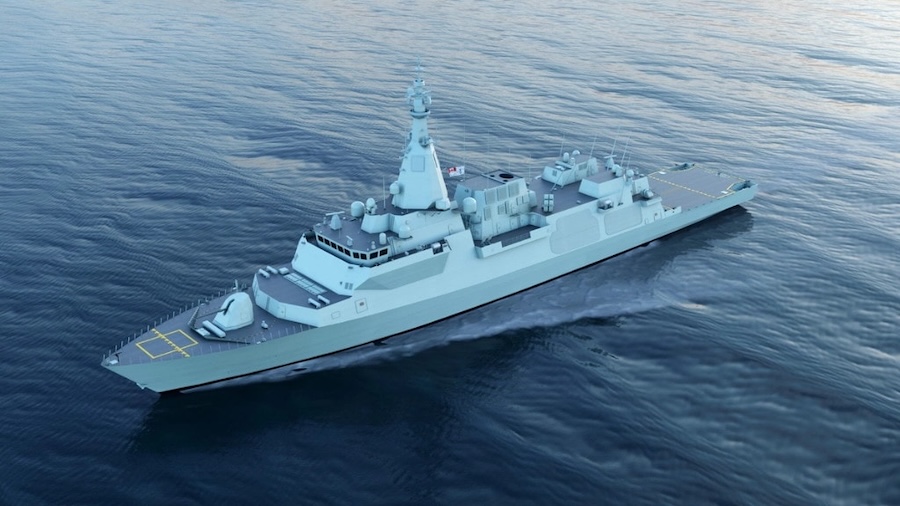
Thales said integration of the S2087 into the River-class destroyers supports the goal of achieving 75% fleet serviceability. The company said this will be supported by the system’s operational maturity and long-term supportability.
“The S2087 adds a critical layer of capability to the River class destroyers, ensuring Canada’s surface combatants are equipped to operate effectively in contested maritime environments,” said Ian Krepps, CEO, Thales Canada.
“As we deliver this advanced sonar system, Thales remains deeply committed to Canada—investing in local expertise, strengthening sovereign capabilities, and working alongside Canadian industry to safeguard the nation’s security for decades to come,” Krepps said.
The S2087 is currently deployed by the British Royal Navy and has been selected for Australia’s Hunter-class frigates. Thales said the system strengthens interoperability among Five Eyes and NATO allies.
The S2087 belongs to Thales’ CAPTAS sonar family. CAPTAS was originally developed in close partnership with the British, French and Italian navies.
Thales said CAPTAS has been chosen by 20 navies worldwide. In 2025, the company celebrated the order of its 100th CAPTAS variable immersion towed sonar system.
Lockheed Martin Canada is serving as the Combat Systems Integrator for the River-class destroyer programme. The company leads a team of global partners to deliver an integrated, open architecture solution tailored to the operational needs of the Canadian Armed Forces.
Thales said its contribution reinforces the programme’s focus on proven technologies, interoperability with allied navies and long-term supportability. Lockheed Martin Canada said the selection also supports Canada’s industrial base.
“The River-class Destroyer Program delivers significant economic benefits to Canada, bringing advancements in Canadian technology and manufacturing all along the Canadian supply chain,” said Stephen Isaacs, General Manager for Lockheed Martin Canada Rotary & Missions Systems.
“This selection is a prime example of how our partners contribute to that Canadian ecosystem,” Isaacs said.
The River-class destroyers will form the backbone of the Royal Canadian Navy. They are planned to replace the Halifax-class frigates and Iroquois-class destroyers.