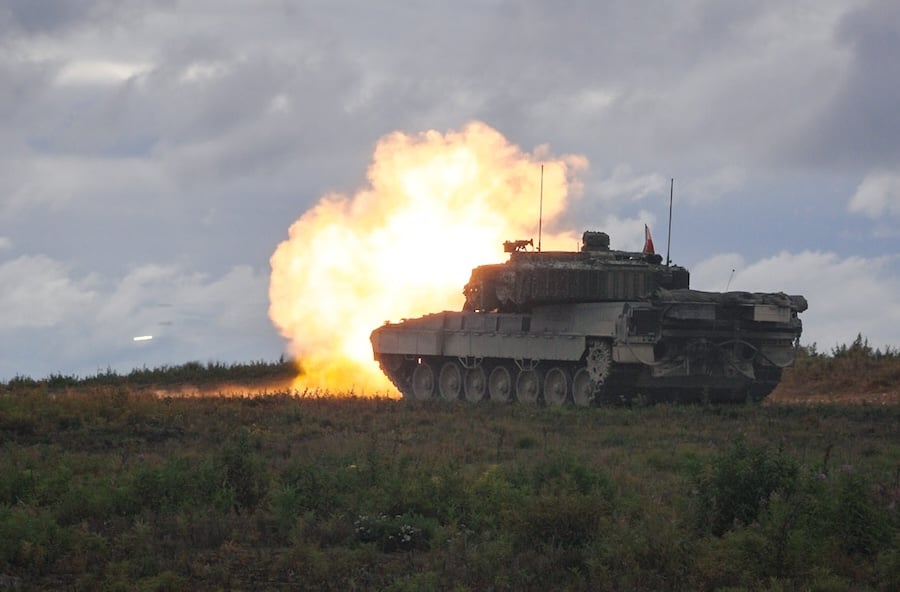
The tank squadron first zeroed its weapons before conducting tactical scenarios involving live fire. Crews then practised treating a wounded crew member and handing the casualty over to the medical platoon.
Medical personnel used the scenarios to rehearse their procedures in realistic conditions. The training also included recovery of a disabled tank, allowing the squadron to practise restoring mobility after a vehicle breakdown.
The battalion’s medical platoon, supply transport platoon and recovery section supported both the deployment to Estonia and the tactical drills. The Danish Armed Forces said the training was intended to build soldiers’ experience and improve their effectiveness within a combined unit.
Heavy CARDOM mortars provided artillery support based on the tank squadron’s needs and requests. The mortar platoon practised coordinating its actions with the tanks while refining its own operating procedures.
On receiving a fire order, the platoon moved into a firing position, fired and quickly withdrew. The sequence was intended to reflect battlefield requirements for coordinated fire support and rapid movement.
The activity also rehearsed the battalion’s ability to move and employ its forces. Supply transport personnel provided food, fuel and ammunition while working alongside the combat units.
The Danish Armed Forces said the training developed individual skills and coordination across the battalion. It also linked the activity to Denmark’s presence in the Baltic region and its readiness to contribute to regional defence if necessary.