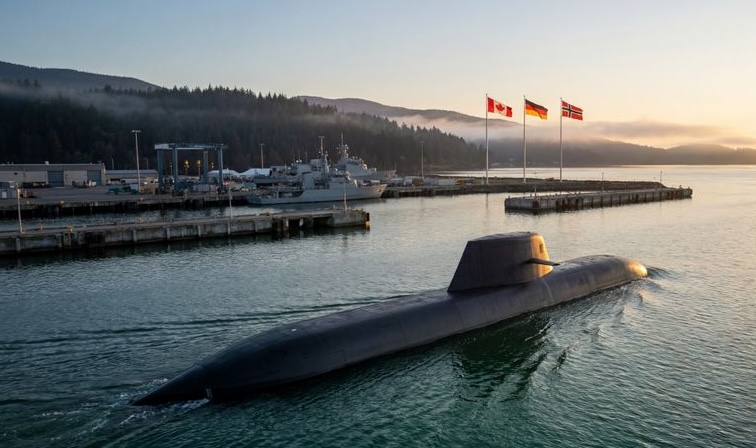
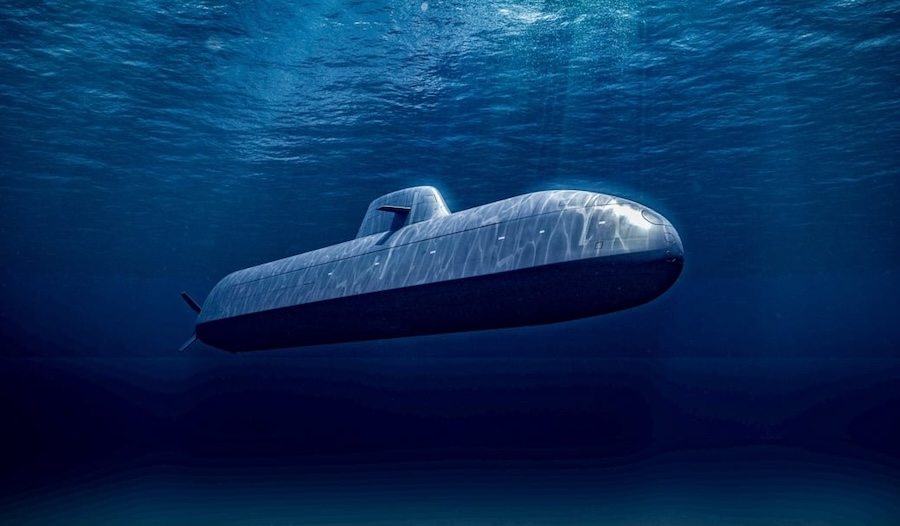
Canada selected Team 212CD as Preferred Supplier for the programme, which could deliver up to 12 submarines. The decision opens contract negotiations with Germany and Norway and creates a possible long-term industrial framework for Canadian companies.
TKMS said the proposal would deliver more than CAD 86 billion in economic impact across Canada. It also said the project would support more than 650,000 job-years over its lifetime.
The offer is built around more than submarine construction. TKMS said it would establish a sovereign Canadian sustainment enterprise, support workforce development, transfer skills and strengthen domestic supply chains.
Canadian companies would also gain access to a broader international defence ecosystem over time. TKMS said that would create a new dimension of industrial collaboration between Canada, Germany and Norway.
Kongsberg is part of that wider industrial proposition. The Norwegian group is a key partner in the 212CD programme and supplies major elements of the ORCCA combat system through kta naval systems.
Kongsberg said it is already established in Canada through operations, deliveries and cooperation with local customers and industry partners. The company said it will make further investments and expand industrial cooperation with Canadian industry as the programme advances.
“This is a big milestone for the 212CD program and for the industrial cooperation between Canada, Norway and Germany. Kongsberg has world-leading combat system experience spanning decades, and we look forward to contributing further to a programme that strengthens allied underwater capabilities.” Said Eirik Lie, CEO of Kongsberg.
The combat-system work is a key part of the offer’s industrial depth. Kta naval systems, owned by Kongsberg, TKMS and Atlas Elektronik, was established in 2017 to develop next-generation combat systems for non-nuclear submarines.
TKMS said the Canadian project would be the largest single order in its history. The potential extension of the 212CD programme beyond Germany and Norway would increase TKMS’s current order backlog by more than 50%.
“This is an important day – for Canada, Germany and Norway,” said Oliver Burkhard, CEO at TKMS. “With the CPSP, we are proud to take on the largest single order in the history of TKMS – and with it comes a clear promise: we will deliver.”
Burkhard framed the Canadian offer as a long-term alliance rather than a single procurement. “The CPSP is more than a procurement program; it is the foundation of a long-term strategic partnership between trusted allies.”
“Together with Canada, we are taking the next step as NATO partners – built on trust, shared values and a common commitment to defence. We stand ready to work alongside the Government of Canada, Canadian industry and our partners in Germany and Norway to deliver a world-class submarine capability that will strengthen security, create economic opportunity and generate lasting benefits for future generations.”
“Last year our independence marked the beginning of a new era for TKMS. The CPSP is the next chapter of that journey. Canada will benefit from the full force of the current unique European program – the combined strength of Germany and Norway, united in purpose, and committed to delivering the very best and to create a new kind of transatlantic coalition.”
Canada’s participation would make it an equal partner in the existing 212CD cooperation with Norway and Germany, according to Kongsberg. The programme is designed to support joint development, standardisation and long-term operational effect for allied navies.
The submarine itself is being promoted as suited to Arctic, North Atlantic and Pacific requirements. TKMS said the Type 212CD was co-designed by an Arctic nation and was “built for the North, not simply adapted to it.”
Dr. Volkmar Dinstuhl, Chairman of the Supervisory Board at TKMS, said the selection showed confidence in the programme. “Canada’s trust in Team 212CD is testament to TKMS’s international competitiveness.”
“This is a very important demonstration of NATO’s capacity to act and the capabilities of the German and European defence industries. The fact that Canada is committing to a joint submarine capability with the 212CD together with Germany and Norway underlines the strong and trustful security and industrial cooperation between close allies.”
“With this decision, TKMS confirms its role as a reliable strategic partner for maritime security worldwide. A good day for Canada, Germany and Norway. A good day for TKMS as a leading maritime powerhouse.”
Canada said its submarine programme would include up to 12 modern submarines, according to Kongsberg. The company said contracting is expected no later than the end of 2027, with the first four submarines delivered ahead of schedule in 2034.
TKMS said it expects to deliver the first 212CD submarine by 2033. The next phase will cover contract negotiations, industrial planning, workforce development and implementation with Canada, Germany, Norway and Canadian industry partners.
Miguel López, CEO of thyssenkrupp AG, said the Canadian decision supported TKMS’s strategy after its spin-off. “Canada’s decision in favour of Team 212CD is a tremendous success for TKMS – and a powerful validation of our strategy.”
“With the spin-off of TKMS, we laid the foundation for the company to unfold its full potential as an independent champion in the international naval business. Today’s announcement proves that this was the right path.”
“We are convinced that this trilateral partnership between Canada, Germany and Norway will create lasting value – for TKMS, for our shareholders and for the transatlantic security architecture. thyssenkrupp stands firmly by TKMS’s side as the company takes this important step,” said Miguel López, CEO of thyssenkrupp AG.
For Canadian industry, the promise is scale, duration and access. The 212CD offer links submarine sustainment, combat-system work, skills development and local supply-chain participation to a multi-decade allied programme.