
The commander-directed exercise ran from August 4 to August 7. Only a small group of planners knew it was coming, leaving operational units without the preparation period usually provided before a major test.
The format gave commanders a direct view of how operations, maintenance and security teams perform under pressure. Units had to rely on their normal command-and-control channels and solve problems in real time.
“An effective nuclear deterrent must be ready 24/7/365, and Sentinel Dragon proved that our standard, day-to-day posture is highly lethal and fully prepared,” said Maj. Gen. Colin Connor, commander of 20th Air Force. “Readiness is not a state we ramp up to achieve on test day- it is our baseline operational standard.”
The assessment centred on three areas: simulator evaluations for missile operators, maintenance under pressure and the recapture of a launch facility. The operator tests followed governing directives and measured personnel against established performance requirements.
First-tour crew members were a particular focus because they form a large part of the operational force. The exercise tested whether they could carry out each required step precisely under high-pressure conditions.
“The biggest success was simply proving we can execute a complex, multi-wing exercise with zero notice,” said Maj. Jared Lynd, chief of the 20th Air Force Exercise Branch. “Our ops crews performed exceptionally well under pressure.”
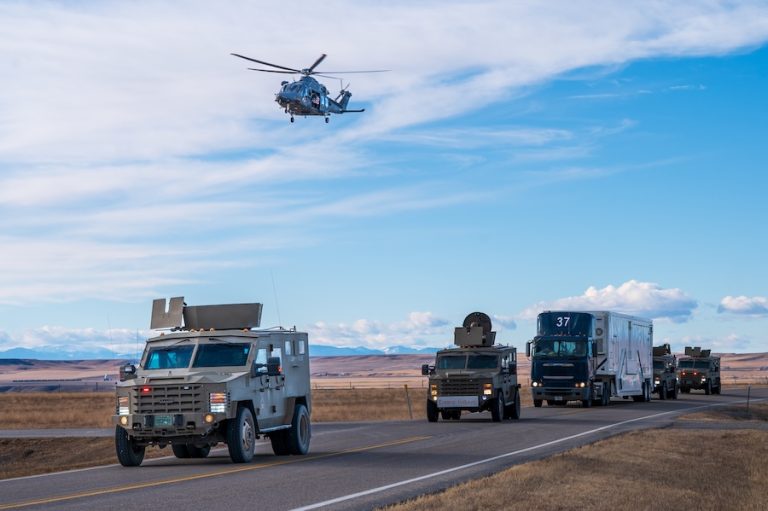
The launch-facility recapture brought ground and air units into a single tactical scenario. Security forces managed complex airspace, responded to a simulated drone threat and coordinated with the 582nd Helicopter Group for insertion and air support.
At the same time, operations and maintenance personnel worked in the launch capsule and in the field. Their role was to keep the weapon system secure and mission-capable throughout the response.
The 20th Air Force will use observations from the exercise to refine tactics and procedures. It also plans to standardise simulator scripts and training materials across its missile wings.
The command expects common training products to return hundreds of administrative hours to instructors. That would allow training teams to spend more time on operational performance and combat readiness.