
Increment 2 was previously managed under the Major Capability Acquisition pathway. The Army moved it to the Middle Tier of Acquisition-Rapid Fielding framework after reviewing technical maturity, production readiness and the operational threat environment.
The new approach allows the programme to reuse Increment 1 hardware, software and test results. That decision shortens verification timelines, speeds integration and provides early production options while new technology continues to mature.
The Army plans to combine the ability to engage moving maritime targets with residual capabilities from Increment 1. The programme forms part of a wider shift towards faster weapons development within Portfolio Management Executive Offensive Fires.
“The PrSM program serves as a prime example for how PME Offensive Fires aggressively defines, assigns and manages risk throughout the acquisition life cycle,” said Lt. Col. Daniel Newell, the programme’s product manager. “By prioritizing operational speed, iterative development and informed decision-making, the program has achieved a healthy balance between operational urgency and technical and programmatic risk through an incremental development approach.”
Rather than waiting for a fully mature system, the Army delivered early PrSM missiles that provided an operational combat capability. Technical risks were carried into later development and are being addressed through modular upgrades supported by an open-systems architecture.
The programme has also accelerated design reviews, production decisions and changes to requirements. Army officials said the process allows decisions to be made while technology is still evolving.
Limited User Tests at White Sands Missile Range in New Mexico in May and September 2025 assessed the missile under operational conditions. The tests included GPS jamming, updated software and realistic mission scenarios.
Cybersecurity assessments ran in parallel with operational testing to identify vulnerabilities before fielding. The Army also conducted test launches against representative threat countermeasures to assess reliability and lethality.
“Ultimately, these proactive changes ensure that risk ownership is deeply embedded in the acquisition process—from high-level decisions to technical design and test planning—reducing the likelihood of late-stage surprises, shortening developmental timelines and significantly increasing the probability of delivering a combat-ready system to the warfighter,” Newell said. The approach is intended to identify problems early enough for the programme to validate fixes before deployment.
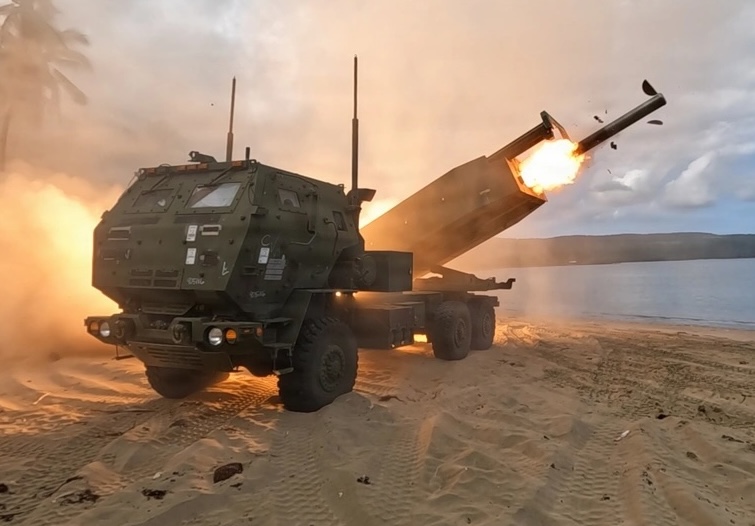
Soldier feedback has shaped PrSM design decisions, training and operational requirements. The Army retained compatibility with HIMARS and the M270A2 Multiple Launch Rocket System after troops stressed the importance of familiar equipment and procedures.
That compatibility allows units to move from the Army Tactical Missile System to PrSM without introducing a new launcher. It also limits additional training and reduces the effect of the transition on unit readiness.
Soldiers fired two Increment 1 missiles from a HIMARS launcher at Fort Wingate Launch Complex in New Mexico on Dec. 11, 2024. Their experience informed subsequent assessments of mission planning, usability, training and operational integration.
Further feedback was collected during testing in May and September 2025. Soldiers validated the system’s performance and found that the training provided before the events was adequate.
For Increment 2, the programme is consulting users across the Army, Navy and Marine Corps. Regular discussions with U.S. Army Pacific are helping refine operational scenarios, information requirements and cross-service interoperability.
The acquisition changes are also reshaping the workforce within Offensive Fires. The organisation is expanding cross-training, hiring personnel and working with Warfighting Acquisition University to strengthen rapid-acquisition expertise.
“We’re also training PrSM personnel on each other’s duties and responsibilities, hiring new talent and always working to ‘build the bench’ to ensure there is redundancy within the team,” Newell said. “Critical thinking and problem-solving skills have always been significant but are becoming more and more essential.”
“Looking ahead, success for the future of the acquisition workforce means recognizing that the greatest risk is not technical imperfection, but operational delay,” Newell said. “Success is no longer defined by delivering a perfectly mature system at the end of a prolonged, decade-long cycle.”