Domestic Shield is a Department of War effort to improve protection for risk-prioritized facilities and assets within the United States. The latest awards cover technologies spanning drone detection, tracking and engagement, allowing equipment to be selected for specific operational needs.
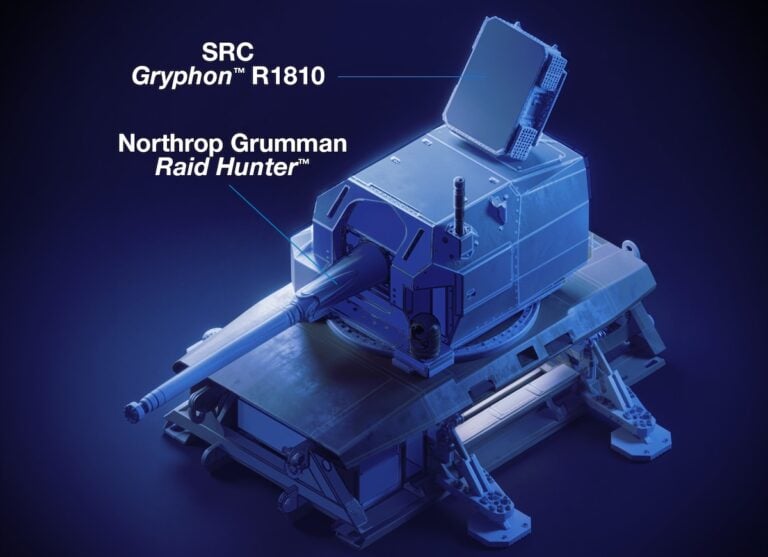
The procurement includes optical scopes that help soldiers engage drones with standard rifles and automated robotic weapon stations. Compact radars and long-range tracking cameras provide additional detection and surveillance options.
JIATF 401 established multiple-award indefinite-delivery/indefinite-quantity contracts to support Domestic Shield, its counter-unmanned aircraft systems marketplace and other counter-drone requirements. The marketplace provides a streamlined route to identify, evaluate and transition commercial capabilities.
“This multi-vendor marketplace enforces strict open architecture standards, breaking proprietary vendor lock and ensuring new technologies can immediately integrate into our existing defense networks,” said Brent G. Ingraham, assistant secretary of the Army for Acquisition, Logistics and Technology. “By driving continuous competition among both prime vendors and non-traditional commercial innovators, we are securing the best value for the American taxpayer and ensuring our warfighters remain ahead of our adversaries.”
Allen Control Systems, Digital Force Technologies, DroneShield, Napatree Technology, RADA Technologies, SRC and L3Harris WESCAM each received a $500 million base IDIQ award. Echodyne and PVP Advanced EO Systems each received $250 million base awards, while SmartShooter received a $150 million award.
The task force coordinates its acquisition efforts with the Office of the Assistant Secretary of the Army for Acquisition, Logistics and Technology. It said the approach draws on applicable test data and lifecycle considerations to match layered counter-drone capabilities to validated requirements.
“JIATF-401 is continuously working with the military services to provide the counter-UAS capabilities needed to protect warfighters and installations,” said U.S. Army Brig. Gen. Matt Ross, the task force’s director. “Our approach allows us to identify the right capabilities for specific operational requirements and rapidly deliver those capabilities to the warfighter.”
Echodyne’s radar procurement pathway
Echodyne’s contract provides an ordering period of up to 36 months for capabilities supporting force protection, base defense and counter-drone operations in the United States and abroad. The $250 million figure is the agreement’s ceiling, rather than the value of an individual delivery order.
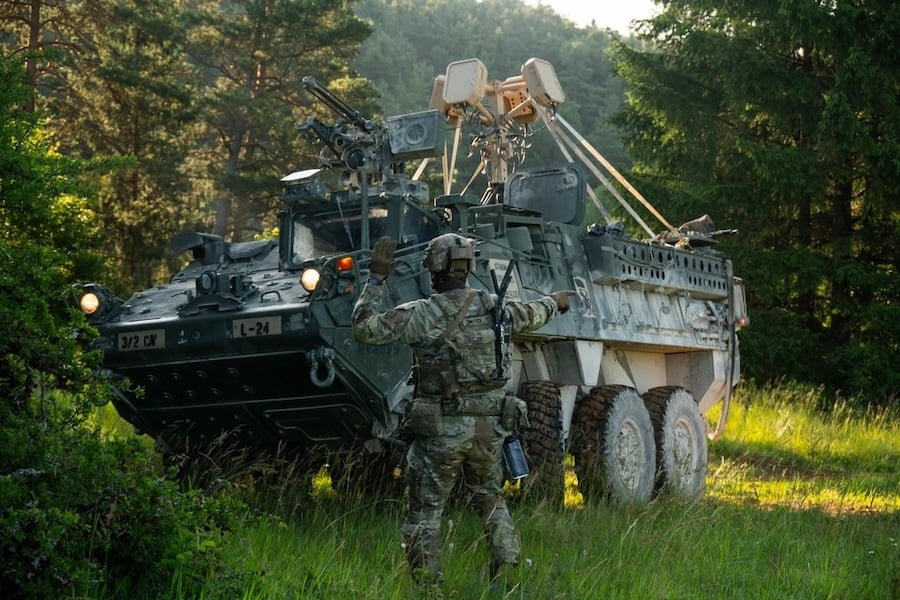
The agreement makes Echodyne’s MESA radars available through the JIATF 401 marketplace for U.S. and allied nations. The systems support fixed installations, portable deployments and on-the-move defense missions.
“Counter-drone defense depends on knowing precisely where a threat is, maintaining that track and rapidly getting useful data to the systems that can respond,” said Eben Frankenberg, Echodyne’s chief executive. “MESA gives operators that precision in a radar they can deploy across missions and platforms.”
MESA is Echodyne’s software-defined metamaterials electronically scanned array architecture. It combines electronic beam steering with a compact, solid-state design and supports updates as threats and operational requirements change.
Echodyne’s EchoShield medium-range radar provides persistent tracks at a 10 Hz update rate, according to the company. Its stated angular accuracy is less than 0.5 degrees in both azimuth and elevation.
Artificial intelligence and machine-learning models classify objects, including fixed-wing and multirotor drones. The resulting track data helps operators and connected systems distinguish threats and support a response.
Echodyne said the radar’s low size, weight and power requirements allow deployment across different platforms and missions. That flexibility aligns with the task force’s approach of selecting equipment for specific protection requirements.
Production capacity and broader integration
Echodyne supplies radars to defense companies and said its products are integrated into hundreds of counter-drone systems worldwide. Many of those systems are also available through the task force’s marketplace.
The company recently opened an 86,350-square-foot manufacturing facility in Washington State. It said the plant can manufacture more than 30,000 radars annually, expanding its ability to meet demand.
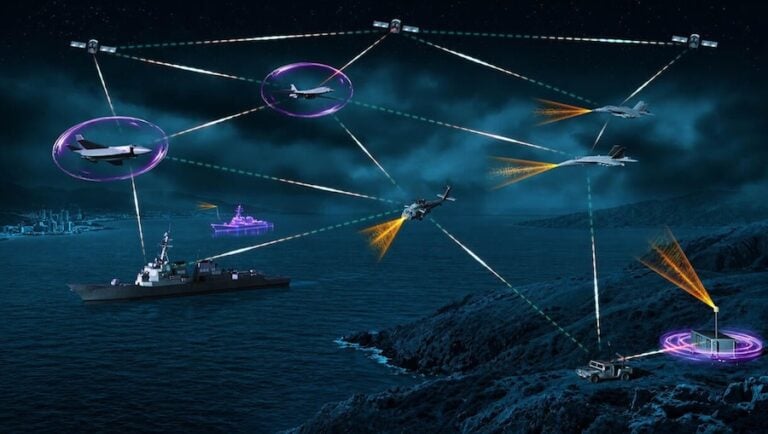
The wider Domestic Shield awards provide access to both sensors and engagement technologies from multiple suppliers. JIATF 401 said the procurement pathways support layered defenses against evolving unmanned aircraft threats at home and abroad.