
IonStrike is described as a radar-agnostic, low-cost kinetic interceptor that could provide a new mid-range intercept capability for air defense formations. The Army said the system is intended for units facing increasingly complex unmanned aircraft threats.
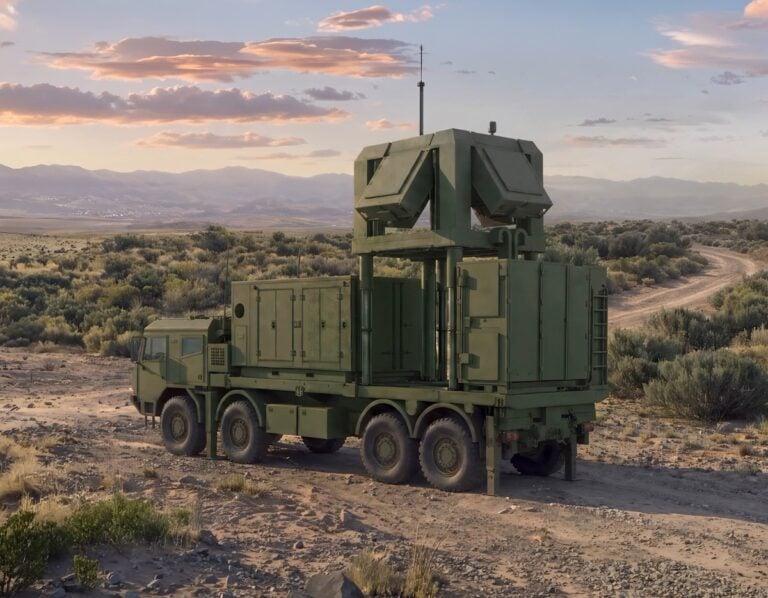
The interceptor integrates with existing command-and-control architectures, including the Forward Area Air Defense System and Integrated Battle Command System Maneuver. That integration is intended to allow soldiers to use systems they already rely on to detect, track, classify and engage one-way attack drones.
The tests are focused on assessing IonStrike’s suitability for the Eastern Flank Deterrence Initiative. The initiative is a warfighting concept using unmanned and minimally manned systems, supported by an integrated mission command network that uses live data to speed decision-making.
The Army said the concept is intended to offset forward posture challenges and adversary advantages in mass and momentum. The initiative is guided by U.S. Army Europe and Africa and NATO Allied Land Command.
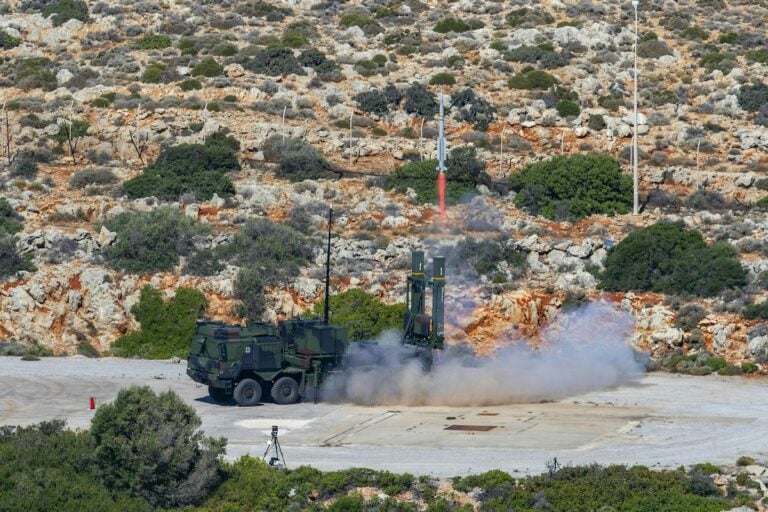
During test and demonstration events this spring, DZYNE brought IonStrike to Europe and demonstrated the system to senior leaders from U.S. Army Europe and Africa and NATO Allied Land Command. The 52nd Air Defense Artillery Brigade provided soldier feedback on operational use, integration requirements and the defense of fixed and semi-fixed sites against one-way attack drones.
“IonStrike is important because it does not require Soldiers to learn a new kill chain,” said Maj. Cody Davis, 52nd Air Defense Artillery Brigade operations officer.
“It integrates with approved C2 systems, cues on existing radar feeds, and provides commanders another kinetic option within the air defense architecture,” Davis said.
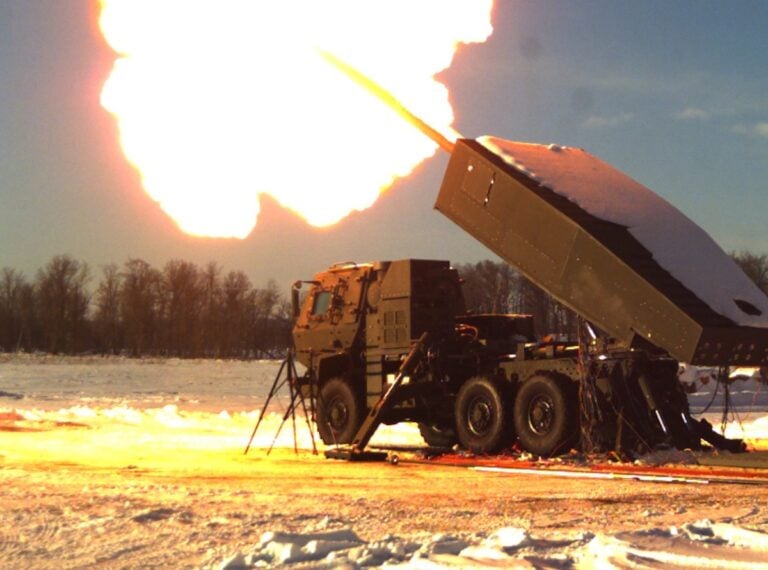
IonStrike is launched from a multi-interceptor pallet and cued by radars already integrated into approved command-and-control systems. The test configuration uses a four-interceptor launcher, while the brigade is working with DZYNE on a 12-interceptor configuration to increase magazine depth against larger raid profiles.
Unlike traditional fire-and-forget interceptors, IonStrike is designed to give operators greater flexibility after launch. If a target is reclassified as friendly or no longer meets engagement criteria, the operator can abort the engagement or redirect the interceptor to another target.
The Army said this capability could allow commanders to launch earlier, extend engagement depth and preserve decision space without automatically losing the interceptor. The system is also intended to preserve higher-end air defense interceptors for more demanding threats.
IonStrike is designed to cost less than the threats it defeats. The Army said this places the system to the left of the traditional cost curve for fully autonomous, extended-range kinetic interceptors.
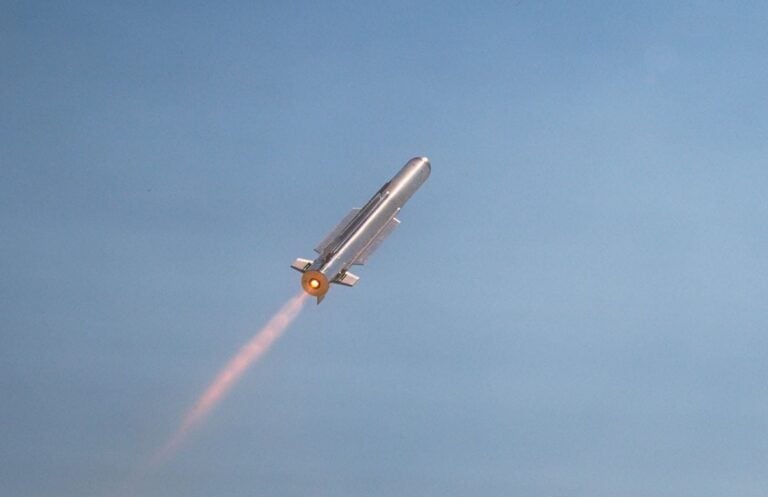
The interceptor uses a precision terminal infrared seeker and a proximity-fuzed warhead to increase lethality against one-way attack drones of all sizes. The system is designed for both day and night engagements.
A follow-on operational assessment is planned for this summer. It will examine IonStrike’s integration with existing command-and-control systems, radar cueing, abort functions, launcher configuration, reload process and lethality against representative one-way attack drones.
“The summer assessment will determine whether IonStrike can deliver a repeatable combat layer under operational conditions,” said Maj. Benjamin Bowman, the brigade’s forward operations officer.
“The questions are straightforward: can it integrate, can it be fired through existing C2, can it extend the defended area, can it be reallocated in flight, and can Soldiers sustain it in the field?” Bowman said.
The Army said IonStrike could provide air defenders with a scalable kinetic layer between electronic warfare, traditional gun systems and higher-cost missile interceptors. Its low soldier burden, radar-agnostic cueing, command-and-control integration and retaskable flight profile are intended to give commanders greater air defense depth against unmanned aircraft threats.
The 52nd Air Defense Artillery Brigade said the assessment is part of a broader effort to identify, test and accelerate capabilities against emerging unmanned aircraft threats in operationally relevant conditions. The brigade provides air and missile defense capabilities in support of U.S. Army Europe and Africa, defending critical assets, protecting maneuver forces and advancing integrated air defense across the European and African theaters.