
The money also covers ground control stations and supporting equipment. For the Coast Guard, the payoff is a better view of what is happening far offshore.
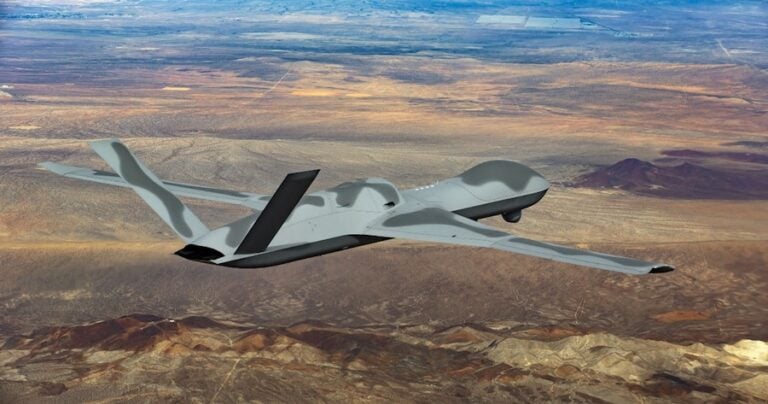
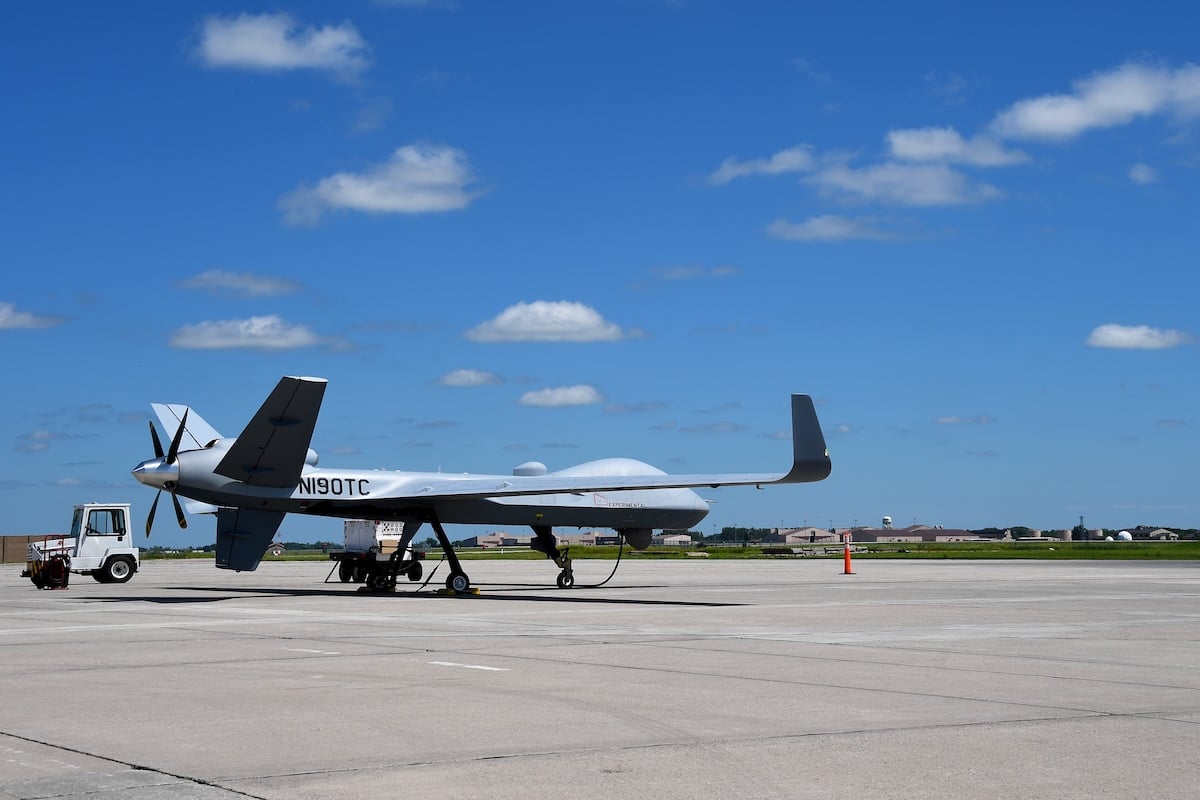
The service says the aircraft will help it protect borders and critical infrastructure, support search and rescue, combat drug trafficking and counter illegal and unregulated fishing. They will also gather and share intelligence and carry out surveillance and reconnaissance far at sea.
“The MQ-9B long-range unmanned aircraft systems will expand our reach and strengthen our ability to protect the nation,” said Anthony Antognoli, the assistant commandant and program executive officer for robotics and autonomous systems. “This investment will give Coast Guard crews a longer-range view of our maritime domain, helping them detect threats earlier, make better-informed decisions and act faster across our missions.”
The Coast Guard has numbers to back its case. MQ-9A aircraft operated by Customs and Border Protection flew with Joint Interagency Task Force South in fiscal year 2026.
They directly contributed to the seizure of about 60,700 pounds of illegal drugs worth $306 million. Around 20 smugglers were apprehended.
The Coast Guard and Customs and Border Protection operate the MQ-9A Guardian, also known as Predator B, through a joint program office in Texas. Coast Guard flight crews fly the maritime-variant aircraft alongside the agency on maritime missions.
The program began in 2008 as a pilot study. It tested whether long-range unmanned aircraft could give ground agents on the U.S. Southwest border long-endurance intelligence, surveillance and reconnaissance.
It has since expanded into the maritime environment, providing that coverage in the Gulf of Mexico. The Coast Guard has said the joint flights improve its understanding of potential long-range options and support the development of its requirements.
The Coast Guard introduced its unmanned aircraft strategy in 2023. It is evaluating a wide range of systems to augment its aircraft fleets and extend the surveillance range of its surface assets.
The service is drawing on development work by other uniformed services and federal agencies. It is looking for cost-effective systems that meet both cutter-based and land-based requirements.
Short-range systems are used across all 11 of the service’s statutory missions. More than 600 remote pilots have been trained, over 330 systems fielded and more than 80 units qualified.
Medium-range systems are part of the national security cutter fleet’s force package. The Coast Guard is moving toward expanding that capability to other surface assets.
For long-range systems, the Coast Guard has validated a mission need. The aim is to significantly enhance ocean surveillance in support of its operations.
The order is paid for out of fiscal year 2025 budget reconciliation and fiscal year 2026 appropriations. Reconciliation alone gave the Coast Guard nearly $25 billion.
That is the largest capital investment in the service’s history. About $16.3 billion of it has already gone to orders for new assets and capabilities.