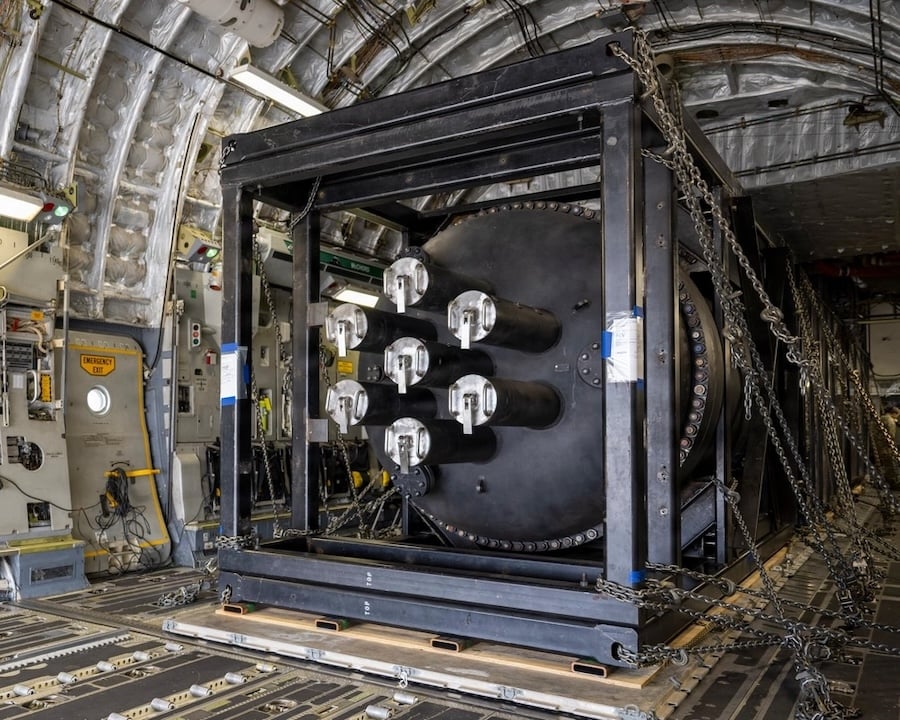
The commercially owned and operated Micro Modular Reactor will be the Navy’s first shore-based advanced microreactor. It will also be the first power-producing nuclear reactor installed in Indiana.
Naval Weapons Station Crane supports weapons development and other defense technology missions. The reactor is intended to sustain those operations during power disruptions and other demanding conditions.
The project is being executed through the Army’s Janus Program in coordination with the Navy and other Department of War organizations. The State of Indiana is also participating in the effort.
The Army serves as the department’s executive agent for nuclear energy at military installations. The Navy is providing the operational requirements for the Crane site, while the Department of War Innovation Unit is connecting the program with commercial technology.
“Under President Trump’s bold leadership, the Department of War is rapidly fielding next-generation energy solutions for our warfighters,” said Emil Michael, Under Secretary of War for Research and Engineering. “We are unleashing the American nuclear industrial base to ensure our military installations possess the resilient infrastructure required to maintain uninterrupted operations.”
The deployment implements executive orders issued by President Donald Trump on advanced reactors and the U.S. nuclear industrial base. The orders direct the government to remove barriers to nuclear innovation and rebuild domestic industrial capacity.
“At Critical Technologies, we start from a simple first principle: a technology matters only when it reaches the mission,” said Mike Dodd, Assistant Secretary of War for Critical Technologies. “Our standard is to field and deploy capability within 24 months or less.”
The Office of the Assistant Secretary of War for Critical Technologies is coordinating participants across the department. The reactor project falls within its Contested Logistics Critical Technology Area.
“Janus was designed from the beginning to deliver capability beyond the Army,” said W. Jordan Gillis, Assistant Secretary of the Army for Installations, Energy and Environment. “Together, we are building a pathway to resilient nuclear power that can strengthen mission assurance across the Joint Force.”
The Crane installation is intended to become the first step in a wider department effort to deploy nuclear power for national security missions. The program is also designed to support skilled employment and expand the domestic nuclear supply chain.
“Energy security is warfighting capability,” said Brendan Rogers, Assistant Secretary of the Navy for Energy, Installations and Environment. “Hosting the Navy’s first shore-based advanced microreactor at NWS Crane under the Janus Program underscores our commitment to hardening our shore infrastructure against evolving physical, cyber, and grid vulnerabilities.”
The department developed the initiative during more than a year of coordination with Indiana officials. Senator Jim Banks, Governor Mike Braun, Senator Todd Young and Representatives Erin Houchin and Mark Messmer supported the project.
Federal, state and local partners will continue work on the required safety, environmental, regulatory and installation processes. The department said nuclear safety, physical security, cybersecurity and responsible use of taxpayer funds would remain central throughout the project.