The work was carried out at the National Criticality Experiments Research Center at the Nevada National Security Site. Los Alamos National Laboratory and Idaho National Laboratory participated in the test at the National Nuclear Security Administration facility.
Westinghouse is developing eVinci through repeated cycles of testing, modeling, simulation and design changes. The company said this process is intended to accelerate development while reducing technical risk.
The next phase will use integrated prototype testing and demonstrations to examine performance, operability and manufacturability. Findings from each stage will shape later changes to the design and prototypes.
“This zero-power criticality milestone reflects Westinghouse’s heritage of innovation and pushing to the next frontier of nuclear,” said Dr. Lou Martinez Sancho, Westinghouse Chief Technology Officer. “We appreciate the support and collaboration of our partners at the U.S. Department of Energy, NNSA, Los Alamos National Laboratory, Idaho National Laboratory and NNSS in achieving this important milestone.”
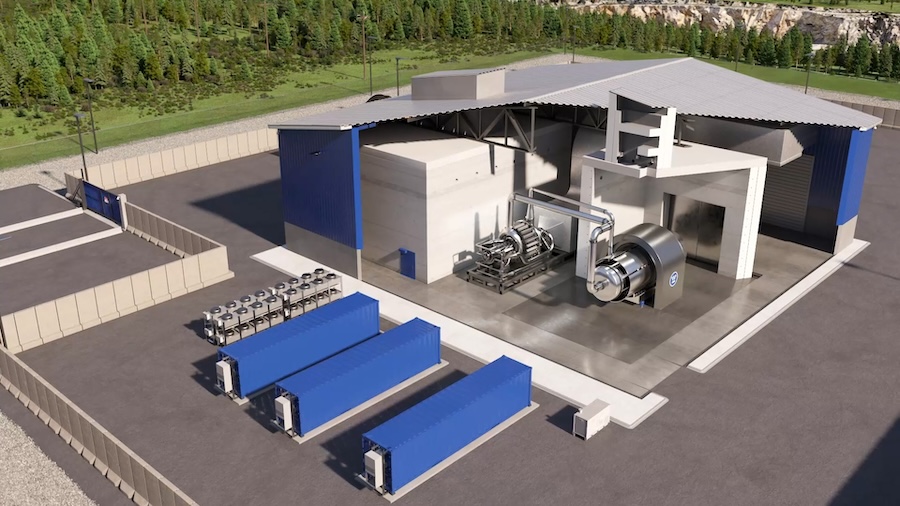
The reactor’s compact architecture combines advanced heat-pipe technology, TRISO fuel, graphite core materials and control-drum components. Westinghouse designed the system for remote and challenging locations where resilient power is required.
Potential uses include defense and space applications. Westinghouse said the eVinci microreactor is designed to supply electricity around the clock for eight years without refueling.