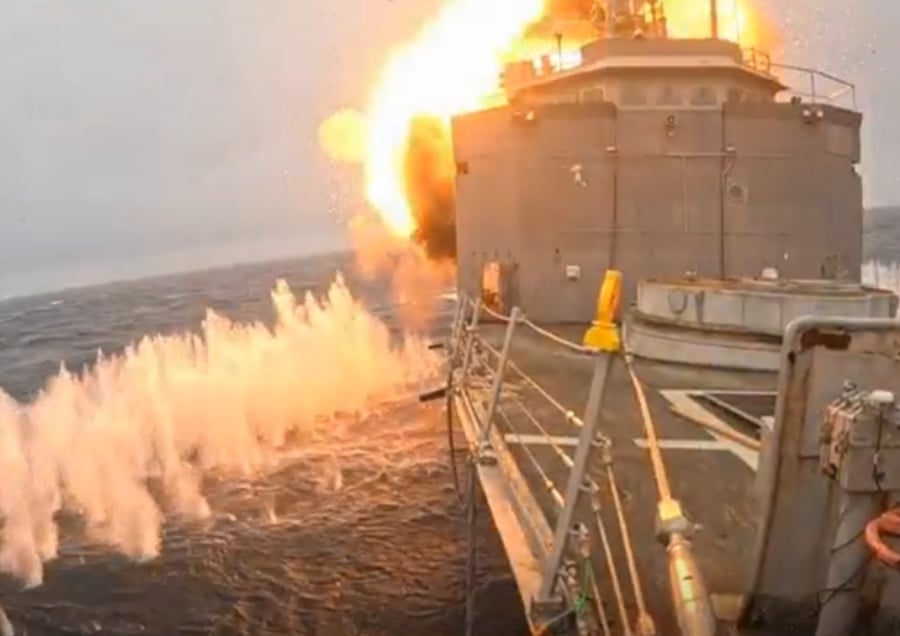
The exercise used the UK Ministry of Defence’s Hebrides Range, managed by QinetiQ. Alongside live firing, the forces tested how they shared targeting data and coordinated attacks across different military services, according to an account of the exercise.
The destroyer USS Paul Ignatius demonstrated the anti-surface variant of the Standard Missile 6 against Klakring. The submarine USS Massachusetts then delivered the final hit with a Mk 48 Advanced Capability torpedo, the U.S. Navy said.
The Royal Navy reported a successful Naval Strike Missile firing and also cited its Sea Venom missile during the exercise. “The successful firing of NSM marks a significant milestone for the Royal Navy, demonstrating our ability to deliver credible, modern maritime strike capability,” said Lt. Cmdr. Louise Kirkaldy of HMS Portland.
U.S. and Royal Air Force P-8 maritime patrol aircraft, a Royal Navy Wildcat helicopter and U.S. Air Force F-15E Strike Eagles participated alongside the warships. An account of the exercise identified two of the F-15Es as aircraft from the 48th Fighter Wing at RAF Lakenheath.
“Atlantic Thunder demonstrates the unmatched lethality and interoperability of the United States and United Kingdom,” said Capt. Kelechi Ndukwe, commander of U.S. Task Force 65. U.S. Navy teams placed sensors on Klakring before the attack to gather data for assessing the damage caused by the weapons.
Klakring entered service in 1983 and was decommissioned in 2013. After years at a Navy facility for inactive ships in Philadelphia, the Oliver Hazard Perry-class frigate was towed away in August for its final crossing of the Atlantic.