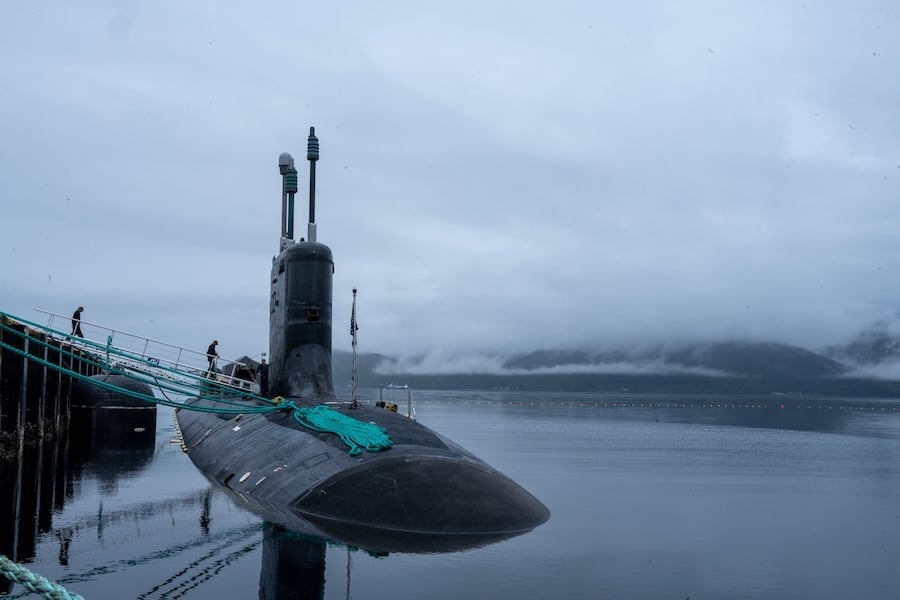
U.S. 6th Fleet leaders and Norwegian officials toured the submarine and met members of its crew. The engagement focused on the two allies’ continuing cooperation in northern waters.
Rear Adm. John W. Stafford, commander of Task Force 169, said the region’s maritime routes were directly linked to European and U.S. security. He also framed regular submarine deployments as a means of improving allied interoperability.
“Operations in the strategic gateways of the High North and Norwegian Sea are of paramount importance to maritime security, both for the defense of Europe and the defense of the U.S. homeland,” Stafford said. “By routinely deploying our advanced undersea forces alongside other capabilities, we build interoperability with our allies to deter and defend in the theater across all domains.”
The Navy said USS Delaware’s deployment formed part of broader efforts to increase U.S. presence in the region. The activity is intended to preserve freedom of maneuver, maintain safe navigation and strengthen maritime domain awareness.
American submarines routinely operate between the Arctic and Atlantic. Those missions are designed to support regional security, monitor maritime activity and provide options for responding to threats across Europe.
Virginia-class submarines are built for anti-submarine warfare, anti-ship missions, land attack, intelligence collection and special operations. They can also employ unmanned systems, deploy special operations forces and strike targets ashore with Tomahawk cruise missiles.
U.S. 6th Fleet directs American naval operations across Europe and Africa from its headquarters in Naples, Italy. The command regularly operates with allied forces and U.S. government agencies to support regional stability and American security interests.