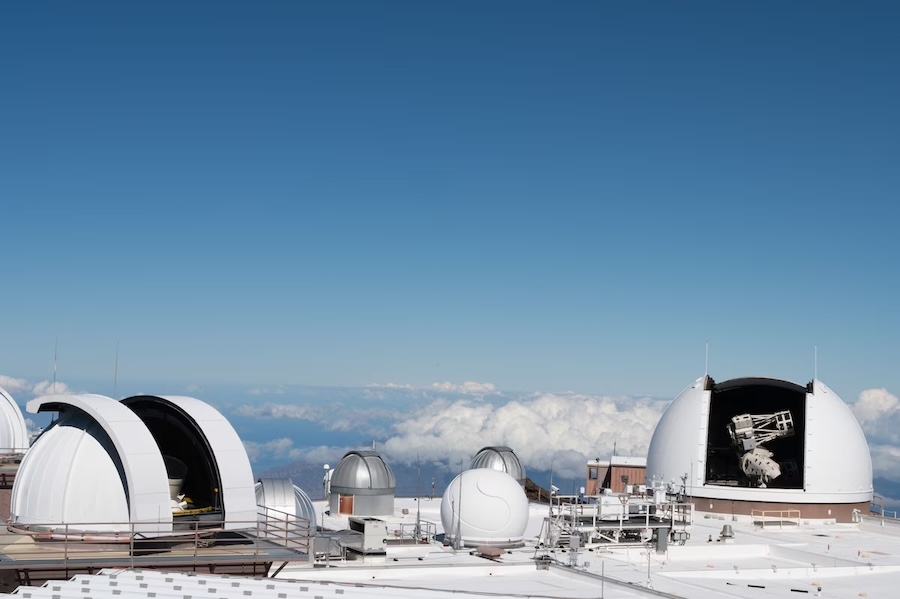
Officials said the system doubles the field of view and search speed while more than tripling sensitivity, enabling improved detection of small and hard-to-track objects. The capability extends coverage across Medium Earth Orbit, Geostationary Orbit, High Earth Orbit and cislunar space.
“The advancements we’re seeing with GBOSS significantly enhance our awareness in space. We’ve been able to see the operational benefits of improved clarity across multiple orbital regimes,” said Latina Jones. “Seeing faster, clearer, and with a wider view enables decisive advantage for combatant commanders.”
The Maui site is the second location to receive the upgrade, following earlier deployment at White Sands Missile Range in New Mexico. Operational acceptance at Maui on April 10, 2026, marks a key milestone in expanding the capability across the global surveillance network.
“Space superiority starts with space domain awareness. This advanced capability increases our ability to detect, identify, and maintain custody of activities in space,” said Barry Croker. “We’ve now significantly enhanced our ability to monitor our adversaries who try to hide activities in orbit. Objects in space that were once too dark, too small, or too close to one another are now observable.”
L3Harris said the upgraded system replaces legacy sensors with advanced optical technology designed to improve tracking accuracy and responsiveness. The company added that the system delivers high-fidelity space intelligence to operators, supporting faster decision-making and improved protection of critical space assets.
“GBOSS delivers exactly what today’s warfighters need: faster, more precise awareness in a domain where seconds matter,” said Jeff Hanke. “This capability strengthens America’s ability to deter threats, protect vital space infrastructure, and ensure mission continuity for forces and citizens who rely on space every day.”
The Space Force said the upgrade comes amid growing congestion and competition in space, where threats to satellites are increasing. Enhanced sensing capabilities are intended to support the resilience of systems that underpin communications, navigation, intelligence and weather monitoring.
The program also demonstrated an accelerated acquisition approach, with early operational use authorized in October 2025 to streamline testing and deployment. Officials said this enabled the Maui system to reach operational status ahead of schedule.
“This is a successful example of rapid sustainment and enhancement of current capabilities to get Guardian warfighters what they need when they need it,” said Dustin Guidry.
Together with other upgraded sites, the system contributes to persistent global surveillance of deep space. Officials said the network enables operators to identify anomalies, avoid collisions and respond to emerging threats while safeguarding critical space infrastructure.