
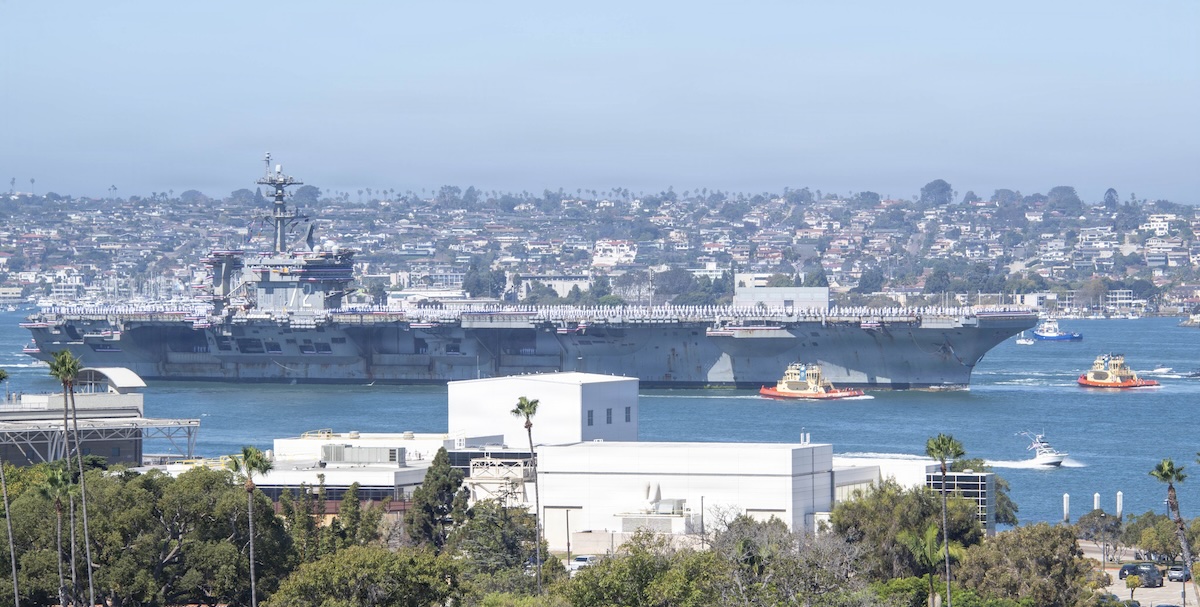
Its strike group, Carrier Strike Group 3, spearheaded the Navy’s part in Operation Epic Fury and supported 40 days of major combat operations. It then took part in two naval blockades aimed at Iran, according to the Navy.
“USS Abraham Lincoln and the entire Carrier Strike Group team set a new standard of excellence through their extraordinary conduct during this historic deployment,” said Rear Adm. Robert Loughran, who commands Carrier Strike Group 3. “I am incredibly proud of each and every Sailor, Marine, and member of this team for what they have accomplished under the most demanding conditions.”
“Their professionalism, resilience, and combat effectiveness have been unmatched,” Loughran said. “We now look forward with great excitement to their well-earned reunion with family and loved ones.”
In the lead off Iran’s southern coast
The strike group arrived in the U.S. Central Command area of responsibility in late January. It took the lead role on the southern Iranian coast, operating as Commander, Task Force 50, the Navy said.
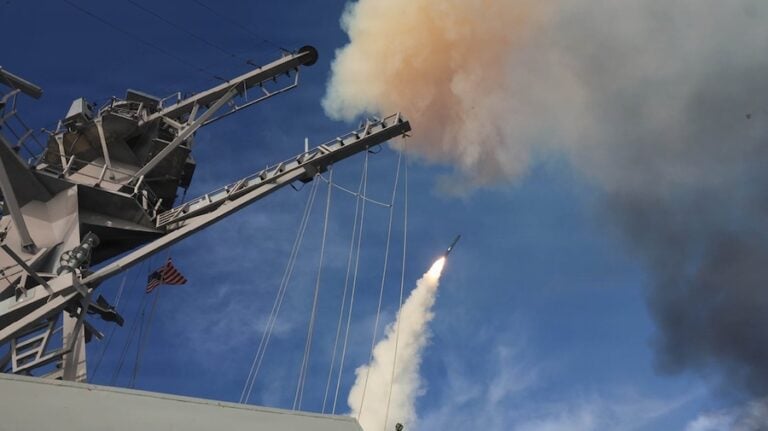
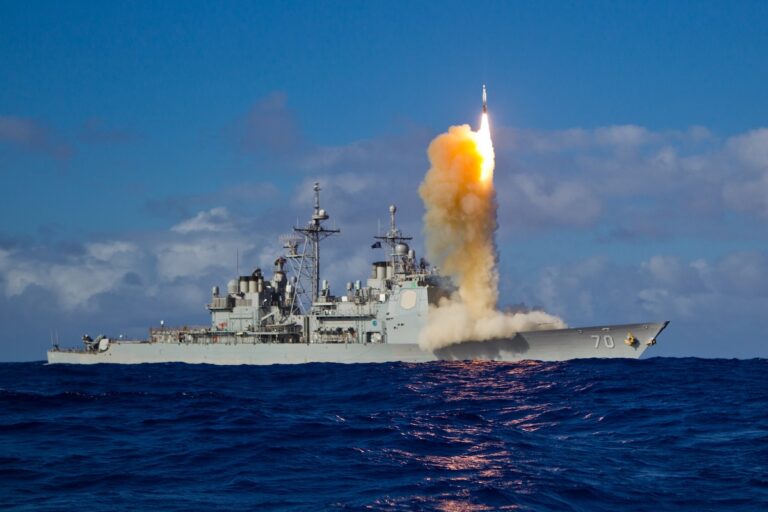
During the 40 days of fighting, Carrier Air Wing 9 flew nearly 4,000 combat sorties and delivered more than 1.5 million pounds of ordnance on thousands of targets. Units in the task force destroyed more than 100 Iranian drone, missile and small boat attacks on the force, according to the Navy.
That firepower significantly degraded the Iranian Navy’s capabilities, the Navy said. A ceasefire between the U.S. and Iran followed on April 8.
Blockade duty after the ceasefire
After the ceasefire, the strike group switched to enforcing a maritime blockade of Iranian-flagged vessels in the Northern Arabian Sea and Gulf of Oman. The Navy said the blockade cut off the flow of Iranian oil and material and let U.S. leaders negotiate from a position of strength.
Iran attacked commercial shipping in the Strait of Hormuz in July, according to the Navy. Abraham Lincoln and its air wing answered by supporting strikes on Iran’s coastal defense systems and on cruise missile storage and launch sites.
The strike group then reinforced a second naval blockade of Iranian shipping and ports. It left the Central Command area on Aug. 22 and headed for home.
“Conducting major combat operations, enforcing two naval blockades, and demonstrating our presence and power projection capabilities in multiple Numbered Fleets, all while keeping an unprecedented operational tempo for a long period of time, is truly remarkable, and demonstrates the strength and resilience of the 5,000 Sailors and Marines across this strike group,” said Capt.
Dan Keeler, Abraham Lincoln’s commanding officer. “This team is literally rewriting the book of what an aircraft carrier is capable of, and it has been awe-inspiring to watch them grow as a team through this historic deployment.”
Record stretches at sea
The deployment kept the carrier at sea for 208 days without a break between Guam and Oman. It also went 286 consecutive days at sea between leaving San Diego and arriving in Thailand, and the Navy called both marks records for modern aircraft carriers.
The ship made brief overnight stops for supplies in Guam in December 2025 and September 2026, and in Duqm, Oman, in July 2026. It also made a port call in Pattaya, Thailand, from Sept. 2 to 6.
In all, the ship carried out 72 replenishments at sea and took on more than 20.5 million gallons of aviation fuel. Its crew supported more than 13,000 sorties by Carrier Air Wing 9 aircraft, adding up to 28,500 flight hours.
The route took the carrier across the Pacific Ocean and through the San Bernardino Strait, Surigao Strait and Strait of Malacca. It also sailed the South China Sea, Indian Ocean and North Arabian Sea.
“I could not be prouder of the group of Sailors and Marines aboard this mighty warship for everything they have accomplished the last 10 and a half months,” Keeler said. “We asked a lot of these warfighters, and every time, they rose to the occasion, achieving the mission with pride, professionalism, and expertise.”
The carrier and its strike group
Three Arleigh Burke-class guided-missile destroyers sail with the carrier: USS Frank E. Petersen Jr., USS Spruance and USS Michael Murphy. The strike group also includes the embarked staffs of Carrier Strike Group 3, Destroyer Squadron 21 and Carrier Air Wing 9, and more than 70 fixed-wing and rotary-wing aircraft.
Abraham Lincoln, named for the 16th U.S. president, is the fifth Nimitz-class nuclear-powered aircraft carrier and was commissioned on Nov. 11, 1989. In more than 36 years of service, it has supported evacuation efforts in the Philippines after Mount Pinatubo erupted in 1991, along with Operations Restore Hope, Iraqi Freedom, Enduring Freedom, Inherent Resolve and Epic Fury.