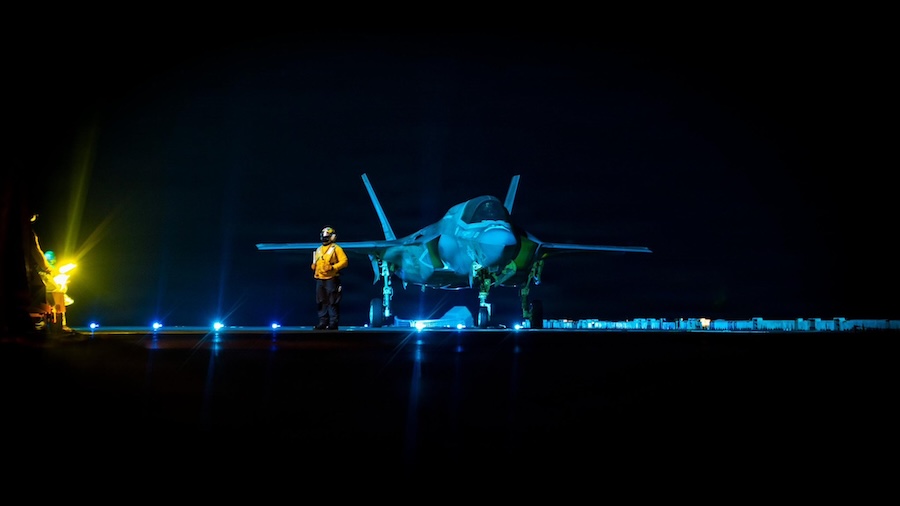


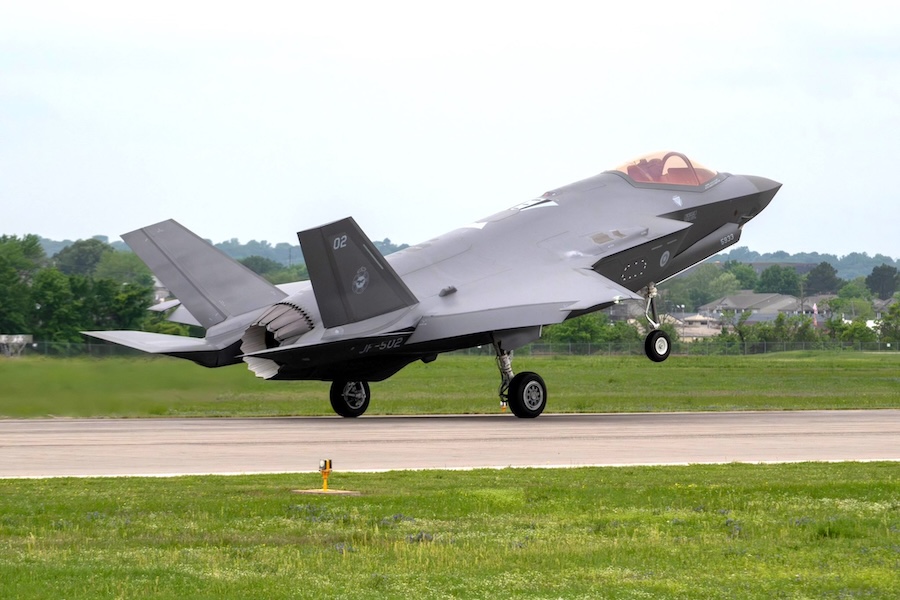
The flight began at 2:17 p.m. local time using aircraft JF-502 and forms part of the practical phase of initial pilot training in the United States. Finnish personnel are undergoing training at Ebbing following earlier theoretical and simulator instruction completed at Eglin Air Force Base in Florida.
“It was great to finally fly the F-35 after several months of theoretical and simulator training. The aircraft’s performance was immediately impressive during takeoff, with afterburner accelerating the aircraft to takeoff speed at full power. The handling felt easy and intuitive throughout all phases of flight. This is a valuable characteristic, because it allows the pilot to focus primarily on the mission at hand rather than just flying the aircraft. After the flight, it was great to see the Finnish and American personnel working at Ebbing waiting on the ramp. It was a strong reminder of the significant effort by many different groups that made this first flight possible,” said the pilot who conducted the flight.
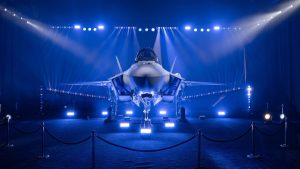
A Finnish Air Force pilot flew the F-35A multirole fighter for the first time on 15 April from Ebbing Air National Guard Base, located in Fort Smith, Arkansas, where the practical phase of the Finnish personnel’s F-35 initial training is conducted. pic.twitter.com/d8RtHlyq4M
— Ilmavoimat (@FinnishAirForce) April 16, 2026
The pilot, an experienced F/A-18 Hornet aviator and former instructor, described the training process as intensive but rewarding. He noted that the program has included aircraft systems, emergency procedures and tactical flying focused on new capabilities provided by the F-35.
“The training has progressed steadily, and there will certainly be plenty to learn even after the initial training phase. At this stage, the training has included type training, emergency procedures, and tactical flight operations, where we have been able to explore in more depth the new capabilities the F-35 brings to Finland’s air defense. The American instructors have been experienced, knowledgeable, and clearly accustomed to working with international students,” he said.
He added that simulator preparation played a critical role ahead of the first flight due to the aircraft’s single-seat configuration. “As a test pilot, I am trained to fly new aircraft types even without comprehensive type training, but the F-35’s single-seat configuration added its own level of tension to the first flight. Unlike the first flight in a Hornet, there is no instructor on board in the F-35. The importance of simulator training was therefore emphasized, and it was reassuring to see that simulator preparation provided a solid foundation for the first flight.”
Finland has so far received eight F-35A aircraft, designated JF-501 to JF-508, which are stationed at Ebbing for training until early 2028. These aircraft undergo airworthiness and acceptance inspections by Finnish personnel before being cleared for flight training.
Further deliveries are scheduled to begin directly to Finland from fall 2026, with aircraft from JF-509 onward arriving in-country. The first Finland-based F-35s will be stationed at Rovaniemi, where the Lapland Air Wing will begin operations.
Approximately 150 Finnish personnel, including around 20 pilots, will complete initial F-35 training in the United States. Training is expected to continue in phases through early 2028.
Finland plans to introduce initial operational capability with the F-35 at the beginning of 2028, when the Lapland Air Wing transitions fully to the new aircraft. Full operational capability is expected by the end of 2030, with the F-35 gradually replacing the current F/A-18 Hornet fleet during the transition period.
Source: Finnish Air Force (press release).