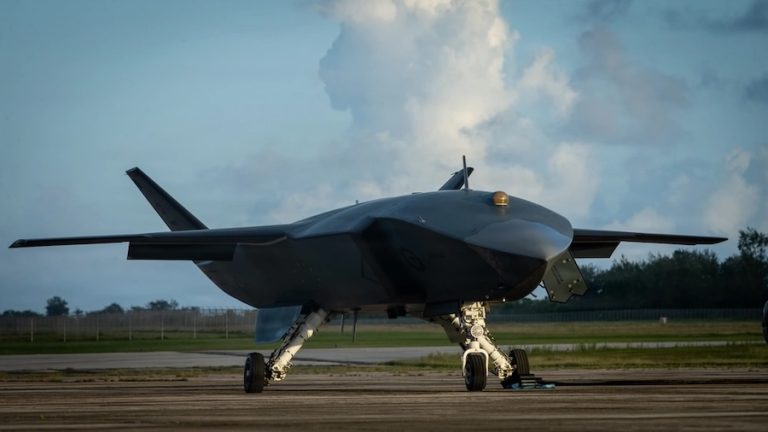
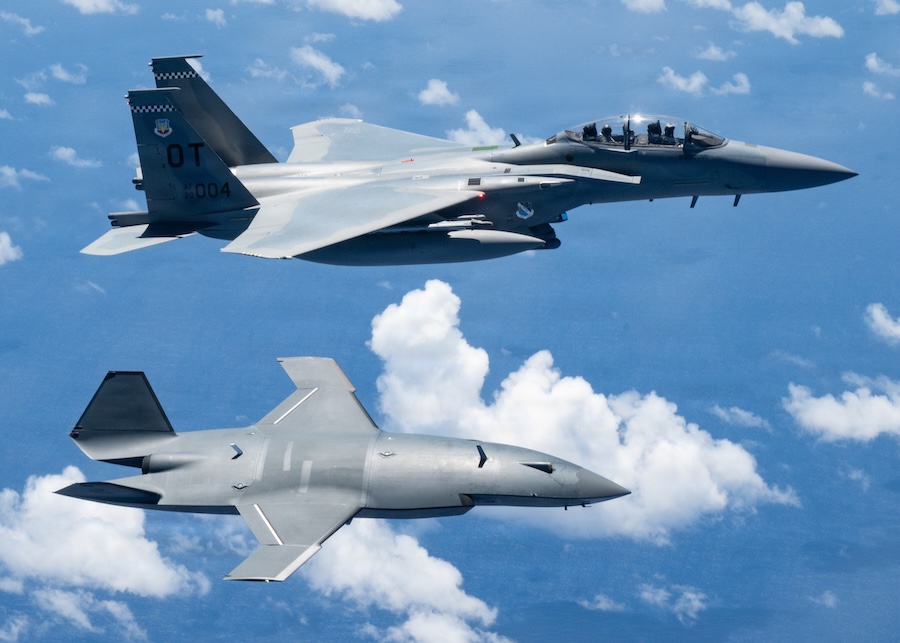
The companies said previous flight testing indicates the MQ-28 can meet German requirements for both air-to-air and air-to-ground operations. Boeing is continuing to invest in the platform’s development, including its air-to-ground capabilities, while Rheinmetall would support Germany’s capability build-up as system integrator.
Boeing described the maturity of the aircraft as a central element of the proposal. The company said the MQ-28 is the first and only strike-fighter drone to have participated in multinational exercises, including the US-led Valiant Shield.
“While many CCA programs worldwide are still in the concept, definition or early test phase, the MQ-28A Ghost Bat has already gone through these essential development steps,” said Glen Ferguson, Boeing Defense Australia’s Global Director of the MQ-28 programme. The companies argue that using an existing aircraft would allow Germany to focus sooner on integrating national technologies and developing operational concepts.
The MQ-28 would also provide the German Air Force with a development and test platform for refining cooperation between crewed and uncrewed aircraft. Boeing said that work would need to begin well before any planned operational capability is introduced.
“If the goal is to achieve such a capability by 2029, this work must begin today with the development of tactics, training, definition of force structure and the integration of sovereign technologies,” Ferguson said. The proposed approach would therefore use the Ghost Bat both as an aircraft and as a test environment for Germany’s broader CCA development.
Boeing is building a German industrial network around the effort with Rheinmetall, Rohde & Schwarz, Diehl Defence and HENSOLDT. The companies said the structure is intended to enable Germany to develop and integrate required capabilities domestically over the longer term.
Rheinmetall plans to establish independent system integration for the MQ-28 in Germany as the first step. Under the proposed model, software development, mission integration and intellectual property would remain within the German industrial ecosystem.
“Germany does not have to choose between speed and independence. We offer a way to achieve both at the same time,” said Mike Schmidt, CEO of Rheinmetall’s Business Unit Air, Uncrewed and Space.
“The MQ-28 enables us to bypass the lengthy development phase of a new aircraft and go directly to the decisive task: making the capabilities of unmanned combat air systems available to the German Air Force,” Schmidt said. Rheinmetall said this would allow German technologies to be developed, tested and integrated immediately on the MQ-28.
Experience gained through that work could subsequently be applied to future CCA platforms, according to Rheinmetall. Development of the Ghost Bat itself is supported by a digital twin, extensive flight-test data and experience from the programme with the Royal Australian Air Force.
“The MQ-28 Ghost Bat has been designed from the outset as an extremely adaptable platform. Experiences gathered in operational use to date show that the MQ-28’s architecture can be quickly adapted to new mission requirements, including air-to-ground capabilities,” Ferguson said.
“This is not about a retrofit, but about using a modular design that is conceived from the ground up for continuous adaptations,” Ferguson said. Boeing and Rheinmetall are presenting that combination of platform maturity, modularity and German-controlled integration as a route to establishing a national CCA capability without first developing an entirely new aircraft.