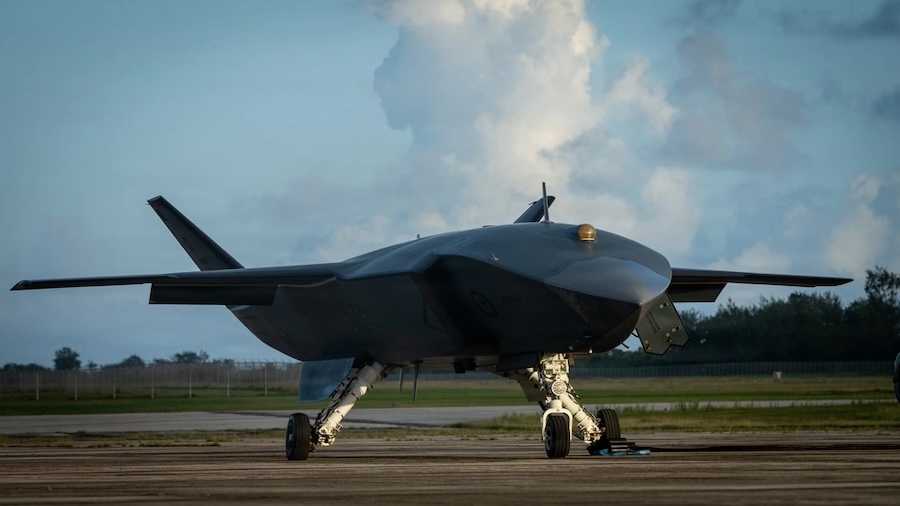
The U.S. Air Force’s Experimental Operations Unit integrated the MQ-28 at Rota in the Northern Mariana Islands from June 21 to July 1. The 21st Air Expeditionary Wing supplied the infrastructure and sustainment needed for flight operations.
The deployment placed the Ghost Bat within a large-force exercise under operationally relevant conditions. It also examined the power, fuel, communications and security requirements needed to support the aircraft away from a permanent base.
“The EOU conducts rapid experimentation with CCA prototypes to provide direct warfighter feedback to CCA and mission-autonomy vendors,” said U.S. Air Force Maj. Daniel Pesich, EOU combat aircraft detachment officer in charge. “The unit is uniquely designed to take emerging technologies like the CCA and place them into operationally relevant environments much earlier than traditional acquisition programs.”
The unit focused on the requirements for deploying and sustaining Collaborative Combat Aircraft in austere environments. The Air Force said lessons from successful and unsuccessful activities would inform future CCA development and employment.
“This is the first of many large force exercises the EOU will participate in with the CCA,” said Pesich. “We will build from this event with the intent of quickly integrating with the force more each time.”
The 21st Air Expeditionary Wing rapidly established the operating support required by the MQ-28. Its personnel provided power production, communications and force protection throughout the deployment.
“The ability of our team to work in the background is the foundation necessary for MQ-28 operations,” said U.S. Air Force Lt. Col. Nathaniel White, 21st CABS commander. “Without power the ground control unit wouldn’t be functional, without fuel the power wouldn’t be supplied, and without communications we wouldn’t be able to provide the MQ-28 operators the necessary capabilities to plan.”
The wing supported decentralized operations across four islands in the Guam cluster. Its work included airfield management, aircraft refueling and defueling, logistics and force protection.
The sorties demonstrated that the MQ-28 could be integrated into expeditionary operations under the Air Force’s Agile Combat Employment concept. They also generated direct operational feedback for mission-autonomy developers and future U.S. collaborative aircraft programs.