The selection launches Phase 2 of the Integrated Fires Protection Capability Increment 2 Second Interceptor program. The companies will complete detailed design, development, integration and demonstration work.
The phase will culminate in a competitive demonstration against Army requirements. That process will test whether the Boeing-Anduril design can fill the gap between short-range point defenses and longer-range systems reserved for high-value targets.
Boeing is providing the seeker technology and compact airframe. Anduril is supplying the interceptor’s solid rocket motor.
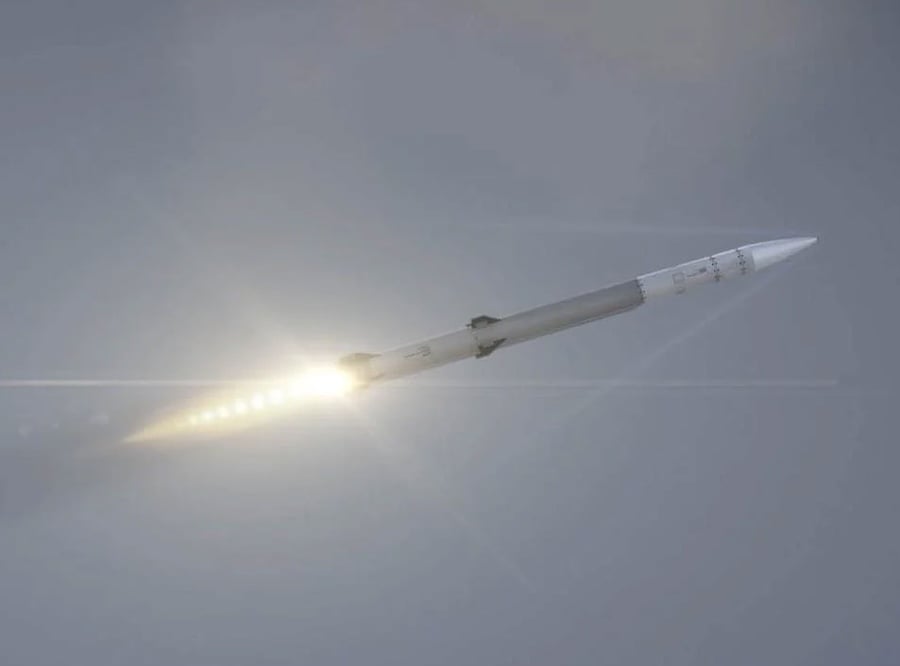
The design emphasizes speed, affordability and magazine depth. Its compact size is intended to let military units deploy more interceptors at each defended site.
A Modular Open Systems Architecture allows the companies to replace seeker, avionics or software blocks without redesigning the complete weapon. That approach is intended to shorten upgrade cycles and reduce costs as threats change.
“Our scalable production approach is designed to provide a reliable, affordable layer of defense against a range of aerial threats to protect the warfighter with practical, dependable capability when it matters most,” said Bob Ciesla, vice president of Boeing Precision Engagement Systems. Boeing said the manufacturing model is designed to support production at scale.
Anduril plans to build the motor at its 450-acre Mississippi Solid Rocket Motor Complex. The company has invested more than $100 million of its own capital in the plant.
The facility has also received $58 million in Defense Production Act funding. Anduril said the combined investment will support multiple propulsion programs and higher production volumes.
The Mississippi complex includes a bladeless high-speed mixer that Anduril described as the only one of its kind worldwide. Its manufacturing line can run several production stages in parallel and produce multiple motor configurations.
Anduril said decades of consolidation have left the U.S. solid rocket motor market in the hands of two suppliers. The company built the Mississippi facility to add capacity and resilience to a supply chain facing rising demand.
The industrial push reflects concern about the growing volume of lower-cost aerial threats. Anduril said China, Russia and Iran have spent the past decade fielding mass-producible cruise missiles and drones designed to drain U.S. interceptor inventories.
Boeing and Anduril began exploring potential technologies for the Army program in 2024. They announced their partnership in December and are now moving the concept into full system development.
“We welcome the opportunity to continue in this competition,” said Jim Bryan, executive director of Boeing Integrated Air and Missile Defense. “By combining proven seeker expertise with a purpose-built interceptor, we are delivering thoughtful, effective advances in air and missile defense that meet mission needs.”
The proposed weapon would add a midrange layer to the Army’s base-defense architecture. Its design links interceptor performance with a production model intended to deliver enough rounds to counter threats deployed in large numbers.