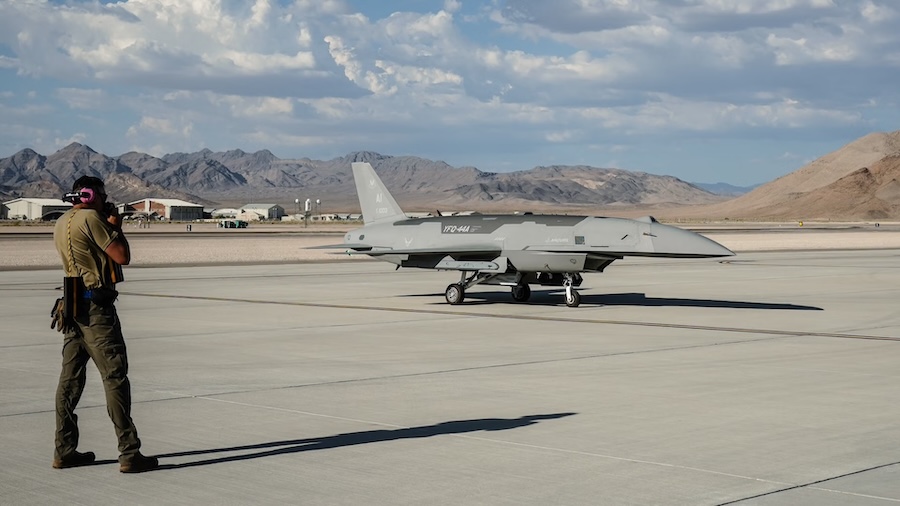
Air Force operators tasked the YFQ-44A through several stages of mission execution from multiple locations. Anduril said the approach demonstrated the disaggregated control needed to reduce manpower requirements and generate CCA sorties from austere bases.
Operational personnel also directly supervised daily mission-autonomy flights with the aircraft for the first time. The YFQ-44A used mission autonomy to execute operationally relevant tactics and maneuvers throughout the exercise.
The latest event increased mission complexity and gave Air Force personnel greater responsibility for aircraft operations. It followed an initial EOU exercise in April, when operators launched, recovered and sustained the YFQ-44A for the first time.
The second exercise included a week of on-time flight operations at a high tempo. Several days included multiple sorties, giving operators more experience with the aircraft’s employment, maintenance and sustainment requirements.
Anduril said the testing is helping establish the operational procedures and user confidence needed to field the production FQ-44 at scale. The company described repeated testing with operational personnel as central to moving the CCA program from prototype aircraft toward combat capability.
Creech Air Force Base is expected to host thousands of sorties by prototype YFQ-44A and production FQ-44 semi-autonomous fighters in the coming years. The Nevada installation has supported Air Force uncrewed aircraft operations for decades and will now play a role in CCA experimentation.
Anduril said future exercises will deepen cooperation with Air Force operators and continue increasing their involvement with the aircraft. Each event is intended to move the program closer to operational fielding of the FQ-44.