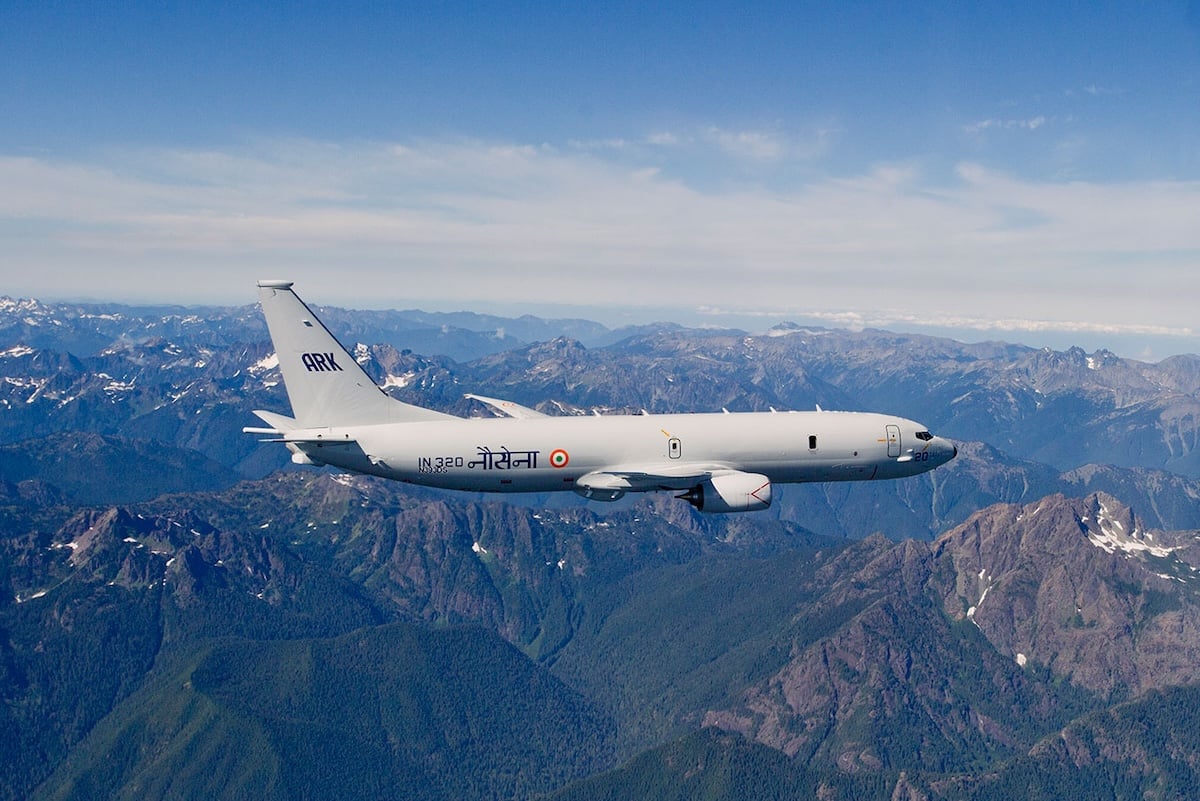
India became the first international customer for the P-8 platform in January 2009, placing an order for eight aircraft with options for four more. Boeing developed the P-8I from the U.S. Navy’s P-8A Poseidon to meet India’s requirements.
The first P-8I took off from Renton Field in Washington on September 28, 2011, and landed at Boeing Field in Seattle after two hours and 31 minutes. During the flight, test pilots checked aircraft systems, engine acceleration and deceleration, and autopilot flight modes.
The aircraft reached an altitude of 41,000 feet. The successful flight cleared the way for mission systems installation and testing.
Further development included flight testing and weapons certification, with tests using inert weapon shapes. Boeing delivered the first aircraft to India in 2013 and completed deliveries under the initial order by 2015.
The P-8I remains the only variant developed from the original P-8A, according to Boeing. Also known as the Neptune, the Indian aircraft incorporates a magnetic anomaly detector, an AN/APS-143 OceanEye radar and systems supplied by Indian companies.
The program combined Boeing’s commercial and defense expertise, using the Next-Generation 737 production system. Indian suppliers, including micro, small and medium-sized enterprises, produce mission-critical components.
Boeing said the program supported growth in India’s aerospace and defense industry and the government’s “Make in India” initiative. Its global supply chain included CFM International, Northrop Grumman, Raytheon, Spirit AeroSystems, BAE Systems and GE Aviation.
“The first P-8I flight was more than a milestone for one aircraft — it marked the start of a program that continues to grow through the work of our teams and partners. Fifteen years later, it’s a moment worth celebrating and a reminder of what we can achieve together,” said Tory Peterson, Boeing’s vice president and P-8 program manager.
The aircraft have carried out maritime patrol and reconnaissance missions, alongside humanitarian and disaster relief operations. Separate reporting also describes their use along India’s land borders with Pakistan and China.
That reporting says an Indian P-8I was targeted by a guided missile during the 2025 conflict. It states that the aircraft’s self-protection system neutralized the missile.
India’s experience with the fleet has led to interest in additional aircraft, with a formal government decision reported in February 2026. The reporting does not confirm whether a further order has been placed.
Source: Boeing.