The system remained under U.S. control, with Indian Army personnel observing its components and exchanging tactics with their American counterparts. The distinction mattered during an exercise in which artillery crews from the two armies also trained together directly on M777 howitzers.
“Defeating the small UAS threat is not a single-nation fight; it requires interoperable forces that can share information, integrate capabilities, and act as one,” said Chief Warrant Officer 3 Mark Giauque, the division’s air and missile defense systems integrator. “The ability of U.S. Army and partner forces to seamlessly detect, identify, and defeat enemy UAS will be critical to maintaining freedom of maneuver and protecting the force on the modern battlefield.”
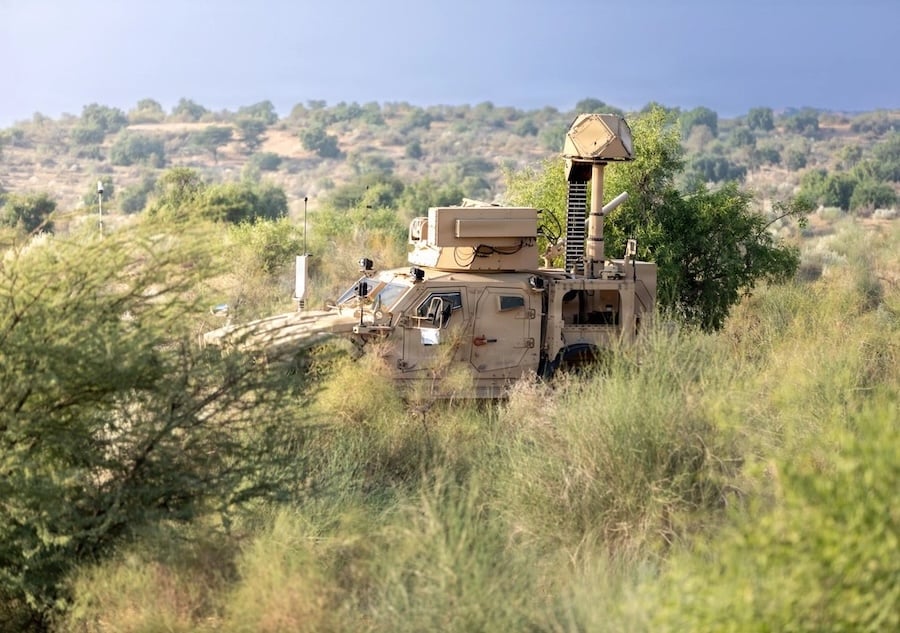
M-LIDS combines sensors, command-and-control equipment and electronic warfare and kinetic options for defeating drones on mobile tactical vehicles. U.S. soldiers practiced linking those elements to build a local air picture, track a potential threat and select a response.
The system uses Forward Area Air Defense Command and Control to integrate information from its sensors. A Ku-band radar and electro-optical and infrared equipment provide detection, tracking and visual identification capabilities.
The demonstration also put the system and its operators to work in the heat, dust and open terrain of the Rajasthan desert. Unlike equipment tied to a fixed site, M-LIDS can reposition with troops as they maneuver.
Elsewhere at Yudh Abhyas, U.S. and Indian forces trained on artillery, aviation, maneuver, medical and force-protection tasks. The Army said the counter-drone exchange helped both forces examine how protecting soldiers and equipment from aerial threats supports those wider operations.