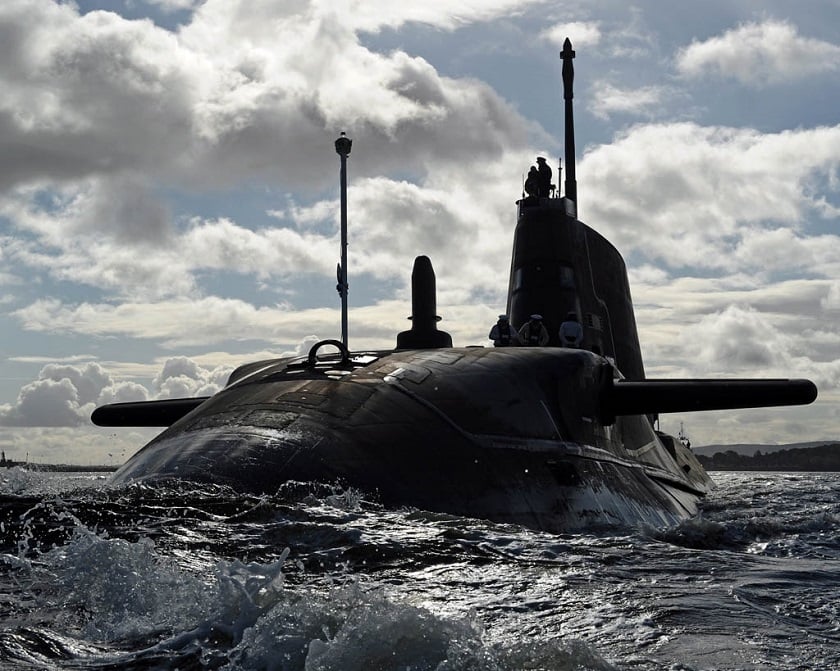
The development was disclosed in the government’s Defence Nuclear Enterprise 2026 Annual Update to Parliament. The report did not specify the timetable, cost or technical scope of the revalidation programme.
HMS *Astute* entered service in 2014 and leads a planned class of seven conventionally armed submarines. Five boats are currently in service, with two more at different stages of testing and construction.
The class provides the Royal Navy with its principal underwater attack capability. The submarines carry Tomahawk land-attack missiles and Spearfish heavyweight torpedoes for operations against targets at sea and on land.
Astute-class boats also protect maritime task groups, support special forces and conduct intelligence missions. They contribute to British, NATO and coalition operations while supporting the continuous at-sea nuclear deterrent.
BAE Systems builds the submarines at Barrow-in-Furness, while Rolls-Royce Submarines supplies their nuclear reactor plants from Raynesway near Derby. Babcock provides through-life support from Devonport, the Royal Navy’s centre for submarine deep maintenance.
The base is undergoing a £7.1 billion modernisation programme over ten years. Investment covers docks, equipment and supporting infrastructure needed to maintain existing submarines and accommodate future classes.
HMS *Agamemnon*, the sixth Astute-class boat, was commissioned at Barrow in September 2025 and has completed its first trim dive. Construction of the seventh and final submarine in the class is continuing.
Britain intends to replace the Astute class with SSN-AUKUS submarines from the late 2030s. Devonport is being prepared to support those boats and the Dreadnought-class ballistic-missile submarines through the 2030s and 2040s.