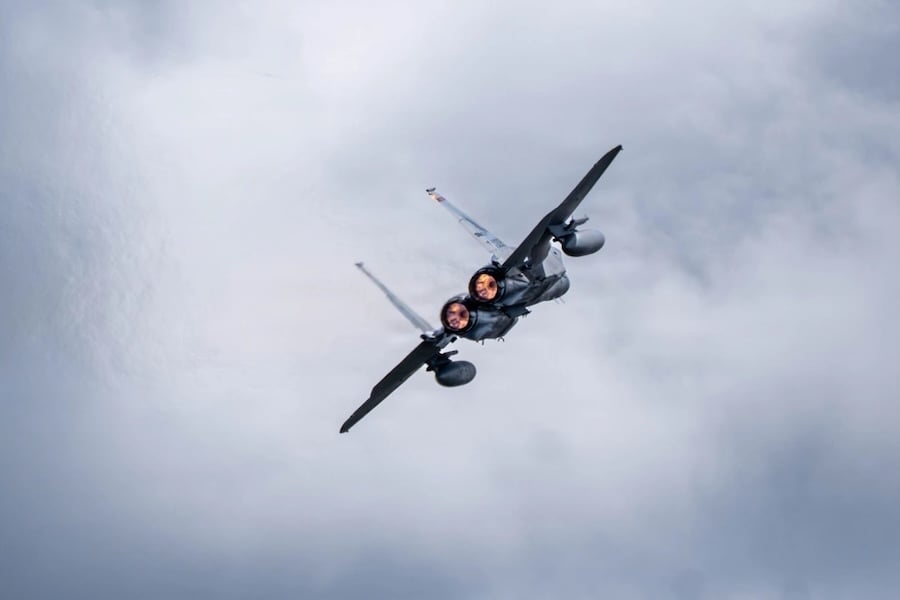
The F110 powers the F-15EX and F-16, and GE Aerospace says the improvements position it to meet growing U.S. Air Force and allied demand. Total defense engine output increased 15% in the first half of 2026.
Since 2023, GE Aerospace has invested more than $600 million in manufacturing at its defense facilities. It has also committed more than $100 million to external suppliers for tooling and equipment to expand capacity and stabilize production schedules.
Those investments extend across multiple defense engine lines. The company is also establishing additional sources for critical components and upgrading parts needed to support higher production rates.
Over the past two years, GE Aerospace has worked with suppliers to make demand more predictable and deployed engineering and quality personnel to address bottlenecks. The company says this gives it a clearer view of its supply chain and more opportunity to resolve problems before they delay deliveries.
Castings remain a constraint across the industry, prompting GE Aerospace to pursue additional capacity through an agreement to acquire Consolidated Precision Products. The company says the planned acquisition is one part of its response and that external suppliers will remain central to meeting demand.
Technicians used AI on the F404 and F110 production lines this year to identify supply-chain risks, gaps and potential bottlenecks earlier. GE Aerospace says the work has improved material flow, supplier readiness and coordination.
“Artificial intelligence is changing how we build and sustain the F110,” said Shawn Warren, vice president and general manager of combat and trainer engines in GE Aerospace’s Defense & Systems business. “It’s giving our teams the ability to see problems before they become delays, and to move faster without sacrificing the reliability our Air Force customers depend on.”
GE Aerospace has also expanded AI-enabled predictive maintenance. Through a deeper partnership with Palantir, it is deploying agentic AI to support aircraft sustainment decisions and streamline production.
The company’s FLIGHT DECK operating model guides efforts to eliminate waste, improve production flow and address delivery gaps. On the F110 line, that work includes engineering support and collaboration with suppliers.
During a recent weeklong improvement effort, the team cut overall production lead time for the F110 high-pressure compressor forward shaft by roughly 60%. It consolidated key processes and shortened the distances operators traveled inside the facility, with further improvements planned across the production line.
The F110 has accumulated more than 11 million flight hours over its 40-year evolution. GE Aerospace says it has upgraded 90% of the engine’s parts through new materials, advanced coatings and improved manufacturing and inspection processes.
The production line also uses additive manufacturing. In 2021, the U.S. Air Force qualified an F110 sump cover that GE Aerospace describes as the first engine component designed and produced using metal 3D printing to receive airworthiness approval from a U.S. Department of Defense entity.
“Forty years in, the F110 keeps getting better, because we keep investing in it,” Warren said. “From AI on the production floor to FLIGHT DECK on the shop floor, every improvement we make comes back to one goal: getting engines to our Air Force customers faster, and keeping them flying longer.”
Source: GE Aerospace.