
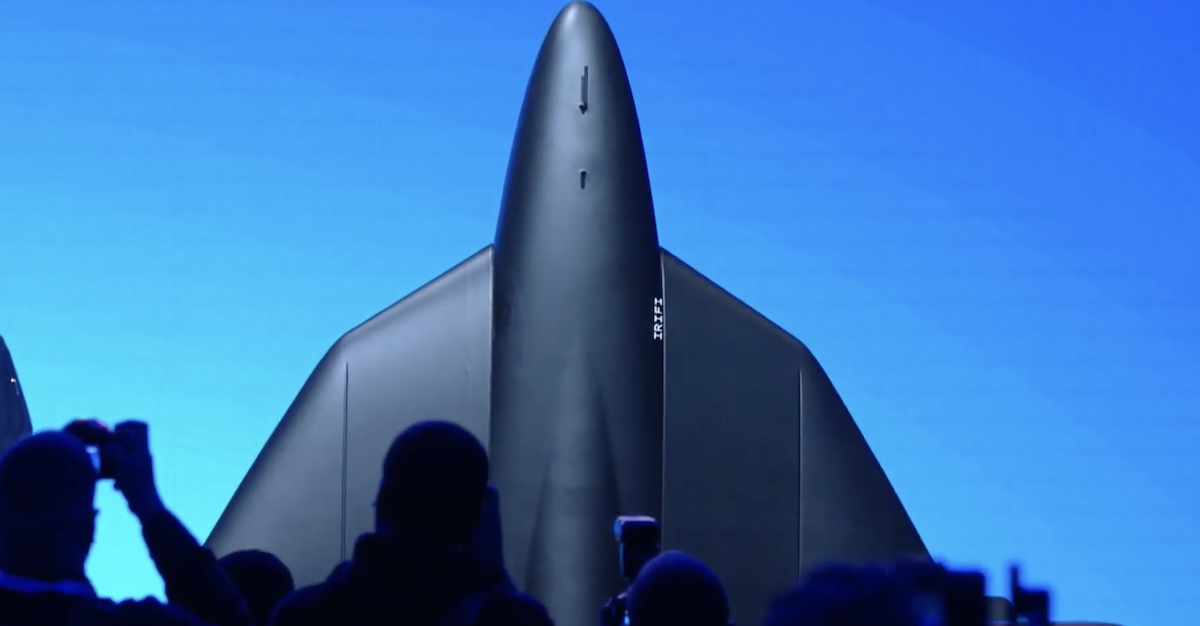
IRIFI uses a mobile canisterised launcher and carries an undisclosed payload. Harmattan AI said the system is designed for rapid deployment at scale and coordinated saturation strikes.
Its onboard navigation does not rely on satellite positioning, while visual guidance directs the final approach to the target. The company said these technologies are designed to allow IRIFI to operate when communications are jammed or spoofed and satellite navigation is degraded or denied.
Harmattan AI said the system is designed to fly below radar detection and strike with metre-level precision. Navigation and terminal guidance operate within parameters established by human authorities.
Commanders approve targets and set mission parameters before launch. IRIFI then carries out the mission autonomously within those boundaries.
The company said a single commander could direct dozens of autonomous strikes with support from an AI system that processes large volumes of satellite imagery. This would allow personnel to focus on planning and strategic decisions while the systems handle mission execution.
“The Shahed is cheap and easy to produce at scale, but it is imprecise and easy to shoot down,” said Mouad M’Ghari, chief executive and co-founder of Harmattan AI. “Tomahawks and Storm Shadows are exquisite pieces of technology with high survivability, but they are expensive and produced in very limited numbers.”
“AI-powered autonomy now makes it possible to combine the best of both worlds, and that is exactly what we did with IRIFI,” M’Ghari said. Harmattan AI said the system follows its principle of autonomous mission execution with human authority over lethal action.