Deliveries are due to run from 2028 to 2030. The programme is designed to give Spain domestic control over the production, maintenance and future development of medium-range military drones.
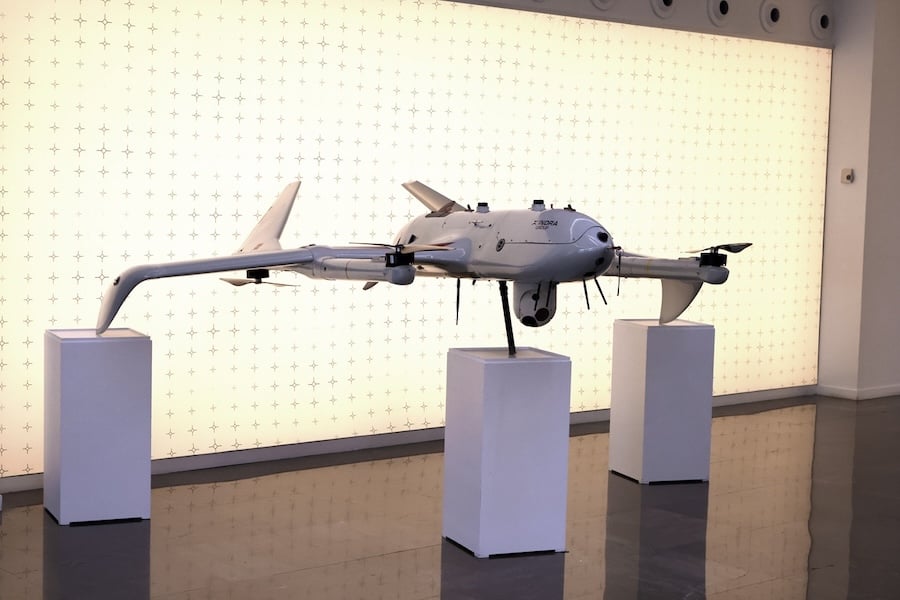
Indra will produce two aircraft with different operating profiles but a common technological architecture. The Tarsis-W will use conventional runways, while the Tarsis-VTOL will take off and land vertically.
The conventional model is intended for missions requiring longer range and endurance and will be able to carry light weapons. The VTOL version is designed for faster deployment in areas where runways and logistical support are limited.
Both aircraft will have a maximum take-off weight of 150 kilograms and a wingspan of about six metres. They are expected to fly for around 10 hours at altitudes of up to 15,000 feet.
Their communications links will reach beyond 120 kilometres. Control of the aircraft can be transferred between operators, allowing mission tasks to be shared among several personnel.
The platforms will conduct intelligence, surveillance, target acquisition and reconnaissance missions. Their sensors will include electro-optical, infrared and laser-designation equipment, along with synthetic aperture radar.
The programme will bring several technologies now sourced mainly from overseas into Spanish production. These include navigation and flight-control systems, autopilots, communications, propulsion, radar and onboard electronics.
Indra said the move would give Spain an industrial base able to adapt the aircraft to changing military requirements. A common domestic supply chain will also support both Tarsis configurations.
The aircraft will undergo certification before entering serial production. Indra expects that process to support safety, operational availability, interoperability and possible future exports to NATO members and other allied countries.
The programme is expected to create about 500 direct jobs over the next four years. Roughly 100 positions will be based at Indra, with the remainder spread across its suppliers.
Engineering and manufacturing work will take place at Indra facilities in Seville, Villadangos del Páramo, Valladolid, Madrid and Barcelona. Partner organisations elsewhere in Spain will carry out additional work.
Around a dozen companies, two research centres and several universities are expected to join the programme. Vocational training centres will support aeronautical mechanics and assembly, while INTA will take part in platform certification.
The Tarsis family is intended to fill the space between lightweight drones and larger unmanned aircraft. Indra said it would offer more endurance, range and payload than smaller systems while requiring less infrastructure and support than larger platforms.