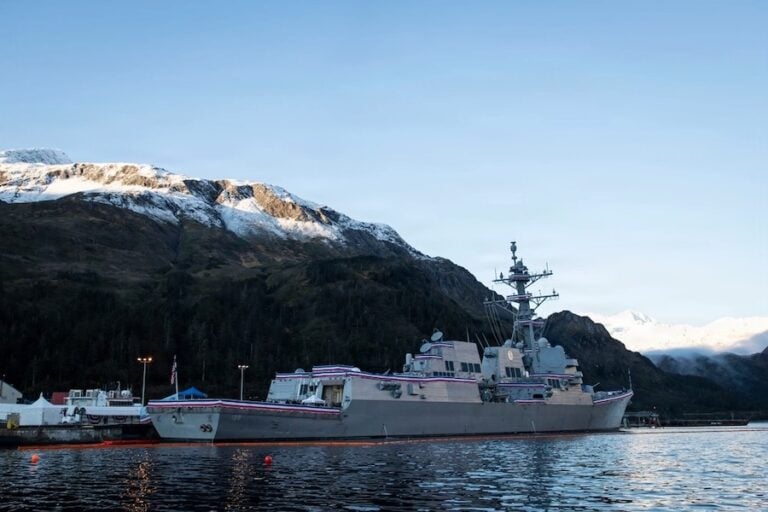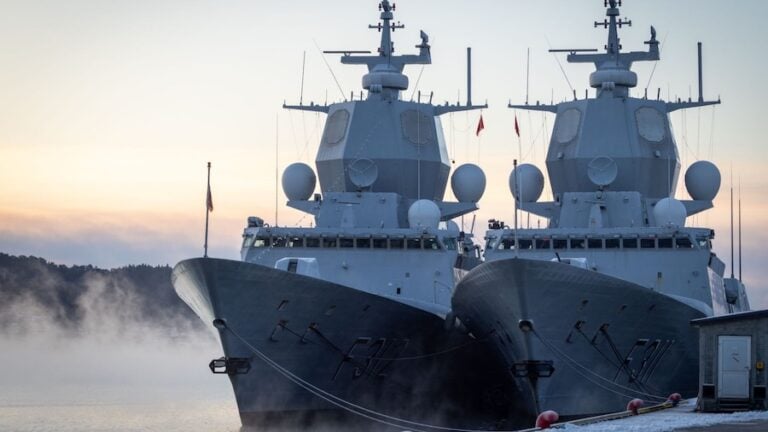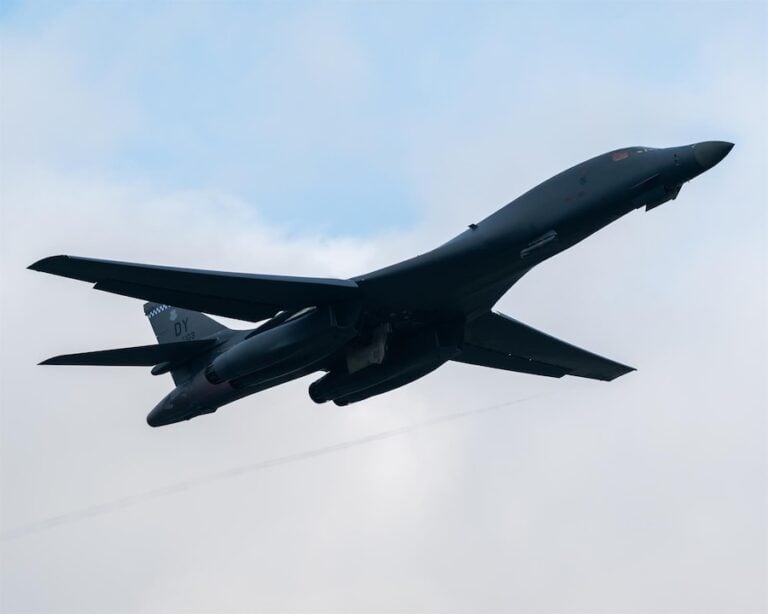

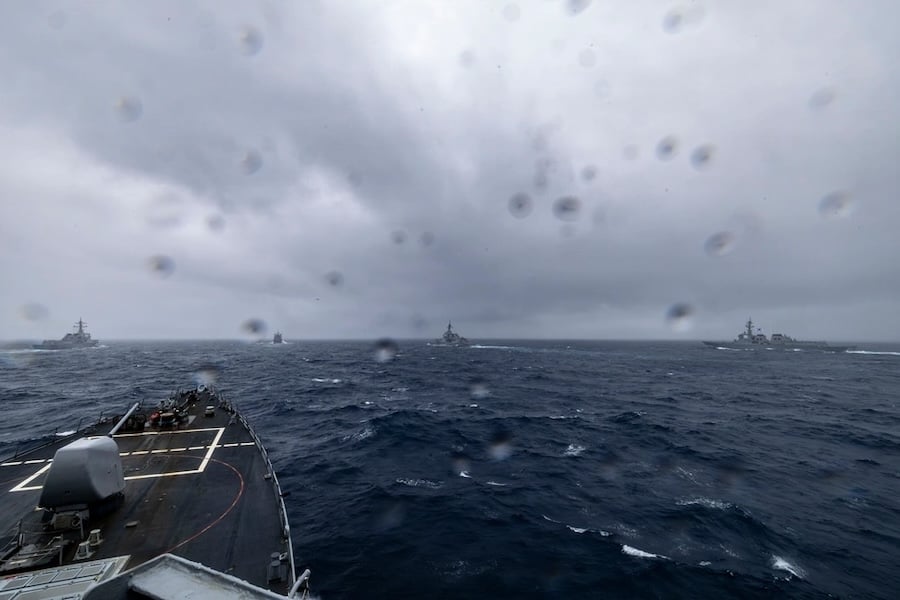
The three nations deployed maritime, air, medical and cyber forces to international waters and airspace south and east of the Republic of Korea. Training also took place at military installations and command posts in Japan.
“Freedom Edge 26 built on the foundation of previous iterations through increasingly complex trilateral training. What began as a maritime-focused effort in the first iteration of Freedom Edge, now integrates air, maritime, missile defense, cyber and medical capabilities in a more connected training environment,” said Lt. Col. Matthew McNeal, Exercise Control Group Director, U.S. Pacific Command.
Freedom Edge 26 was designed to improve coordination, sharpen interoperability and strengthen the three countries’ defensive readiness. Participating forces tested how quickly and effectively they could communicate, share information and operate together across several domains.
Ships maneuvered in formation and practiced replenishment at sea, while maritime and aviation crews rehearsed multilateral medical evacuations and search-and-rescue operations. Aircrews flew in multinational formations as command-and-control personnel synchronized activity across the wider training area.
The three countries also expanded their air defense communications and refined procedures for sharing data in real time. Cyber planners and command-post personnel worked through coordination drills intended to connect national information flows and support faster decisions across the battlespace.
Capt. Takenori Koga, Exercise Control Group Director for the Japan Joint Staff, linked the training to the three nations’ shared interest in maintaining regional security. “Freedom Edge was a valuable opportunity for Japan, the U.S. and the Republic of Korea to enhance our defensive capabilities, which contribute to a security environment that does not tolerate unilateral changes to the status quo,” Koga said.
The activity placed greater emphasis on connecting forces and command structures than its maritime-centered first iteration. Air, naval, missile defense, cyber and medical elements operated within a common trilateral training framework.
Capt. Daeik Kim, Exercise Control Group Director for the Republic of Korea Joint Chiefs of Staff, said the expanded format reflected closer security ties among the participants. “Built on mutual understanding and trust, Freedom Edge served to further elevate the level of security cooperation among the ROK, U.S., and Japan,” Kim said.
The exercise ended with participants exchanging coins, patches and other souvenirs. Exercise-control planners also gathered for a group photograph outside U.S. Forces Japan Headquarters at Yokota Air Base.