
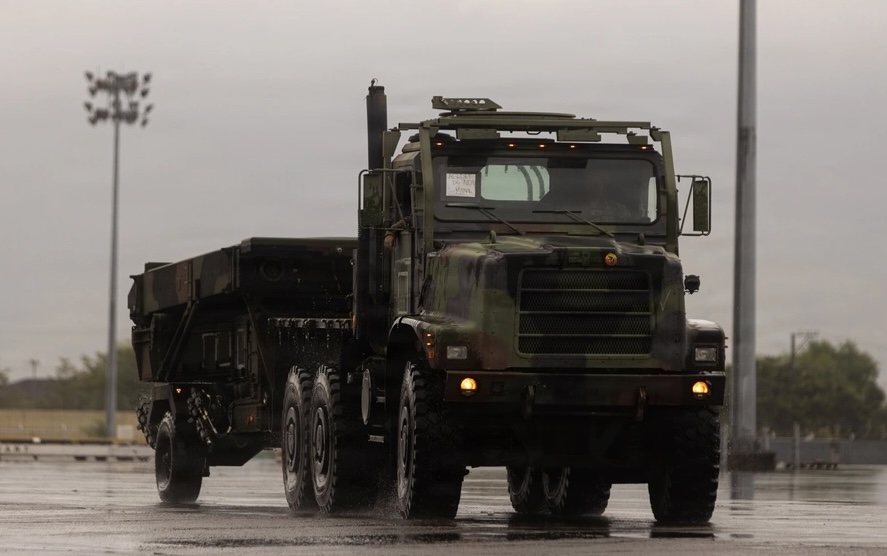
The AN/TPS-80 GATOR is a medium-range radar that provides 360-degree surveillance. It can support an integrated air and missile defense system, control friendly aviation assets and provide targeting data to adjacent forces.
Marines from the Air Command and Control Detachment of Marine Rotational Force – Southeast Asia evaluated the radar’s mobility, setup and stowage. The testing focused on rapidly displacing the system and establishing it at a new location with a limited number of personnel.
“Every time we can take slack out of the process, we make ourselves more capable and better partner,” said 1st Lt. Arturo Perez, an air command and control officer and the officer in charge of AC2 Det. “The TPS-80 is a useful asset that allows us to command and control the airspace alongside our Philippine Allies and other partner nations.”
The radar testing comes as MRF-SEA supports the Philippine Marine Corps’ Archipelagic Coastal Defense Concept through the Archipelagic Coastal Defense Continuum. The effort provides recurring opportunities for U.S. and Philippine forces to develop capabilities in fires, command and control, maritime domain awareness and unmanned systems.
“We were able to validate our ability to rapidly displace and set up with a limited number of personnel and to better understand how the system could support operations in a distributed environment,” said Sgt. Jacob Herbert, a tactical data systems technician and the non-commissioned officer in charge of AC2 Det. “The goal is to understand what this capability can provide, identify its limitations and determine how we can best integrate it into future training.”
Testing the AN/TPS-80 before larger bilateral exercises is intended to reduce the time needed for basic system evaluation during combined training. That allows U.S. and Philippine forces to focus on interoperability, fires integration and how their respective capabilities can work together.
The approach supports the wider goal of repeatedly testing and refining systems before they are incorporated into more complex operations. For the AN/TPS-80, the latest event examined whether its surveillance, aviation control and targeting functions can be paired with the mobility required for dispersed operations.
Marine Rotational Force – Southeast Asia serves as I Marine Expeditionary Force’s forward command element in the Philippines. The unit supports Task Force-Philippines and works with the Armed Forces of the Philippines to improve combined readiness and interoperability.